

Sustainability · 2025
In this section50 topics
- Sustainability Policy3 items
- Sustainability Goals & UN SDGs4 items
- Policy Review3 items
- Business Value Chain1 item
- Stakeholder Analysis2 items
- Environmental Policy & Guidelines4 items
- Environmental Policy Review3 items
- Energy — Plan & Guidelines2 items
- Energy — Electricity Consumption1 item
- Energy — Fuel Consumption1 item
- Energy — Targets1 item
- Energy — Performance & Outcomes2 items
- Water — Plan & Guidelines2 items
- Water — Withdrawal, Discharge & Consumption1 item
- Water — Targets2 items
- Water — Performance & Outcomes2 items
- Waste — Plan & Guidelines2 items
- Waste — Generation, Disposal & Recycling1 item
- Waste — Targets2 items
- Waste — Performance & Outcomes2 items
- GHG — Plan & Guidelines2 items
- GHG — Emissions1 item
- GHG — Emissions Verification3 items
- GHG — Principles & Standards1 item
- GHG — Targets1 item
- GHG Targets — Carbon Neutrality1 item
- GHG — Performance & Outcomes2 items
- Environmental Legal Incidents1 item
- Other Environmental Management1 item
- Social Policy & Guidelines5 items
- Social Policy Review1 item
- Social — Principles & Standards Practised1 item
- Human Rights Due Diligence3 items
- Employees — Plan & Guidelines3 items
- Employees — Workforce1 item
- Employees — Remuneration & Provident Fund1 item
- Employees — Training & Development1 item
- Employees — Occupational Health & Safety1 item
- Employees — Labour Relations1 item
- Employees — Employee Representation2 items
- Employees — Targets2 items
- Employees — Performance & Outcomes2 items
- Customers — Plan & Guidelines3 items
- Customers — Satisfaction Results1 item
- Customers — Targets2 items
- Customers — Performance & Outcomes2 items
- Community & Social — Plan & Guidelines3 items
- Community & Social — Targets1 item
- Community & Social — Performance & Outcomes2 items
- Law Violation Incidents1 item
Sustainability Policy
Has a Sustainability Policy
Yes
Policy Description
The Company is committed to conducting business in accordance with the principles of good corporate governance with the goal of achieving corporate sustainability by enriching its footprint along economic, social, and environmental dimensions.
The Sustainable Development Policy is designed to serve as a framework for the Company’s operations in Thailand and overseas. The Company’s sustainability performance is regularly reviewed to ensure that it is yielding positive results that benefit all stakeholders.
Policy
Environment
Establishing targets for reducing carbon emissions and energy consumption, as well as reducing the use of fossil fuels through efficiency improvements, advanced technologies, and the use of alternative and renewable energy sources.
Improving resource efficiency, including using water efficiently, recycling where possible, and protecting water quality.
Social
Striving to respect human rights and treat seafarers, employees, or personnel fairly, with the goal of ensuring non-discrimination, gender equality, personal development, and well-being.
Striving to amplify the competence and skills of our employees and seafarers by way of conducting regular trainings and development programs.
Striving to constantly improve health and safety at the workplace, with the goal of zero workplace accidents.
Adopting socially responsible practices that create value for the community and the Company.
Transferring the Company’s culture of sustainability to the entire value chain: customers, partners, suppliers, and other stakeholders.
Governance
Ensuring compliance with relevant laws and regulations including tax codes of the countries where the Company operates, both domestically and overseas.
Adopting good corporate governance practices to ensure transparency, avoid corruption, and encourage fair and ethical behavior.
Managing risks and opportunities whilst mitigating adverse impacts on the environment, people, and assets.
Developing and reviewing sustainability targets against appropriate benchmarks.
Establishing mechanisms for continuous improvement, assessing performance through operations, and carrying out the necessary actions to achieve proposed objectives.
Implementing information security and data confidentiality throughout the Company’s systems, while maintaining availability and integrity of information provided.
Reporting transparently to stakeholders, using economic, environmental, and social performance indicators published in the Company’s sustainability reports.
Compliance
Directors, executives, employees, and seafarers at all levels are responsible for supporting, promoting, and adhering to the Sustainable Development Policy to foster a work culture that values the balance of economic, social, and environmental benefits.
Monitoring
This Sustainability Development Policy and the Company’s sustainability performance are regularly monitored by the Sustainability and Risk Management Committee and reported to the Board of Directors annually.
Policy Document Link
https://www.preciousshipping.com/en/sustainable-development-policy/
Sustainability Goals & UN SDGs
Introduction
Contribution to Sustainable Development Goals (SDGs) [GRI 102-15, 102-29, 103-2, 103-3]
The Company aims to support the United Nations’ Sustainable Development Goals (SDGs). The Company integrates these goals into its business operations to ensure that all executives and staff are able to achieve sustainable development alongside the Company’s business growth.
The Company is committed to meeting the UN’s sustainable development goals, particularly in relation to the promotion of good health and well-being; quality education; gender equality; decent work and economic growth; climate action; peace, justice and strong institutions; and partnerships to achieve the goal. These goals are integral to the long-term sustainability of the Company.
Has Sustainability Goals
Yes
Goals Description
Sailing Toward Sustainability Goals
Materiality topics | Key stakeholders | Our commitments | Targets 2030 | Our efforts in 2025 |
Risks and opportunities arising from climate change |
|
|
|
|
Carbon footprint and emissions |
|
|
|
|
Effluents and waste |
|
|
|
|
Cybersecurity |
|
|
|
|
Anti-corruption |
|
|
|
|
Economic performance |
|
|
|
|
Training and education |
|
|
|
|
Occupational health and safety |
|
|
|
|
Diversity and equal opportunity |
|
|
|
|
UN Sustainable Development Goals
| SDG Goal |
|---|
| Goal 3 Good Health and Well-being |
| Goal 4 Quality Education |
| Goal 5 Gender Equality |
| Goal 8 Decent Work and Economic Growth |
| Goal 9 Industry, Innovation and Infrastructure |
| Goal 13 Climate Action |
| Goal 14 Life below Water |
| Goal 16 Peace, Justice and Strong Institutions |
Policy Review
Policy Reviewed This Year
Yes
Policy Changed This Year
Yes
Review Details
The group conducts an annual evaluation to recognize significant sustainability materiality concerns. This process ensures that the identified critical issues correspond with the group’s activities and stakeholder expectations, in addition to being relevant to the prevailing economic, social, and environmental landscape. The evaluation of significant sustainability materiality concerns is based on the assessment of both the effects of the Company’s operations on society and the environment, as well as the influence of sustainability issues on the organization’s overall value.
Materiality Assessment Processes
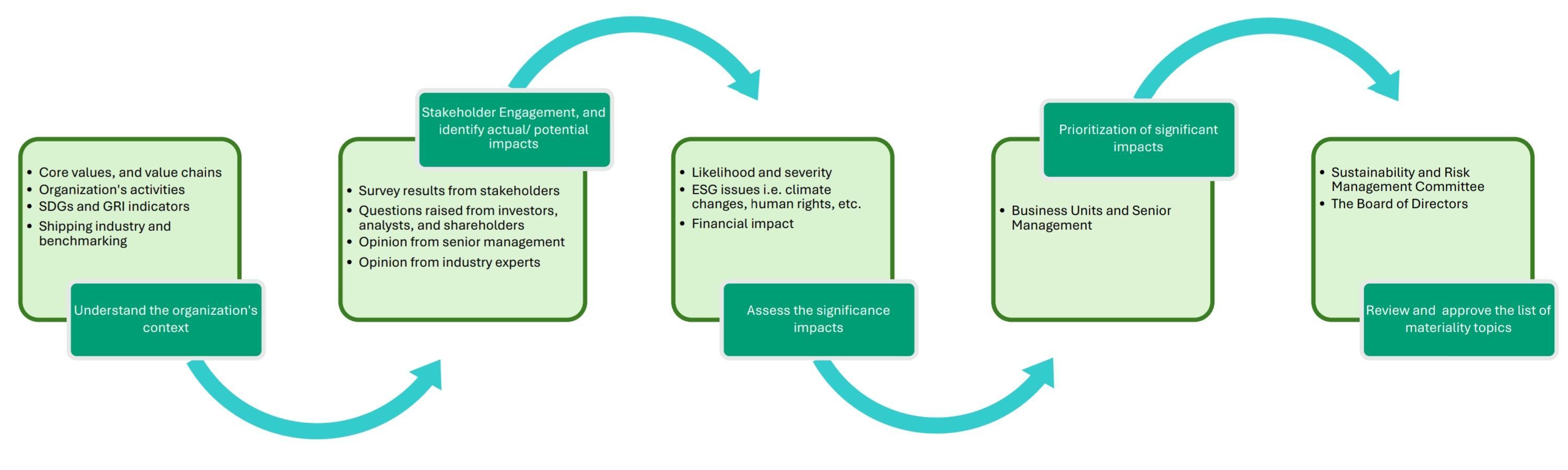
In alignment with the principles of the GRI Standards and the SDGs, the Company has used a four-step process in determining its materiality assessment:
Identification of actual and potential impacts:By defining operational and value chain boundaries to determine where impacts occur, the impact of each issue was assessed, both within and outside the Company, using SDG and GRI indicators across business units..
Assess the significance of the impacts: Data from stakeholder engagement surveys was analyzed to identify and assess issues of significance to the organization as well as its stakeholders. This process involved determiningareas with considerable economic, environmental, and social impacts, enabling prioritization of the concerns most critical to our collective success and sustainability.
Validation of prioritization through review and evaluation:This materiality assessment has been validated through reviews conducted by internal representatives from business units, with support from senior management.
Annual review of context:The results of the materialityassessment, after review by senior management, are submitted annually to the Group’s Sustainability and Risk Management Committee and the Board of Directors for approval.
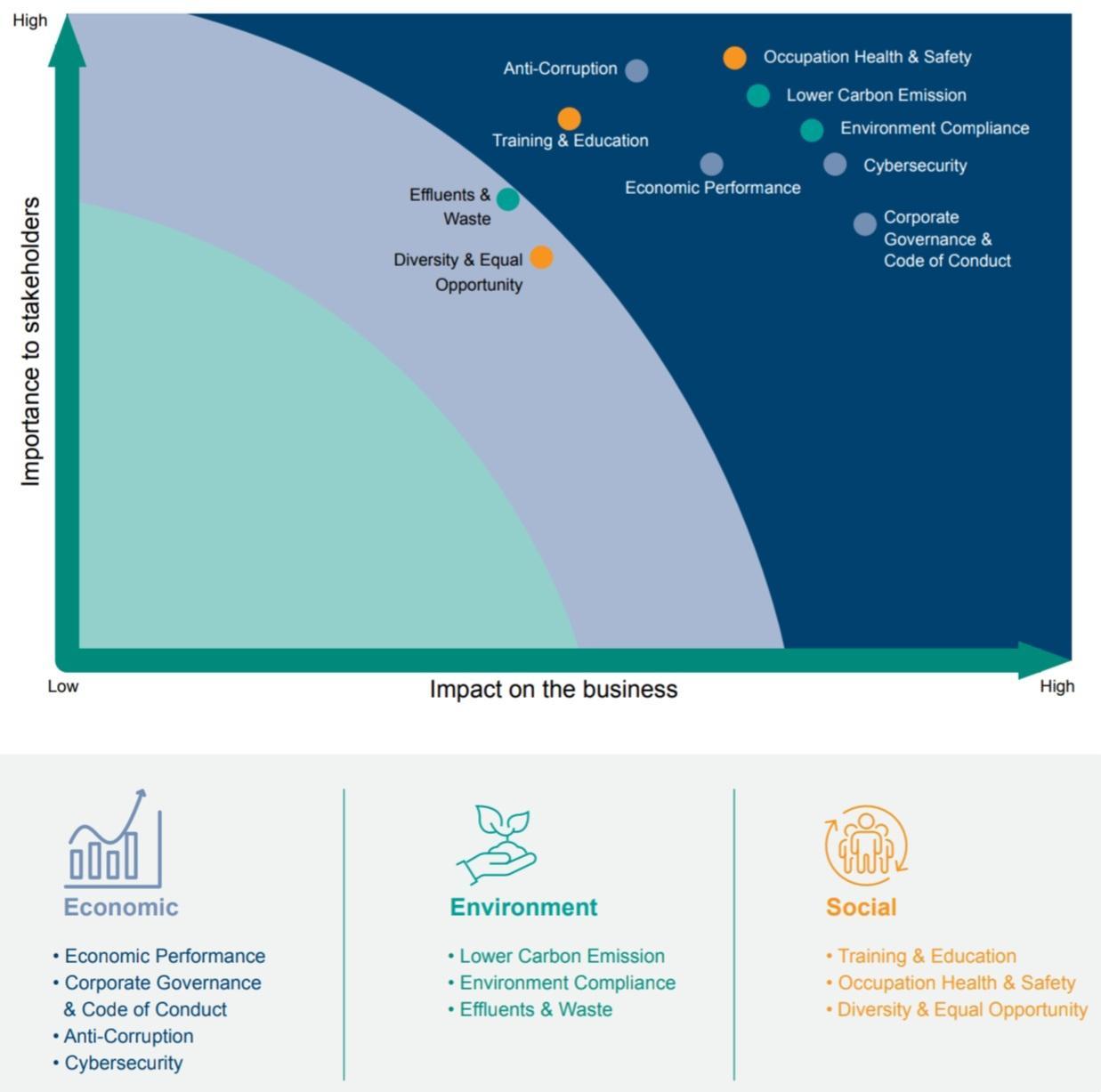
The materiality matrix below presents ten topics for each sustainability-related category, based on their level of significance and impact. The topics in the matrix reflect the Company’s sustainability priorities and the issues that are most relevant and important to the Company and its stakeholders. The Company recognizes the value of broadening its engagement with its stakeholders to improve its materiality assessment and increase the relevance of information within its report based on stakeholder priorities.
2025 Materiality Matrix
Business Value Chain
Value Chain Description
Our Value Chain
In the dry bulk shipping industry, a maritime operational value chain is considered to be sustainable if the activities involving the transportation of dry bulk goods such as grains, minerals, and other raw materials are carried out in an environmentally and socially responsible manner. This includes the use of efficient ships, routes, and cargo loading and unloading practices. It also involves efforts to minimize emissions and environmental impact. By implementing sustainable practices across the entire value chain, the Company aims to reduce its costs and increase efficiency while improving its environmental and social performance.
The maritime shipping industry is crucial for international trade because it is the most efficient and cost-effective way to move large volumes of goods over long distances. According to estimates, around 90% of global trade is carried by sea. This includes everything from raw materials, such as oil and grains, to manufactured products, like cars and electronics. The ability of ships to reach and deliver cargoes to remote corners of the world make them indispensable for the global economy.
1. Loading and cargo handling operations in port: This involves loading the cargo, such as ores or grain, onto a ship, as well as ensuring that the cargo is properly secured and stored on the ship for transportation.
The following practices are implemented to improve the loading process:
• Using efficient and swift cargo handling equipment.
• The loading and discharging sequences are discussed with the shore team at the port, and due consideration is given to optimise the turnaround time, which can help to minimize delays and to ensure smooth cargo management.
• There is a “ship-shore safety checklist” which is followed as part of our Standard of Procedures (SOPs) to ensure all points are taken into consideration.
2. Operating a dry bulk shipping vessel as a ship owner requires a high degree of expertise and experience in managing ships and handling cargo, as well as a thorough understanding of the logistics and regulations involved in international shipping. The following divisions are typically involved in vessel operations:
Technical Management: The technical team manages the fleet of vessels, including scheduling maintenance and repairs, and monitoring the vessels’ performance and regulatory compliance.
Crew Management: The fleet personnel team manages all crew and is responsible for recruiting, training, and managing the performance of the crew members.
Insurance: The Company ensures that its vessels are properly insured against various risks such as accidents, piracy, and natural disasters.
Compliance: The Company ensures that its vessels comply with international regulations for safety, environmental protection, and other standards. The Company analyses each violation in detail to identify the root cause and initiate appropriate corrective and preventive actions. The results are then conveyed to all senior employees as case studies to avoid recurrence.
3. The process of procuring supplies and replacement parts for our vessels involves identifying the need, selecting reputable and reliable suppliers, inviting quotations, inspecting, and storing the items. Therefore, it is essential to establish open and clear communication, meet agreed-upon deadlines and payment terms, treat suppliers fairly, and build long-term relationships with suppliers. The Company ensures that supplier terms and conditions are based on industry norms and practices. The Company established a code of conduct policy for its suppliers to emphasize its dedication to collaborating with them toward a sustainable future. This helps the Company encourage its suppliers to adopt good practices for reducing environmental impact and promoting social responsibility.
4. Discharging and cargo handling operations in port: Discharging involves unloading and delivering the cargo in the same condition in which it was loaded. Prior to arrival, the master usually plans a sequence for discharging cargoes. A discharge plan helps to show the distribution of cargoes within the ship and allow safe discharge of cargoes. After the cargo has been discharged, the ship will be repositioned to another port for its next voyage, or sail to a shipyard for maintenance and repairs.
5. Commercial and ship chartering involves overseeing the commercial side of the business, which encompasses negotiating charter rates, managing the voyage schedule of the ship, and determining the best location for the employment of vessels i.e., the positioning of vessels.
Negotiation of charter rates: The commercial team is responsible for negotiating charter rates with charterers, which is the fee charged for using a ship for a specific voyage or period of time.
Chartering: The commercial team is responsible for managing and chartering the Company’s vessels to charterers or customers. This process involves negotiating charter rates, voyage itineraries, and other terms and conditions. They usually work with independent brokers or agents to connect with potential charter parties.
Voyage planning: The post fixture team is responsible for planning the voyage itineraries for all vessels, taking into account factors such as weather conditions, sea lanes, and port availability.
6. The online customer satisfaction survey is an effective way for the Company to gather valuable feedback from customers about their experiences and perceptions of the business. This information can be used to identify areas for improvement and make informed decisions to better meet customers’ needs and expectations. Furthermore, conducting regular customer surveys helps to keep the Company informed of changes in customer attitudes and preferences.
Stakeholder Analysis
Introduction
Stakeholder Engagements [GRI 102-21, 102-40, 102-42, 102-43, 102-44]
The Company recognizes the importance of all stakeholder groups whether it is the internal stakeholders such as employees, and management of the Company and subsidiaries or external stakeholders such as creditors, suppliers, customers, shareholders, communities, government agencies, and other related organizations whom the Company has an ongoing relationship with and impact on because of its business operations.
The Company’s stakeholder engagement approach is guided by the AA1000 Stakeholder Engagement Standard (AA1000SES), particularly the principles of inclusivity, materiality, and responsiveness. These principles are embedded in the Company’s business practices, corporate strategies, and daily operations, and are used to guide the identification of relevant stakeholders and the consideration of stakeholder expectations. Feedback and concerns raised through engagement activities are reviewed by management and, where relevant, incorporated into business strategy, risk management, and sustainability initiatives.
Stakeholder Engagement Process
Identifying and prioritizing key stakeholders:The Company identifies and prioritizes key stakeholders by considering their knowledge of crucial issues, engagement expectations, relationship with the Company, influence level, geographic location, and organizational context, ensuring a comprehensive understanding of stakeholders’ concerns and expectations.
Define engagement methods: The Company defines engagement objectives and selects appropriate methods for communicating and collaborating with various stakeholder groups. These methods may involve conducting surveys and interviews, as well as organizing focus groups, seminars, and utilizing online platforms and other channels that are deemed appropriate.
Develop a communication plan:The communication plan of the Company is established through the clarification of its objectives and policies. It considers the necessary resources to effectively communicate with stakeholders, including the selection of appropriate channels, determining the frequency of communication, and identifying key messages that promote transparency and clarity.
Grievance mechanism: The Company engages its stakeholder groups in a variety of ways, with frequency and communication mechanisms based on the most effective means of facilitating dialogue. The Company has provided channels on its website for any stakeholder to express his/her opinion and contact the Board of Directors in case they wish to do so directly without going through the management. The Board has and will continue to treat such information seriously and with the utmost confidentiality.
Monitor and evaluate: The Company regularly monitors and evaluates the engagement process at least once a year. Feedback on the engagement is collected and utilized to enhance future involvement efforts.
Stakeholder Expectations, Engagement Goals, and Key Actions
The Company currently classifies and prioritizes its stakeholders into nine groups, as outlined below. All business units are responsible for fostering and maintaining good relationships with these groups, communicating, taking their suggestions, and assessing their expectations.
Stakeholder Analysis
| Stakeholder Type | Stakeholders | Stakeholder Expectations | Response to Expectations | Communication Activities |
|---|---|---|---|---|
| External stakeholders | 2913 · Description: Shareholders | • Share in profits by way of dividends
• Business growth and sustainability
• Fair and transparent operations
• Risk management
• Equitable treatment
• Appropriate channels for monitoring the Company’s performance and giving feedback to the Company
• Easy accessibility to the management of the Company | • Enhance long-term shareholder value and trust
• Creation, preservation, and enhancement of long-term value for our shareholders
• Disclosing timely, concise, and relevant information
• Responsive to all inquiries | 2938 · Description: Visit · 2939 · Description: Press Release · 2941 · Description: Online Communication · 2943 · Description: External Meeting · 2944 · Description: Annual General Meeting (AGM) · 2945 · Description: Complaint Reception · 2949 · Other name: Regular newsletters from the CEO · Description: Others · 2949 · Other name: Annual report and other reports, such as press releases, etc. · Description: Others |
| External stakeholders | 2923 · Description: Customers | • Professional service with a fair charter rate
• Commitment to agreements | • Enhance customer satisfaction and long-term business relationships
• Develop services to respond to diverse needs
• Provide efficient, reliable, and professional services and solutions to all our customers
• Follow the terms of agreements | 2941 · Description: Online Communication · 2947 · Description: Satisfaction Survey · 2949 · Other name: Provide a substantive reply to any query promptly · Description: Others |
| Internal stakeholders | 2921 · Description: Employees | • Appropriate compensation and welfare
• Career advancement and succession
• Competency enhancement
• A positive and good work environment
• Security and safety at work | • Promote employee well-being, capability development, and a positive work environment
• Respecting human rights and diversity
• Ensuring equal opportunity
• Ensuring a safe and healthy work environment
• Providing skill enhancement via sophisticated training | 2940 · Description: Social Event · 2941 · Description: Online Communication · 2942 · Description: Internal Meeting · 2945 · Description: Complaint Reception · 2946 · Description: Employee Engagement Survey |
| External stakeholders | 2894 · Description: Creditor · 2925 · Description: Financial institution | • Ability to repay debts and punctual payment
• Fair returns on loans and service fees
• Commitment to agreements
• Transparent information sharing | • Maintain trust, financial discipline, and long-term relationships with creditors and financial institutions
• Full compliance with all terms of borrowings, including compliance with the objectives of using the borrowed funds, repayment, collateral, and other conditions as may be agreed | 2941 · Description: Online Communication · 2943 · Description: External Meeting · 2949 · Other name: Financial and annual operating reports · Description: Others |
| External stakeholders | 2902 · Description: Community · 2928 · Description: Society | • Improvement in quality of life
• Support community activities
• Environment protection | • Contribute positively to community well-being and minimize environmental impacts from operations
• Support the local community on a regular basis
• Put in place and implement appropriate measures to reduce the environmental impact of the Company’s operations | 2940 · Description: Social Event · 2943 · Description: External Meeting |
| External stakeholders | 2931 · Description: Government agencies and Regulators | • Compliance with relevant laws, rules and regulations
• Good corporate governance and transparency
• Sufficient and timely information disclosures | • Ensure full regulatory compliance and maintain transparent and constructive relationships with regulators
• Follow guidelines in doing transactions with the state, adhere to the code of conduct and actively engage in academic collaboration
• Periodic internal assessment of regulatory compliance
• Complaint handling channels and remedial measures | 2943 · Description: External Meeting · 2949 · Other name: Regular disclosures through the SET · Description: Others · 2949 · Other name: Annual report and other reports, such as press releases, etc. · Description: Others |
| External stakeholders | 2899 · Description: Suppliers | • Fairness and equal opportunity in the procurement process
• Fair prices
• Reputation and credibility
• Honor payment terms | • Ensure fair, transparent, and responsible supply chain practices
• Ensure that terms and conditions for suppliers are based on industry norms and practices
• Follow agreed upon terms and conditions
• On-time payment | 2941 · Description: Online Communication · 2949 · Other name: Conduct supplier evaluations · Description: Others |
| External stakeholders | 2933 · Description: Non-profit organization / NGOs | • Collaboration to drive forward sustainable development | • Support knowledge sharing and collaboration to advance sustainable industry development
• Dialogue through industry associations | 2949 · Other name: Direct engagement to foster closer cooperation · Description: Others |
| External stakeholders | 2904 · Description: Investors or investment institutions | • Return on investment
• Business growth and sustainability
• Fair and transparent operations
• Risk management
• Appropriate channels for monitoring the Company’s performance
• Easy accessibility to the management of the Company | • Business operations that are transparent, verifiable, and adheres to the principles of good governance
• Transparent, complete, and consistent disclosure of information
• Provide accurate and complete financial information
• Adhering to ethical and legal standards | 2941 · Description: Online Communication · 2943 · Description: External Meeting · 2949 · Other name: Regular disclosures through the SET · Description: Others · 2949 · Other name: Presentation/Roadshows 6 times in 2025 · Description: Others · 2949 · Other name: Annual report and other reports, such as press releases · Description: Others |
Environmental Policy & Guidelines
Has an Environmental Policy
Yes
Policy Description
Environmental Protection Policy
PSL’s Fleet is technically managed by Great Circle Shipping Agency Ltd, Bangkok, a wholly-owned subsidiary of PSL that is ISO 9001 and ISO 14001 certified, ensuring that PSL’s fleet operates under a robust Environmental Management System (EMS). This certification confirms that all vessels in our fleet are managed in full compliance with international environmental standards, making Great Circle Shipping Agency Ltd one of the very few dry bulk ship management companies to achieve such a distinction.
The Company has established an “Environmental Protection Policy” and implements an Environmental Management System (EMS) complying with the ISO 14001 standards. ISO 14001 provides a framework for a holistic, strategic approach to the Company’s environmental policy, plans and actions, and demonstrates that the Company is an environmentally responsible organization. The Company first obtained the certificate of environmental management systems registration, issued by Class NK, in the year 2009 as per the standards of ISO 14001:2004. The standards are being upgraded periodically and accordingly the Company’s present certificate is as per ISO 14000:2015 standards. In anticipation of the forthcoming ISO 14001:2025 revision (expected to be published in January 2026), PSL is preparing its Safety Quality and Environment Management System (SQEMS) for transition. The updated standard introduces a harmonized structure across all ISO management systems, enhanced requirements for legal compliance monitoring, and clearer definitions of environmental aspects, ensuring that PSL remains at the forefront of environmental stewardship.
Objectives of EMS
Minimize pollution caused to the environment.
Comply with all national, international legislations and other regulations pertaining to pollution of environment.
Establish procedures for the efficient use of natural resources.
Improve environmental awareness of all employees.
Ensure effective monitoring of the environmental performance of the Company is carried out.
Ensure continual improvement of the environmental performance and pollution prevention.
The Company will set targets and objectives for the improvement of environmental management and will publish details of its environmental performance to the public.
Raising awareness of environmental management
The Company strives to promote a culture of environmental stewardship by actively engaging and raising awareness among both internal and external stakeholders about our environmental management policy and the impacts of our operations.
Internal Awareness Initiatives
Regularly conducted training sessions and workshops ensure that seafarers understand the environmental management policy, and key environmental impacts.
The training team utilizes internal platforms, such as newsletters, and on site/online trainings to share updates, success stories, and best practices related to environmental management.
External Awareness Initiatives
Stakeholder Engagement: the Company engages with suppliers, customers, and business partners to communicate our environmental management policies and encourage alignment with sustainable practices.
We raise awareness of environmental issues and promote collective action through campaigns, and partnerships with local communities and NGOs.
Through periodic review and continual improvement of our SQEMS, the Company hopes to elevate environmental performance over the coming years and make significant contributions to conservation of the environment and reducing the Company’s carbon footprint. Another tangible effort being made by the Company to reduce the environmental impact of the business is the adoption of new environmentally friendly technology on new ships acquired.
Policy Document Link
https://www.preciousshipping.com/en/environment-protection-policy/
Environmental Guidelines
| Guideline |
|---|
| Water Management |
| Waste Management |
| Biodiversity Management |
| Greenhouse Gas and Climate Change Management |
Environmental Policy Review
Policy Reviewed This Year
Yes
Review Details
The Company reviews its sustainable development policy to align with current circumstances, ensuring it remains appropriate and up to date. This policy includes environmental guidelines and practices. Additionally, the Company has reviewed its sustainability management goals and established clear operational plans concerning environmental issues. The environmental management targets are as follows:
Reduce the volume of water purchased from the shore by 25 percent by 2029, compared to the baseline year 2019.
Reduce the food waste intensity on board by 15 percent by 2029, compared to the baseline year 2020.
Maintain zero oil spills.
Reduce carbon dioxide emissions per unit of cargo transport by at least 38.54 percent by 2034, using 2019 as the baseline year.
Policies & Guidelines Changed
| Change |
|---|
| Water Management |
| Waste Management |
| Biodiversity Management |
| Greenhouse Gas and Climate Change Management |
Energy — Plan & Guidelines
Has an Energy Management Plan
Yes
Plan Description
Sustainable Energy Practices
The Company is dedicated to advancing sustainable energy practices, underscoring our responsibility to both the environment and our stakeholders. We prioritize the optimization of energy usage across all operations by adopting innovative technologies and processes aimed at reducing consumption and enhancing efficiency.
We actively seek out and implement renewable energy solutions to decrease our reliance on fossil fuels and promote energy sustainability. Each year, we conduct a greenhouse gas (GHG) inventory, which is verified by a third party, to accurately measure the carbon emissions from our operations.
Furthermore, we are focused on developing a green, energy-efficient fleet by systematically replacing older ships with newer designs and retrofitting existing vessels.
Use of New Technology and Innovations
The Company’s commitment to protection and conservation of the environment and prevention of pollution is reflected in the newbuilding vessels that the Company ordered and took delivery from various shipyards in China as explained in this report. These vessels were built to comply with all regulations presently in force and those which are known to become applicable in the foreseeable future. In addition, wherever practical, the vessel’s specifications exceed those mandated by regulations, both for ease of operations as well as to enhance the vessels’ ability to protect and conserve the environment.
“Green” features of the newbuilding ships that we took delivery and placed order in the recent past are:
Double hull construction is utilized (for 40,000 DWT bulkers) to minimize environmental pollution in case of accidental hull damage.
The vessels’ hull form was perfected after several rounds of careful design analysis using the latest technology, with a view to arrive at the most optimal combination of ship-size and shape to achieve the desired speed at minimum fuel consumption. The fuel consumption of these vessels is far less than comparable sized older ships. Such low fuel consumption is achieved by combining a highly fuel-efficient main engine with a new design of slow-speed, and high-efficiency propeller on an optimized hull form.
To reduce carbon footprint and increase thermal efficiency of these ships, the exhaust of auxiliary engines is routed through the composite boiler. This improves waste-heat recovery and reduces the consumption of oil for the burner.
These ships were fitted with onboard treatment plants for ballast water which fully comply with latest IMO regulations. These treatment plants are designed to remove, render harmless and thereby prevent the transfer of harmful bacteria and invasive species of micro-life through ballasting and de-ballasting operations between ports.
Engines fitted follow the required latest Nitrogen oxide (NOx) emission standards.
The 40,000 DWT ships have flush, box-type ship-sides for cargo holds. This reduces the accumulation of cargo residues in the holds, thereby reducing the need for harmful cleaning chemicals for removal of the same, since the holds can be cleaned using water only.
Deep-well sump pumps for main engine oil circulating system - this reduces the overall quantity of lubricating oil required for the main engines, which in due course reduces the quantities of waste oil.
The vessels were fitted with large incinerators, well above the requirements of MEPC 76 (40) standards, to burn waste and sludge. This ably supplements the Company’s garbage and waste management system which is already in operation on all the Company’s vessels.
Larger capacity bilge water/sludge storage tanks - these enable environmentally friendly waste disposal ashore by allowing more flexibility in selecting the best waste disposal facilities ashore separately for oily water and sludge.
Improved bio-based sewage treatment plants are installed on the ships.
Ships follow the IMO’s “Ship Recycling Convention”: The Hong Kong International Convention for the Safe and Environmentally Sound Recycling of Ships, 2009, was adopted in May 2009 and entered into force on 26 June 2025. It is aimed at ensuring that ships, when recycled after reaching the end of their operational lives, do not pose any unnecessary risk to human health and safety or to the environment. Though the convention has not yet come into force, our fleet is already compliant with this requirement and all ships hold an International Certificate of Inventory of Hazardous Material (IHM).
Below are a few significant developments in respect of new ship design and construction. The Company will consider these as far as practicable when acquiring new ships in the future.
Eco-friendly ships
Shipping is one of the cleanest and greenest industries among all international transport industries. It is also an environmentally friendly and fuel-efficient industry. It is estimated that shipping carries roughly 90% of world trade, and yet, according to the latest figures published in 2025, international shipping is responsible for just 2.5% of global CO2 emissions. Nevertheless, the shipping industry continues to look for ways to reduce that figure further.
The shipping industry has not yet solved all its green issues. The present endeavors of the industry and the IMO are two-fold:
For existing vessels: Reduce the intensity of carbon emissions by imposing restrictions on design as well as operational parameters. The introduction of EEXI and CII regulations by the IMO in June 2021 – as described above- does just that.
For new vessels: Use of improved hull designs and more fuel-efficient engines and technology.
Energy Saving Devices (ESD)
Eco Propellers:
In the maritime industry, one of the most effective ESD solutions is the development and use of new ECO propellers. These advanced propellers are designed to reduce fuel consumption, lower emissions, and improve overall vessel efficiency, making them a key innovation for sustainable shipping.
Traditional propellers often waste energy due to inefficient blade shapes, cavitation, and vibration. ECO propellers address these problems through improved hydrodynamic design. Using advanced computer modeling and fluid dynamics analysis, engineers optimize blade shape, pitch, and surface finish to ensure smoother water flow. As a result, ships require less engine power to move at the same speed, directly reducing fuel use.
Fuel efficiency is closely linked to environmental protection. When ships burn less fuel, they emit fewer greenhouse gases such as carbon dioxide, sulfur oxides, and nitrogen oxides. These emissions are major contributors to climate change, ocean acidification, and air pollution. By lowering emissions, ECO propellers help shipping companies comply with international environmental regulations, including those set by the International Maritime Organization (IMO), while supporting global sustainability goals.
Another important ESD benefit of ECO propellers is reduced underwater noise and cavitation. Cavitation occurs when bubbles form and collapse near the propeller blades, causing noise, vibration, and material damage. This noise can disturb marine life, especially mammals that rely on sound for communication and navigation. ECO propellers are designed to minimize cavitation, protecting marine ecosystems and extending the lifespan of the propeller itself.
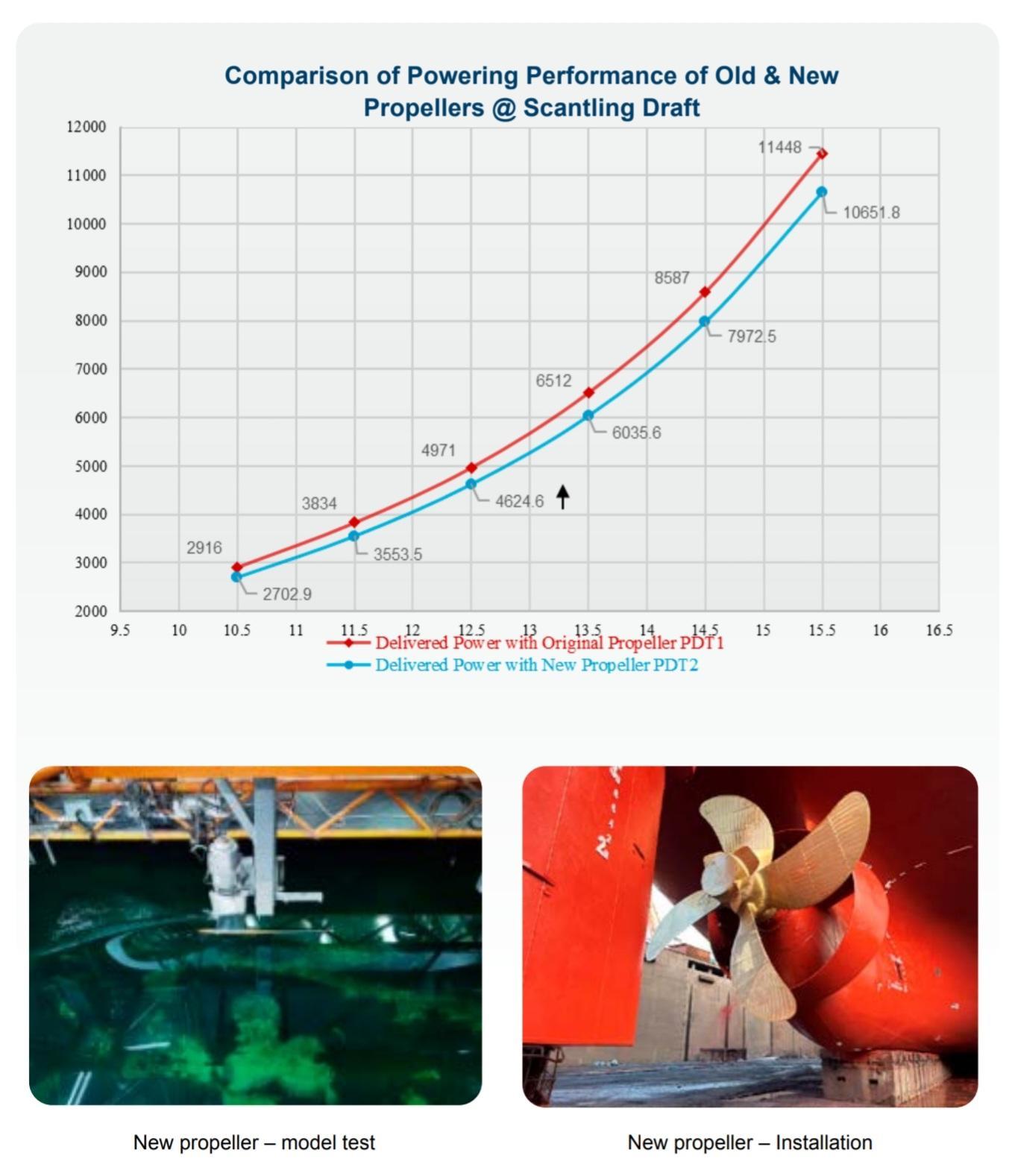
At PSL, the management understood its business implications, evaluated the efficiency of potential designs, and took a leap forward. As part of the strategy, it was decided to retrofit some of the vessels with new propellers. Analysis indicates energy savings in the range of 4% to 6%.
Energy — Electricity Consumption
Electricity Consumption
| Metric | Current Year | Previous Year | Two Years Ago |
|---|---|---|---|
| Total electricity consumption within the organization (Kilowatt-Hours) | 163,531 | 186,252 | 173,193 |
| Electricity purchased for consumption from non-renewable energy sources (Kilowatt-Hours) | 163,531 | 186,252 | 173,193 |
| Electricity purchased or generated for consumption from renewable energy sources (Kilowatt-Hours) |
Energy — Fuel Consumption
Fuel Consumption
| Metric |
|---|
| Crude oil (Barrels) |
| Coal (Metric tonnes) |
| Jet fuel (Litres) |
| Diesel (Litres) |
| Gasoline (Litres) |
| Fuel oil (Litres) |
| Natural gas (Standard cubic feet) |
| LPG (Kilograms) |
| Steam (Metric tonnes) |
Energy — Targets
Has Set Targets
No
Energy — Performance & Outcomes
Has Performance Results
Yes
Performance Description
By installing the eco propellers on 6 vessels, we were able to achieve energy savings of 4-5%. Future technological developments will be monitored and studied to assess their feasibility and viability for further reducing our emissions.
Water — Plan & Guidelines
Has a Water Management Plan
Yes
Plan Description
Fresh Water
The Company recognizes that water resources are a critical component of the ecosystems where the Company conducts its business. The Company is committed to lowering fresh water obtained ashore.
Water Efficiency Management Program
Use of Freshwater Generators: To reduce the water received from shore-based sources, the Company produces water through the freshwater generators on board each vessel. A freshwater generator is a vital machinery system used onboard ships. This machine is used for the conversion of seawater into freshwater by vacuum distillation based on evaporation and condensation.
Bilge and Ballast Water Management: Comply with international regulations to ensure treated discharge water meets environmental standards, reducing pollution and conserving marine ecosystems.
However, the remaining fresh water for consumption is sourced from ashore. Arguably, this eats into the fresh water supply available for communities ashore, and so it is our endeavor to reduce water sourced from shore-based sources over time.
The Company has set a goal of reducing water purchased from shore-based sources by 25% by the year 2029 compared to a 2019 baseline year. In 2025, fresh water quantity decreased by 29.60% compared to the base year of 2019.
The Company has taken measures to reduce water consumption on board by encouraging ships’ crew to minimize wastage of fresh water and maintain freshwater generators on a regular basis so as to maximize production of fresh water on board.
Water — Withdrawal, Discharge & Consumption
Water Withdrawal, Discharge & Consumption
| Metric | Current Year | Previous Year | Two Years Ago |
|---|---|---|---|
| Total water withdrawal (Cubic meters) | 16,437 | 17,863 | 17,167 |
| Total water withdrawal by third-party water (Cubic meters) | 16,437 | 17,863 | 17,167 |
| Total water withdrawal by surface water (Cubic meters) | |||
| Total water withdrawal by groundwater (Cubic meters) | |||
| Total water withdrawal by seawater (Cubic meters) | |||
| Total water withdrawal by produced water (Cubic meters) | |||
| Percentage of wastewater treated before discharge (%) | |||
| Total water discharge (Cubic meters) | |||
| Total water discharge to third-party water (Cubic meters) | |||
| Total water discharge to surface water (Cubic meters) | |||
| Total water discharge to groundwater (Cubic meters) | |||
| Total water discharge to seawater (Cubic meters) | |||
| Total water consumption (Cubic meters) | 16,437 | 17,863 | 17,167 |
| Recycled water (Cubic meters) |
Water — Targets
Has Set Targets
Yes
Targets
| Target | Base Year | Base Year Value | Target Year | Target Change (%) | Unit |
|---|---|---|---|---|---|
| Reduction of water withdrawal | 2,019 | 23,349 | 2,029 | 25 | Cubic meters |
Water — Performance & Outcomes
Has Performance Results
Yes
Performance Description
In 2025, fresh water quantity decreased by 29.60% compared to the base year of 2019.
Waste — Plan & Guidelines
Has a Waste Management Plan
Yes
Plan Description
Waste Management [GRI 306-2]
Mitigation measures are used to manage planned waste, reduce its impact on the environment and ensure compliance with applicable laws, standards, and policies. The Company implemented the garbage management plan to treat waste generated onboard. It shall also designate the person or persons in charge of carrying out the plan. It is a requirement under the International Convention for the Prevention of Pollution from Ships (MARPOL) for all ships operating in international waters. This plan shall provide written procedures for minimizing, collecting, storing, processing and disposing of garbage, including the use of the equipment on board ships. The purpose of the plan is to minimize the amount of waste generated on board and to ensure that all waste is properly disposed of in order to reduce the risk of marine pollution and preserve the health of the oceans and coastal areas.
Food waste
IMO defines food waste as any spoiled or unspoiled food substances and includes fruits, vegetables, dairy products, poultry, meat products, and food scraps generated onboard ship. Food waste on board can be disposed of either onshore or through the use of a food waste disposer, which grinds the waste into smaller pieces and then disposes of it at sea, beyond a distance of 3 or 12 nautical miles, depending on the type of waste and the area, away from the nearest land. To strengthen the management of food waste and enhance the comparability of performance over time, the Company has introduced a normalized food-waste intensity indicator, calculated as cubic metres of food waste generated per crew-day, using 2020 as the baseline year. This approach enables a more accurate assessment of operational efficiency by accounting for changes in fleet utilization and crew deployment.
Food-waste intensity trend (vs 2020 baseline)
Year | Intensity (cubic metres/crew-day) | % change vs 2020 |
2020 | 0.000827 | Baseline |
2021 | 0.000723 | reduced 12.6% |
2022 | 0.000745 | reduced 9.9% |
2023 | 0.000700 | reduced 15.3% |
2024 | 0.000654 | reduced 20.9% |
2025 | 0.000681 | reduced 17.6% |
Based on operational realities and the maturity of data systems, the Company has set a conservative yet achievable target to reduce food-waste intensity by 15% by 2029. The target is supported by improved inventory control, crew training, and enhanced monitoring through Garbage Record Books. While the target reflects a disciplined and credible improvement pathway, the Company views it as a minimum performance threshold and expects continuous efficiency gains beyond the stated target as operational controls and data quality further mature.
Practices implemented to reduce food waste onboard vessels include:
Meals are planned based on the number of crew members onboard, dietary requirements, and available provisions to minimize over-ordering.
Appropriate portion sizes are served to avoid over-serving and reduce food waste.
Food is stored in accordance with best practices to extend shelf life and minimize spoilage.
Food inventories are monitored to prevent overstocking and improve stock rotation.
Food-waste disposers are used, where applicable, to process food waste in compliance with MARPOL requirements.
Sludge disposal
Another source of harmful substances generated by our ship’s consumption of fuel and diesel oil is sludge. Sludge is a product of ‘on board’ fuel oil purification and as an alternative to incinerating sludge and releasing even more harmful gases into the environment, the Company has made a substantial effort to dispose of such material to shore-based reception facilities. This is a much more expensive way of dealing with this issue, but the Company is committed to reducing its carbon footprint, which reflects the Company’s efforts towards environmental conservation. Waste oil or sludge generated on each ship is about 1% of all fuel burnt. Empirical research suggests that every ton of oil burnt generates approximately 3 tons of CO2. By delivering sludge to a suitable reception facility, this waste can be recycled to make products like grease, which is a lubricant widely used in multiple industries.
Revolutionizing Recycling for a Sustainable Future
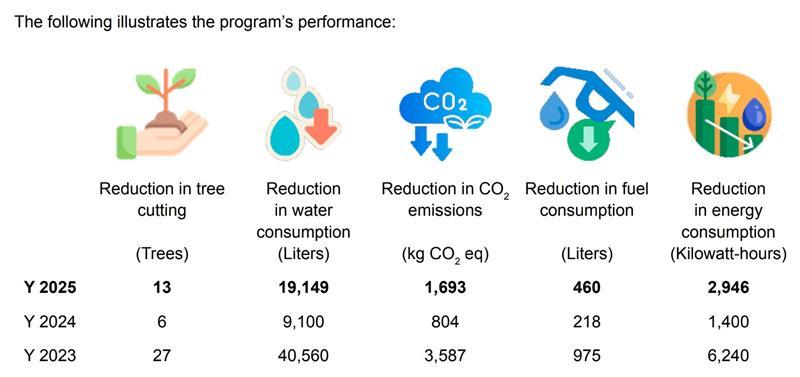
Since 2023, Precious Shipping Public Company Limited has implemented a paper recycling project, reinforcing the Company’s commitment to the principles of the circular economy and responsible resource management. As paper consumption in Thailand continues to rise rapidly, highlighted by data from the Pollution Control Department ,effective waste reduction and recycling have become increasingly critical. On average, individuals in Thailand consume approximately 34 kilograms of paper per person per year, with demand growing at an estimated 15% annually, underscoring the importance of sustained corporate action to reduce environmental impact and promote more efficient use of resources.
This initiative heralds a collaboration with SCG Packaging Public Company Limited (SCGP) through the “Providing Used Paper for Recycling” program. Embracing the ethos of environmental stewardship, our workforce actively collects used paper for recycling, championing responsible consumption and nurturing a culture of sustainability within our organization.
In addition to our recycling efforts, we actively encourage reducing paper usage within the organization to reinforce our commitment to sustainable practices. By promoting a “reduce before you recycle” mindset, we have implemented digital workflows, paperless communication systems, and double-sided printing policies to minimize unnecessary paper consumption. These measures have not only cultivated a culture of efficiency and environmental responsibility but have also led to a substantial decline in overall paper usage, as reflected in the table below. This dual approach—minimizing consumption and maximizing recycling—demonstrates our holistic strategy toward sustainable resource management and our determination to lead by example in environmental stewardship.
Moreover, this endeavor stands as a testament to our unwavering commitment to the principles of sustainable development, particularly in advancing the SDGs. By promoting the circular economy and resource efficiency, this project directly contributes to SDG 12 (Responsible Consumption and Production) and SDG 13 (Climate Action), exemplifying our dedication to creating a more equitable and sustainable future for all.
Green Procurement and Using Resource Efficiency
Green procurement refers to the process of acquiring goods and services in an environmentally responsible manner. Following are the practices we adopted to promote green procurement:
Promote the use of products made from recycled materials, products with energy-efficient features, or products with certifications for environmental sustainability.
Assessing suppliers based on their environmental practices and selecting suppliers that have a strong commitment to sustainability.
Reducing packaging waste and reusing or recycling products and materials.
Promote digitalization - Moving from a paper-based process to a digital workflow.
Educate our crew members on board and staff on shore about the importance of green procurement and best practices for reducing environmental impact.
Monitor and evaluate the performance of suppliers and the impact of procurement decisions on the environment, and continuously improve practices to reduce environmental impact.
The Company encourages optimal use of resources at the office by:
using by-products and eco-friendly materials, i.e., recycled paper
reusing paper that has only been printed on one side
encouraging the use of reusable bags and containers to avoid the use of single use plastic
supporting our staff to learn and understand how to optimize resource consumption to promote environmental preservation and proper consumption behavior.
We are pleased to report that the Company presents this Annual Report in a digital form, and if at all, a printed version is required, it is printed on recycled paper. This is our token contribution to the conservation of the natural environment and is in line with our stated desire to reduce our carbon footprint.
Waste — Generation, Disposal & Recycling
Waste Generation, Disposal & Recycling
| Metric | Current Year | Previous Year | Two Years Ago | Remark |
|---|---|---|---|---|
| Total waste generated (Kilograms) | 1,852,679 | 1,589,561 | 1,469,096 | |
| Non-hazardous waste (Kilograms) | 123,000 | 118,000 | 116,500 | |
| Non-hazardous waste - Landfilling (Kilograms) | ||||
| Non-hazardous waste - Incineration (with energy recovery) (Kilograms) | ||||
| Non-hazardous waste - Incineration (without energy recovery) (Kilograms) | ||||
| Non-hazardous waste - Other disposal operations (Kilograms) | 123,000 | 118,000 | 116,500 | Food waste: the Company’s unit of measurement is cubic metres. Year 2023: 233 cubic metres Year 2024: 236 cubic metres Year 2025: 246 cubic metres For conversion purposes, 1 cubic metre is approximately equivalent to 500 kilograms. Source: https://aberdeenshirecompost.scot/wp-content/uploads/2023/04/Volume-Weight-Conversion-Factors_2.pdf |
| Hazardous waste (Kilograms) | 1,729,679 | 1,471,561 | 1,352,596 | |
| Hazardous waste - Landfilling (Kilograms) | ||||
| Hazardous waste - Incineration (with energy recovery) (Kilograms) | ||||
| Hazardous waste - Incineration (without energy recovery) (Kilograms) | ||||
| Hazardous waste - Other disposal operations (Kilograms) | 1,729,679 | 1,471,561 | 1,352,596 | Sludge oil: the Company’s unit of measurement is cubic metres. Year 2023: 1,876 cubic metres Year 2024: 2,041 cubic metres Year 2025: 2,399 cubic metres For conversion purposes, 1 cubic metre is approximately equivalent to 721 kilograms. https://www.aqua-calc.com/calculate/volume-to-weight/substance/sewage-coma-and-blank-sludge |
| Total reused/recycled waste (Kilograms) | 736.5 | 350 | 1,560 | |
| Reused/Recycled non-hazardous waste (Kilograms) | 736.5 | 350 | 1,560 | |
| Reused non-hazardous waste (Kilograms) | ||||
| Recycled non-hazardous waste (Kilograms) | ||||
| Reused/Recycled hazardous waste (Kilograms) | ||||
| Reused hazardous waste (Kilograms) | ||||
| Recycled hazardous waste (Kilograms) |
Waste — Targets
Has Set Targets
Yes
Targets
| Waste Type | Disposal Approach | Target | Base Year | Base Year Value | Target Year | Target Year Value | Target Change (%) | Unit | Unit — Please Specify | Per Unit (Intensity) | Per Unit — Please Specify |
|---|---|---|---|---|---|---|---|---|---|---|---|
| Hazardous waste | 2763 · Other name: sludge disposal ashore · Description: Other | Reduce waste volume | 2,020 | 1,214,885 | 2,025 | 10 | Kilograms | ||||
| Non-hazardous waste | 2763 · Other name: Food waste intensity · Description: Other | Reduce waste volume | 2,020 | 0.41 | 2,029 | 0.35 | 15 | Other | kilogram/capita/year | Kilogram of product | Kilogram of product |
Waste — Performance & Outcomes
Has Performance Results
Yes
Performance Description
Food Waste Management Performance
Food-waste intensity trend (vs 2020 baseline)
Year | Intensity (kilograms/crew-day) | % change vs 2020 |
2020 | 0.41 | Baseline |
2021 | 0.36 | reduced 12.6% |
2022 | 0.37 | reduced 9.9% |
2023 | 0.35 | reduced 15.3% |
2024 | 0.33 | reduced 20.9% |
2025 | 0.34 | reduced 17.6% |
Performance of sludge oil disposal
To reduce CO2 emissions from incinerators and decrease at-sea disposal, the Company intends to deliver more sludge disposal ashore, the goal is to increase the amount of sludge disposed of through shore vendors by 10% compared to the baseline year of 2020.
Description | 2020 (based year) | 2021 | 2022 | 2023 | 2024 | 2025 |
Sludge disposed of ashore (Cubic metre:m3) [GRI 306-5] | 1,685 | 1,849 | 1,590 | 1,876 | 2,041 | 2,399 |
GHG — Plan & Guidelines
Has a GHG Management Plan
Yes
Plan Description
Greenhouse gas emissions and sulphur dioxide pollution have reached hitherto unseen heights and focus on the environment has become even more important. Organization’s world-over have become more environment-conscious, and shipping is no exception. The IMO has taken positive steps in this matter by effecting several legally binding regulations to be adopted by the shipping industry.
The IMO’s strategy envisages:
A reduction of the average carbon intensity (carbon dioxide (CO2) emissions per transport work) of international shipping by at least 40% by 2030, pursuing efforts towards 70% by 2050, as compared to 2008 levels.
To reduce total annual GHG emissions from shipping by at least 50% by 2050 compared to 2008, while pursuing efforts towards phasing them out entirely within this century.
The uptake of zero or near-zero GHG emission technologies, fuels and/or energy sources which must represent at least 5%, striving for 10% of the energy used by international shipping by 2023.
The 2023 IMO GHG strategy also introduces indicative check points to reach net-zero GHG emissions from international shipping, namely:
to reduce the total annual GHG emissions from international shipping by at least 20%, striving for 30%, by 2030, compared to 2008; and
to reduce the total annual GHG emissions from international shipping by at least 70% striving for 80%, by 2040, compared to 2008.
To reduce GHG emissions from international shipping as soon as possible and to reach net-zero GHG emissions by or around 2050, considering different national circumstances, whilst pursuing efforts towards phasing them out consistent with the long-term temperature goal set out in Article 2 of the Paris Agreement.
The EEXI regulation stipulates upper limits on the GHG emission levels permitted based on the design parameters of ships such as maximum engine power, ship speed, the type of ship and the cargo carrying capacity of ships. To comply with this regulation, nearly 80% of the global fleet will have to limit the maximum power developed by the main engines by varying degrees, typically by between 20 and 50%.
CII on the other hand measures the actual emission levels of each vessel and requires ships a 2% annual carbon intensity reduction (relative to the 2019 reference line) for the period 2023-2026, followed by an increased annual reduction rate of 2.625% from 2027 to 2030. The combination of technical (EEXI) and operational (CII, SEEMP-III) measures ensures that the shipping industry progresses toward IMO’s decarbonization targets while enhancing energy efficiency and sustainability.
Fifth IMO GHG Study
The Fifth Study would include annual GHG emission estimates for the year 2008 (baseline) and for the years 2018- 2025. The study will assess global greenhouse gas emissions (including CO2, CH4, N2O) from international shipping and evaluate progress toward decarbonization goals. Noting that the previous studies were based on Tank-to-Wake (TtW) emission factors, the Fifth Study would include inventories for Well-to-Wake (WtW) emissions based on the Life Cycle Assessment (LCA) guidelines. To demonstrate shipping’s overall energy efficiency, the Fifth Study would also provide a comparison of the carbon intensity of shipping with other transport modes. Additionally, in the absence of further IMO guidance on how to differentiate between domestic and international voyages and how to categorize ship types/sizes, the Fifth Study would include emission estimates using both "vessel-based" and "voyage-based" calculation methodologies. Based on the results of MEPC 83 in April 2025, the Fifth IMO GHG Study was not formally adopted or completed at that session, but rather progressed through the approval of its draft Terms of Reference. The study is being prepared to provide crucial, evidence-based data for the upcoming review of the 2023 IMO GHG Strategy, which is scheduled for 2028.
IMO’s latest regulations on GHG emissions
In line with the IMO’s initial strategy of achieving a reduction in the intensity of CO2 emissions of up to 40% per transport work by 2030 and up to 70% by 2050 to reduce GHG emissions from ships, in June 2021 the IMO introduced two measures: (a) the Energy Efficiency Design Index for existing ships (EEXI) and (b) the Carbon Intensity Indicator (CII). These regulations, which came into force on 1 January 2023, are already affecting a large share of the global fleet and have posed significant compliance challenges across the industry.
In April 2025 (MEPC 83), the IMO approved a package of mid term measures (technical fuel standard + economic pricing element) as draft amendments to MARPOL Annex VI, with a view to formal adoption in an extraordinary session in October 2025 and indicative entry into force around 2027.
However, the extraordinary MEPC session in October 2025 did not adopt the Net Zero Framework (NZF). Proceedings were dominated by strong opposition, most prominently from the United States and Saudi Arabia, including a procedural push to replace the IMO’s longstanding tacit acceptance process with a far more onerous explicit acceptance route, and public threats of retaliation against states supporting the NZF. The adoption vote was adjourned by one year, effectively stalling the framework. Multiple industry updates and press briefings circulated internally describe the outcome as a collapse/postponement driven by that opposition and note a likely shift toward more fragmented regional regulation in the interim.
What this means now: while the MEPC 83 approval of mid term measures remains on the record, the adoption is delayed and timelines are uncertain; commentary shared internally anticipates continued work in intersessional groups, but also warns that the failure to adopt the NZF will accelerate reliance on regional schemes (e.g., EU ETS/FuelEU, and potentially UK/Turkiye/China or others), increasing compliance complexity for global operators.
CII/EEXI remain in force. CII requires a 2% annual carbon intensity reduction (relative to the 2019 reference line) through 2026, with further adjustments under review for 2027–2030. EEXI continues to constrain design related emissions and has led many vessels to limit installed power (EPL) to comply.
GHG — Emissions
GHG Emissions
| Metric | Current Year | Previous Year | Two Years Ago |
|---|---|---|---|
| Total GHG emissions (Metric tonnes of carbon dioxide equivalent) | 507,518 | 492,514 | 537,684 |
| Total greenhouse gas emissions 1 (Metric tonnes of carbon dioxide equivalent) | 10,156 | 11,523 | 10,815 |
| Total greenhouse gas emissions 2 (Metric tonnes of carbon dioxide equivalent) | 84 | 94 | 87 |
| Total greenhouse gas emissions 3 (Metric tonnes of carbon dioxide equivalent) | 497,278 | 480,897 | 526,782 |
GHG — Emissions Verification
Emissions Verified by a Third Party
Yes
Verifying Body
2650
Verification Web Page
https://www.preciousshipping.com/wp-content/uploads/Sustainability/Environment/2025_CFO_Statement.pdf
GHG — Principles & Standards
Principles & Standards Applied
| Standard | Other — Please Specify |
|---|---|
| 2671 | |
| 2676 | |
| 2677 | |
| 2734 | International Maritime Organization (IMO) |
GHG — Targets
Has Set GHG Targets
Yes
GHG Targets — Carbon Neutrality
Carbon Neutrality Targets
| Emission Scope | Carbon Neutrality Certified | Certifying Body | Target Year | Unit |
|---|---|---|---|---|
| 2715 | Y | Thailand Greenhouse Gas Management Organization | 2,025 | Metric tonnes of carbon dioxide equivalent |
GHG — Performance & Outcomes
Has Performance Results
Yes
Performance Description
From 2014, as part of the Company’s commitment to the reduction of GHGs, all vessels have been maintaining records of carbon dioxide emissions, from burning fossil fuel in the engines and boilers. The average carbon intensity per transport, measured in grams CO2 emitted per tonne-nautical mile was 12.884 gm CO2 in 2014. Over the years, this has improved, and the figure for 2025 is 6.35 gm of CO2 per tonne-nautical mile. It is to be noted that this is the average for the entire fleet of 43 vessels. The CO2 emissions per tonne-mile have slightly increased compared to 2024 due to longer anchorage periods and shorter voyages. The Company also operates eleven (11) highly fuel efficient ‘Eco’ Ultramax vessels where in 2025 we have achieved 4.28 grams of CO2 per tonne –nautical mile.
Emissions Data from PSL Vessels [GRI 302-1, 305-1, 305-2, 305-4, 305-7]
Categories | Description | Unit of Measure | 2021 | 2022 | 2023 | 2024 | 2025 |
CO2 Emissions | Total CO2 emitted by all the vessels in the fleet | metric tons (t) | 521,648.64 | 491,824.02 | 525,591.79 | 479,152.98 | 492,875.44 |
Average Carbon Intensity Index (CII) | grams/ tonne-mile | 7.42 | 7.14 | 6.80 | 6.03 | 6.35 | |
Note: Method for calculating the CII and after the figures for total fuel consumed and distances sailed by each vessel were verified by the Recognized Organization (ClassNK for PSL’s fleet) | |||||||
GHG Emissions | Direct GHG emissions (Scope 1) (The CO2 equivalent generated from voyage charters*) | t-CO2e | 49,059 | 5,341 | 3,906 | 2,904 | 3,344 |
Direct GHG emissions (Scope 1) (The CO2 equivalent generated by the Company’s vehicles**) | t-CO2e | 15 | 25 | 23 | 23 | 21 | |
Direct GHG emissions (Scope 1) (The CO2 equivalent generated by the refrigerant on board) | t-CO2e | 5,661 | 6,886 | 8,596 | 6,791 | ||
Direct GHG emissions (Scope 1) (The CO2 equivalent generated by the portable on board) | 0.02 | ||||||
Total Direct GHG emissions (Scope 1) | t-CO2e | 49,074 | 11,027 | 10,815 | 11,523 | 10,156 | |
Direct GHG emissions separately reported (only CO2 emissions from biofuel combustion generated by the Company’s vehicles**) | 2 | ||||||
Indirect GHG emissions (Scope 2) | t-CO2e | 64 | 68 | 87 | 94 | 84 | |
Total GHG emissions | t-CO2e | 49,138 | 11,095 | 10,902 | 11,617 | 10,240 | |
GHG emissions (Scope 3) | t-CO2e | 477,647 | 491,254 | 526,782 | 480,897 | 497,278 | |
Total GHG emissions (Scope 1, Scope 2 & Scope 3) | t-CO2e | 526,785 | 502,349 | 537,684 | 492,514 | 507,518 | |
Note: * Direct GHG emissions Scope 1 (Voyage Charter) & Scope 3 (Time Charter) were calculated based on; MEPC.391(81) (adopted on 22 March 2024) 2024 Guidelines on life cycle GHG intensity of Marine Fuels (2024 LCA Guidelines). ** From 2025 onward, direct Scope 1 GHG emissions from the Company’s vehicles include CO2 from CO2, CH4, and N2O, while CO2 emissions from biofuel are reported separately. Global Warming Potential (GWP) values from the IPCC Fifth Assessment Report (AR5, WG I, Chapter 8) are applied in accordance with the Notification of the Department of Energy Business Re: Specification and Quality Standards of Gasohol B.E. 2019 (reference value: minimum limit). Scope 1 The CO2 equivalent generated by the refrigerant on board was calculated based on PCC defaults (2006), volume 3, chapter 7, table 7.8, p.7.44, from 2022 onward. Scope 1 The CO2 equivalent generated by the portable on board was calculated based on IPCC Assessment Report, AR5, WG 1, chapter 8, p.73 – 79, from 2025 onward. Scope 2 was calculated using the site-based method. Grid emission factor adopted from the latest Electricity Emission Factor published by Thailand Greenhouse Gases Management Organization (TGO); Thai National LCI Database, TIISMTEC-NSTDA, AR5 (with TGO electricity 2022-2024). The numbers and calculation methodology of GHG emission data from 2022 to 2025 have been verified by SGS (Thailand) Limited. | |||||||
Energy Consumed |
| Gigajoules (GJ) | 6,960,682.8 GJ | 6,705,772.8 GJ | 7,013,466 GJ | 6,457,946 GJ | 6,640,551.6 GJ |
| Gigajoules (GJ) | 6,259,806 GJ from VLSFO | 5,814,816 GJ from VLSFO | 6,291,810 GJ from VLSFO | 5,853,316 GJ from VLSFO | 6,116,838 GJ from VLSFO | |
Percentage | 89.90% of total energy generated was from VLSFO | 86.70% of total energy generated was from VLSFO | 89.71% of total energy generated was from VLSFO | 90.64% of total energy generated was from VLSFO | 92.11% of total energy generated was from VLSFO | ||
Energy Efficiency Design Index (EEDI) | Average Energy Efficiency Design Index (EEDI) for new ships (Average for 10 vessels) | Grams of CO2 per ton-nautical mile | 4.062 | 4.062 | 4.062 | 4.062 | 4.062 |
Electricity | Electricity consumed (Purchased electricity - Onshore operations) | Kwh | 126,106 | 135,025 | 173,193 | 186,252 | 163,531 |
Other |
(Based on accepted empirical values for emission factors) | Metric tonnes (t) | 8,263 approx. | 7,954 approx. | 8,325 approx. | 7,669 approx. | 7,888 |
(Assumption of 0.5% in VLSFO consumed and 0.1% in LSMGO consumed) | Metric tonnes (t) | 1,523 | 1,426 | 1,531 | 1,422 | 1,480 | |
| Metric tonnes (t) | 612 approx. | 574 approx. | 616 approx. | 571 approx. | 595 approx. | |
Implemented Ballast Water |
| Percentage | 25% approx. | 16% approx. | 0% | 0% | 0% |
| Percentage | 75% approx. | 84% approx. | 100% | 100% | 100% | |
Spills and Releases to the Environment |
| Number | Nil | Nil | Nil | Nil | 01 |
| Litres | Nil | Nil | Nil | Nil | 300 | |
This reduction of CO2 emissions is the result of several measures which have been adopted by the Company.
Of these, a few important ones are as follows:
Improved voyage planning with reduced ballast passages and port stays.
Maintaining optimized speed so that the vessels are just in time for the required schedules.
Weather routing to take advantage of ocean currents and optimized routes avoiding rough weather.
ptimizing speed and operating the vessels on eco-speeds wherever possible. Maintaining optimized trim to improve performance.
Maintaining the external underwater hull and propeller in clean condition so that frictional losses through the water are kept to a minimum.
Employing efficient hull coatings (anti-fouling paints) which ensure that the hull is maintained in clean condition.
Avoiding wastage of electric power on board.
Maintaining the diesel engines and other fuel-burning equipment in an efficient condition.
Disposing waste sludge generated by Fuel purification to shore facilities, despite the costs, rather than using incinerators on board.
The performance of some vessels has been improved by retrofitting fuel-saving devices like the mewis duct, pre-shrouded vanes, hub vortex absorbed fins and replacing the propeller with Eco-propellers.
Further, several older and less fuel-efficient vessels of the fleet were replaced by the ‘Eco’ vessels. ‘Eco’ operation is made possible by larger cargo hauls, reduced fuel consumption on account of better hull lines, lower lightship and very efficient electronically controlled engines and optimized use of waste heat from the engines (even the exhaust gases from the auxiliary engines is diverted through the boiler to use the available heat). Our new eco vessels emit approximately 35% less CO2 per unit transport work as compared to the older vessels in the fleet. At the same time, the Company seriously evaluates all new developments carefully, as several builders’ claims are often exaggerated to get fresh business and when technical parameters such as the calorific value of fuel, design and scantling draft and ‘sea margins’ are taken into consideration, the so-called benefits simply do not exist, or they are not cost-effective. In any event, the Company looks very closely at the machinery on all new acquisitions, whether new buildings or second-hand vessels, and monitors their performance very carefully to arrive at optimum speed and consumption variables, while ensuring that emissions are kept to a minimum.
GHG Emission Reduction Targets and Performances in Alignment with the SLB Framework
In 2024, the Company became the first Asian Shipping Company to successfully issue a Sustainability-Linked Bond (SLB). Lloyd’s Register Pte Ltd, Singapore, reviewed our Sustainability-Linked Financing Framework and issued a Second Party Opinion. This sustainability-linked bond and its underlying targets highlight our strong commitment to sustainability. By leveraging the unique KPIs of our SLB, we ensure alignment between our performance, long-term sustainability objectives, and industry-specific targets.
Our KPI is to achieve a minimum 38.54% reduction in CO2 emissions per transport work by 2034, using 2019 as the baseline. This ambitious target positions PSL as a leading force in sustainability within the maritime industry. Moreover, this target aligns with the IMO’s interim target prescribed reduction in carbon intensity targets for international shipping by 2030.
Description | 2019 (base year) | 2020 | 2021 | 2022 | 2023 | 2024 | 2025 | 2026 |
KPI Target: Average CII (AER) CO2 Emissions/Transport Work (gCO2/tonne-nautical mile) | 7.55 | 6.66 | 6.51 | 6.37 | ||||
Actual Results: Average CII (AER) CO2 Emissions/Transport Work (gCO2/tonne-nautical mile) | 7.55 | 7.19 | 7.42 | 7.14 | 6.80 | 6.03 | 6.35 | |
% reduction with respect to base year | 4.77 | 1.72 | 5.43 | 9.93 | 20.13 | 15.89 |
This reduction of CO2 emissions is the result of several measures which have been adopted by the Company.
Of these, a few important ones are as follows:
Improved voyage planning with reduced ballast passages and port stays.
Maintaining optimized speed so that the vessels are just in time for the required schedules.
Weather routing to take advantage of ocean currents and optimized routes avoiding rough weather.
ptimizing speed and operating the vessels on eco-speeds wherever possible. Maintaining optimized trim to improve performance.
Maintaining the external underwater hull and propeller in clean condition so that frictional losses through the water are kept to a minimum.
Employing efficient hull coatings (anti-fouling paints) which ensure that the hull is maintained in clean condition.
Avoiding wastage of electric power on board.
Maintaining the diesel engines and other fuel-burning equipment in an efficient condition.
Disposing waste sludge generated by Fuel purification to shore facilities, despite the costs, rather than using incinerators on board.
The performance of some vessels has been improved by retrofitting fuel-saving devices like the mewis duct, pre-shrouded vanes, hub vortex absorbed fins and replacing the propeller with Eco-propellers.
Further, several older and less fuel-efficient vessels of the fleet were replaced by the ‘Eco’ vessels. ‘Eco’ operation is made possible by larger cargo hauls, reduced fuel consumption on account of better hull lines, lower lightship and very efficient electronically controlled engines and optimized use of waste heat from the engines (even the exhaust gases from the auxiliary engines is diverted through the boiler to use the available heat). Our new eco vessels emit approximately 35% less CO2 per unit transport work as compared to the older vessels in the fleet. At the same time, the Company seriously evaluates all new developments carefully, as several builders’ claims are often exaggerated to get fresh business and when technical parameters such as the calorific value of fuel, design and scantling draft and ‘sea margins’ are taken into consideration, the so-called benefits simply do not exist, or they are not cost-effective. In any event, the Company looks very closely at the machinery on all new acquisitions, whether new buildings or second-hand vessels, and monitors their performance very carefully to arrive at optimum speed and consumption variables, while ensuring that emissions are kept to a minimum.
The Company is also a member of the Getting to Zero Coalition, which aims to place zero-emission vessels in operations by 2030. As a member of the coalition, the Company is carefully monitoring developments in technology in the marine field, which offers vessels that operate with zero emissions. The range of sources of power with zero emissions, is extensive, but largely in the research stage. The feverish pace of green technology aims to decarbonize marine transport by offering alternative low-carbon and zero-carbon fuels like biofuels, methanol, ammonia, hydrogen and innovative renewable energy options like wind power, solar power, and electric propulsion. LNG is considered by many to be a transition fuel on the pathway to the zero-carbon future of the shipping industry. It has virtually no SOx and very low NOx emissions, and as compared to fuel oil has almost a 30% reduction is carbon dioxide emissions. However, LNG is mostly made up of methane, which is a highly potent GHG, far more harmful to the environment than CO2. The use of LNG from “well to wake” involves leakage of methane to the atmosphere, referred to as ‘methane slip’. It is estimated that for the same amount of emission, methane warms the planet 30 times more in a short span of 12 years, as would CO2 in a hundred years. Hence, until a solution is found to address or substantially reduce ‘methane slip’, LNG cannot be considered a viable option to reduce GHGs.
The Company’s commitment to the environment led to the early induction of ‘ECO’ vessels. Similarly, it is expected that as soon as commercially viable options of these next generation zero emission ‘green’ vessels become available, they will also form part of our fleet.
Carbon Neutral
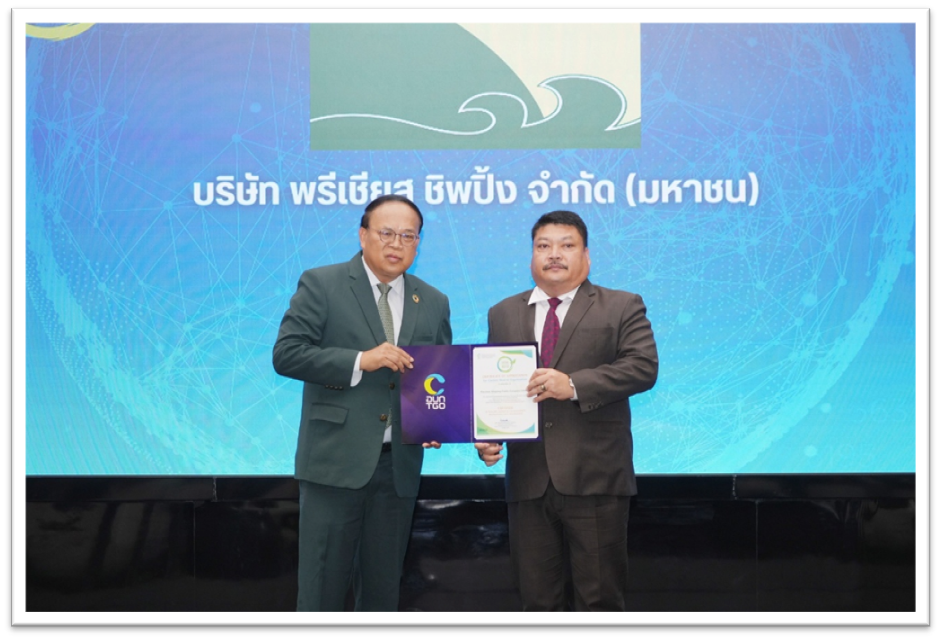
Photo: Dr. Wijarn Simachaya, Chairman of the Board of Directors, TGO, presenting the Carbon Neutral certification to Captain Pattana Sriroon, Head of PSL’s Fleet Personnel Department, at a TGO awards ceremony held on 25 June 2025.
We are proud to announce that Precious Shipping’s operations have been certified carbon neutral by the Thailand Greenhouse Gas Management Organization (TGO). As an autonomous government body responsible for greenhouse gas emissions reduction in Thailand, TGO has recognized our efforts in mitigating our environmental impact. We achieved carbon neutrality certification for our operations by
measuring the carbon footprint of our operations and receiving third-party validation for it
ffsetting our scope 1 and scope 2 emissions for the years from 2023 to 2025 by supporting a renewable energy project in Thailand
In addition to the carbon-neutral certification, we have also achieved the Carbon Footprint for Organization certification, which acknowledges our comprehensive carbon reporting practices. This recognition highlights our dedication to transparently tracking and reporting our carbon emissions, reinforcing our commitment to environmental sustainability.
These certifications symbolize our unwavering commitment to minimizing our carbon footprint and aligning our business practices with a greener future. We take immense pride in this achievement and will continue to prioritize environmental stewardship as we strive to make a positive impact on our planet.
While we take pride in this moment, it serves as a reminder of the path that lies ahead. We are resolute in our dedication not just to maintain these accomplishments but to extend our efforts even more. Together, we are actively shaping a more sustainable future for Thailand and the world!
Environmental Legal Incidents
Legal Violation Incidents
| Metric | Current Year | Previous Year | Two Years Ago |
|---|---|---|---|
| Number of cases or incidents of legal violations or negative environmental impact (cases) | 0 | 0 | 0 |
Other Environmental Management
Plan Description
Biodiversity Protection
The Company recognizes that our operations as a shipping company intersect directly with the world’s oceans. These oceans are home to a vast array of marine life, which plays a crucial role in maintaining the ecological balance of our planet. As a responsible corporate citizen, we are committed to protecting marine biodiversity and minimizing the environmental impact of our activities.
Ballast Water Treatment [GRI 303-1,303-2,304-1,304-2]
The Company is dedicated to reducing the ecological footprint of our operations and protecting marine biodiversity. By complying with ballast water treatment standards, we prevent the spread of invasive species and contribute to the preservation of delicate marine environments.
Exposures and Mitigations: Ballast water, if discharged without treatment, can harm the local ecosystem at the point of discharge, leading to reduced native biodiversity and changes in ecosystem function. To mitigate this risk, ballast water treatment is used by ships to remove harmful organisms and pathogens from their ballast water before release into the ocean. This process helps prevent the spread of invasive species and protects marine biodiversity.
The BWM (Ballast Water Management) Convention came into force on 8 September 2017. All new vessels keel laid from this date are required to be fitted with IMO approved ballast treatment plants. All existing vessels are required to retrofit such plants in a phased manner along with surveys associated with the first renewal of IOPP (International Oil Pollution Prevention) certificate after 8 September 2019. The requirements in the current Convention were reviewed by the relevant Correspondence Group, and in MEPC81 session endorsed the list identifying items that need to be amended within the BWM Convention. The list comprises survey aspects such as sampling and analysis of ballast water to confirm the treatment capacity and discharge concentration of active substances during intermediate and renewal surveys, in addition to commissioning tests, to ensure appropriate installation and effective operation etc. In addition, it was further agreed to reestablish the Correspondence Group for pursuing the topics that require further discussions. At this session, an interim guidance was adopted, which provides operational guidance such as the determination of CWQ (Contanimated Water Quality), bypass procedures for ballasting operations at ports with CWQ and decontaminating procedures of ballast tanks after the bypassed ballasting operation.
Targets for Ballast Water Treatment | Performances |
Installation of Ballast Water Treatment plants in 100% of the fleet | 100% |
Zero cases of violation of compliance with the Ballast Water Management (BWM) Convention requirements performance | 0 |
Marine Mammals Protection [GRI 304-1, 304-2]
(A) What dangers do marine mammals face from international shipping?
Life for a marine mammal in today’s world is tough. Many of the struggles that marine mammals face is sadly due to human negligence and interference.
The three biggest threats marine mammals face from international shipping are:
Ship Strikes
Marine mammals most affected by vessel strikes include large fast whale species, but also slow-moving species that spend a considerable time at the water surface. Fast-moving ships can collide with marine mammals, causing injury or death. To illustrate, ship strikes have been identified as one of the primary reason for the disappearance of the North Atlantic right whale. The North Atlantic right whale is only one of many marine mammal species that are at risk of being hit by commercial ships. Most fatal injuries to large marine mammals are caused by large motorized vessels (80 m or longer) and at speeds of 14 knots or faster. The probability for a strike to be fatal increases from 21% to 79% as speed increases from 8.6 to 15 knots, respectively
Noise Pollution
Loud noises from ships, sonar, drilling rigs, and other human sources can interfere with the ability of marine mammals to communicate, find food, mate and navigate. Scientists believe that acoustic noise pollution prevents these mammals from being able to detect approaching ships or fishing nets, adding to the risk of being killed.
Oil Spills
Oil spills have both short-term and long-term effects on marine mammals. Animals like seals and otters that are exposed to oil will automatically try and lick the oil off their fur. Toxic chemicals in oil cause serious damage to the digestive system and internal organs. Thick, sticky oil has also been shown to clog the blowholes of dolphins and whales, causing them to suffocate. In the long term, exposure to petroleum can cause reproductive damage, making it difficult for populations to repopulate in the wake of oil spills. Otter populations eventually returned to the pre-spill numbers after the Exxon-Valdez spill but this took decades, with a full rebound confirmed around 2014, about 25 years after the 1989 Exxon Valdez oil spill
(B) What species are most in danger?
An ‘At-risk species’ is one in which the population viability is at risk due to ship strikes. Viability may be influenced by a number of single or interacting factors including: the proportion of a population in high risk areas, populations that are prone to ship strikes, for species that swim slowly or remain at surface for long periods of time (sperm whales, humpback whales, bowhead whales and right whales), or for populations that have a small number of reproductively mature females (e.g. western gray whales, eastern north pacific right whales, Arabian sea humpbacks and Chile-Peru right whales).
At-risk species
1.Fin whale
2.Humpback whale
3.North Atlantic right whale
4.Sperm whale
They account for 69% of reported collisions.
(C) Result of ship strikes
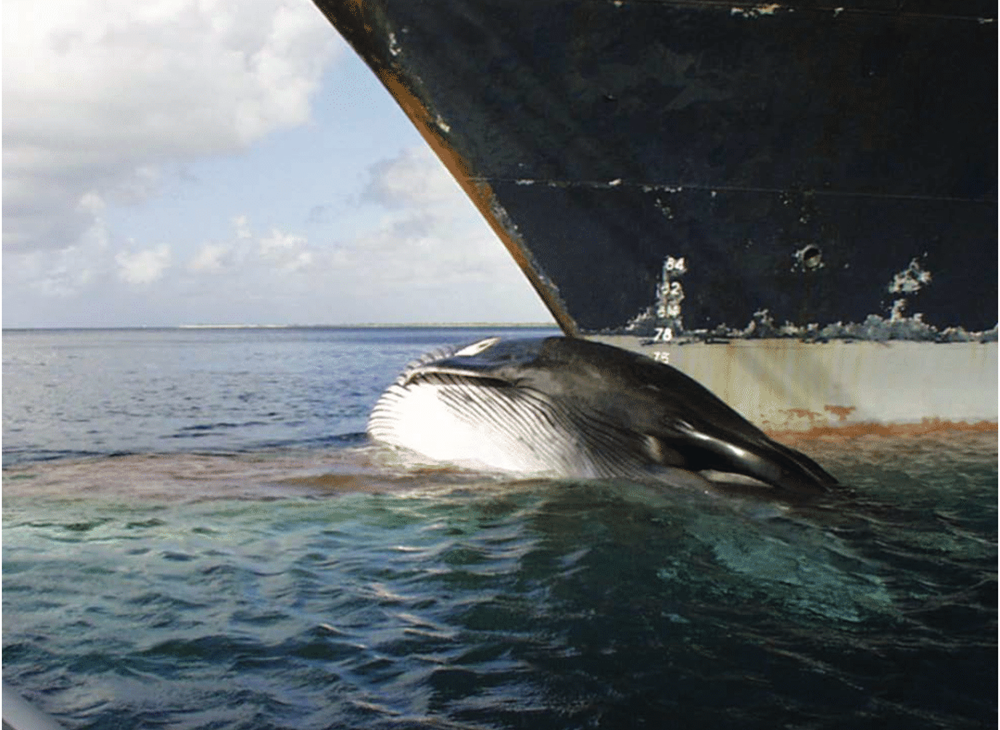
A struck whale can be carried unnoticed, far from the site of the collision
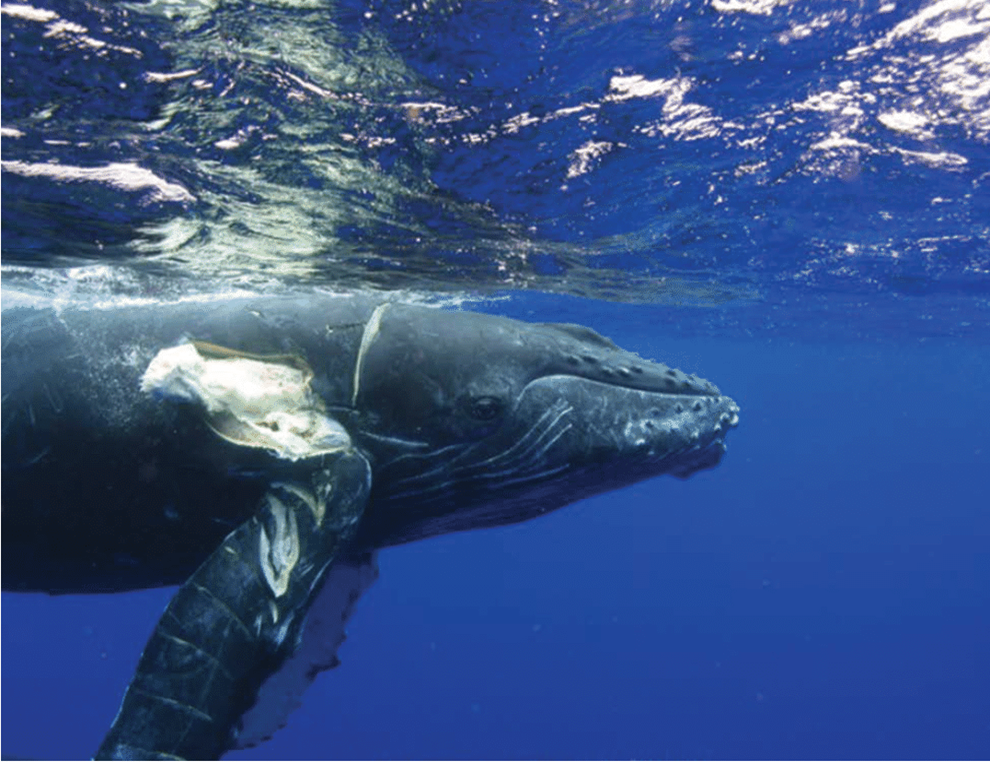
A ship struck humpback whale
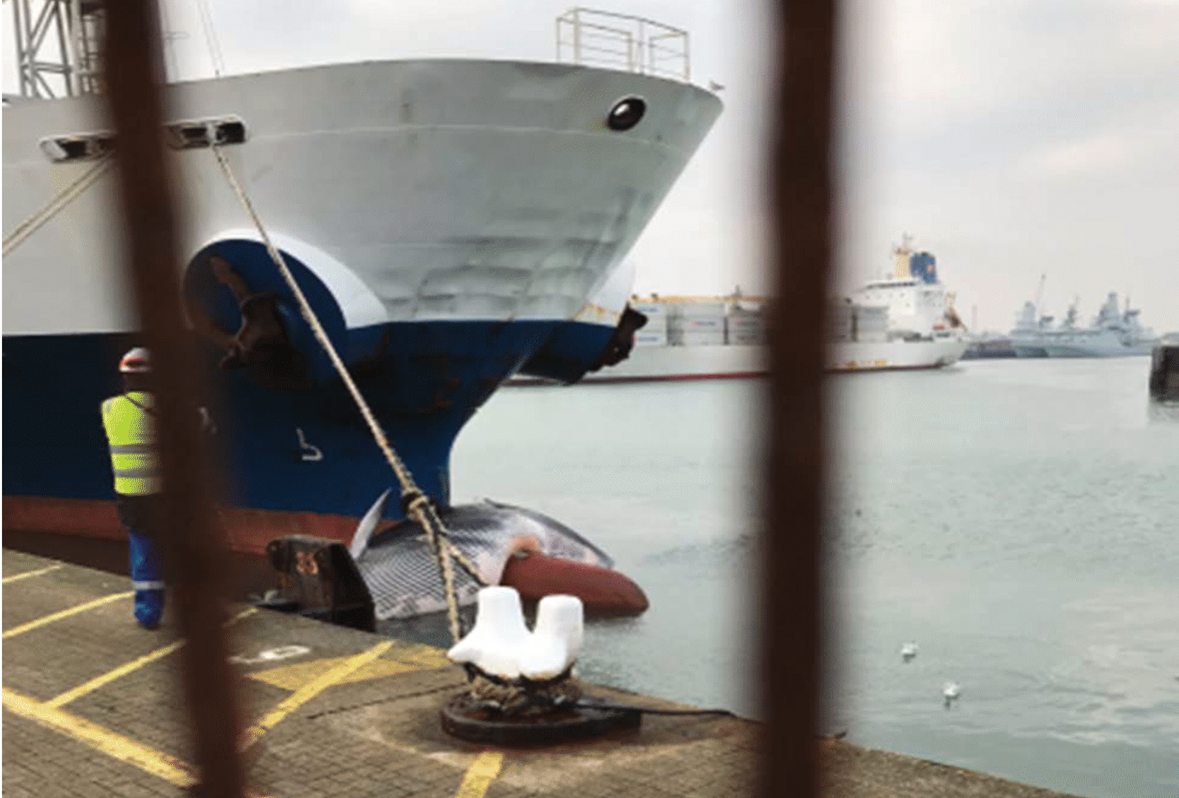
A 39 foot, male Bryde whale hanging limply over the bow of a tanker in the port of Mizushima, Japan
(D) Near Miss : A near-miss between a whale and a container vessel.
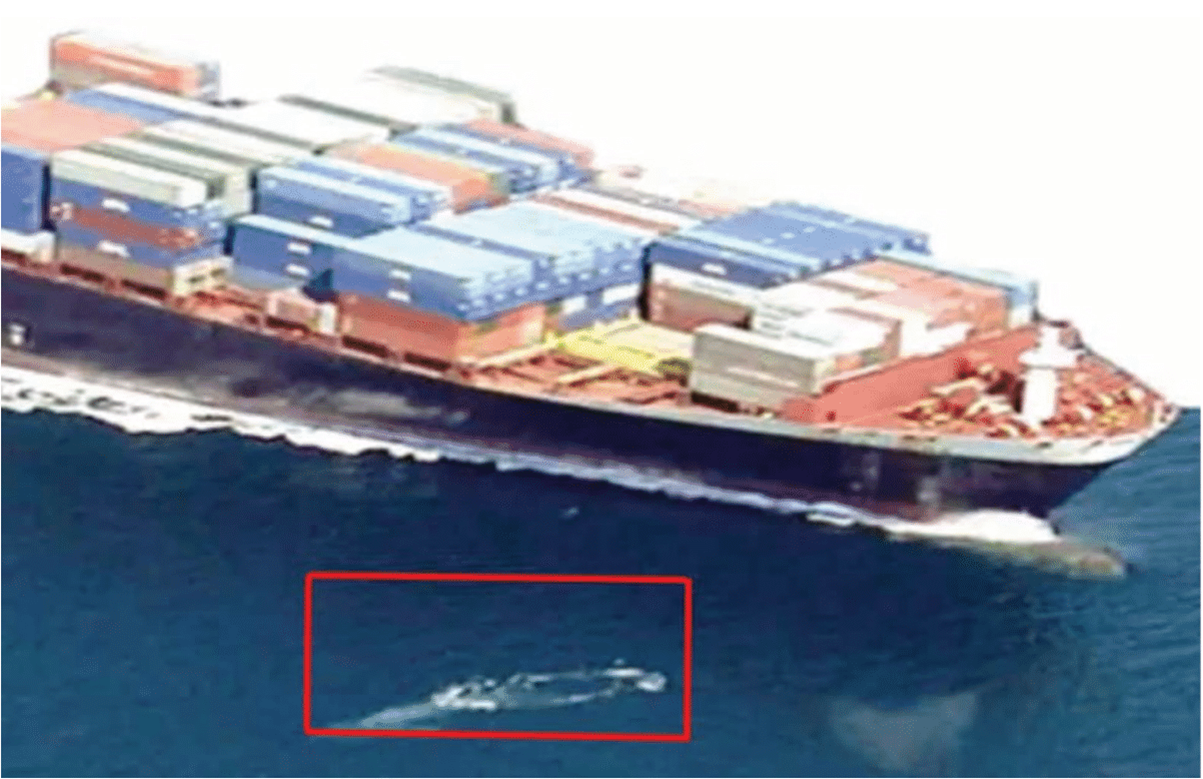
(E) High risk areas
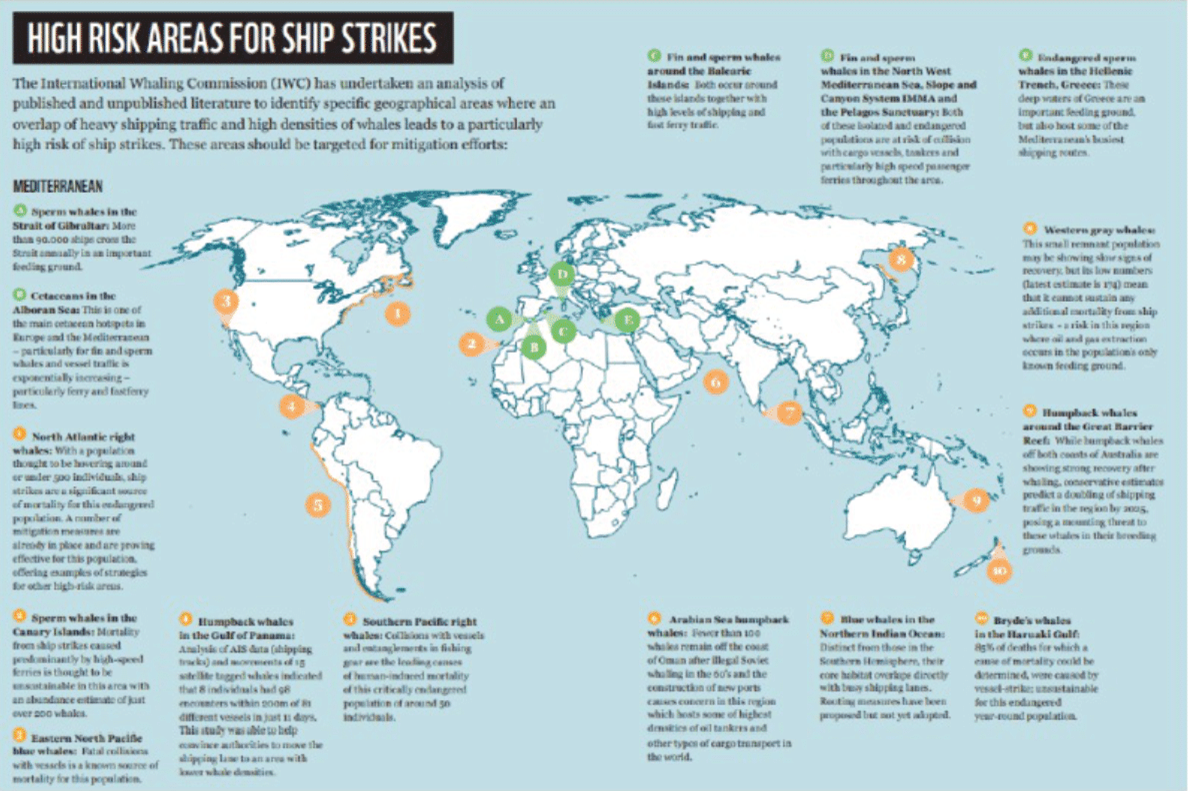
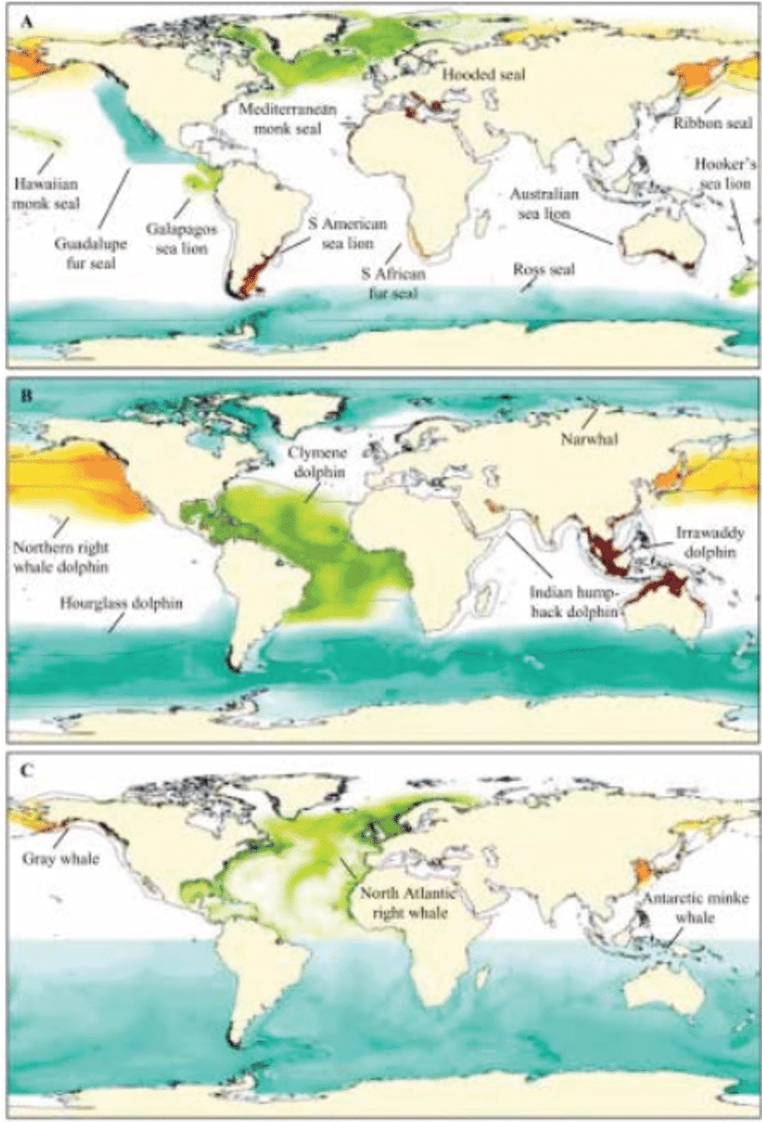
(F) Our commitment
In order to achieve our objectives, we have had one of the UK’s leading whale and dolphin conservation charities ORCA, train and certify our navigating officers on ‘Ship Strike Mitigation and Understanding Important Marine Mammal Areas’ prior to joining our vessels that are enrolled in the ORCA program.
These officers submit scientific survey information into the ORCA portal while at sea, contributing towards monitoring whales and dolphins globally to help identify important hotspots.
The vessels that are enrolled in the ORCA program are provided with a dedicated tablet with the ORCA OceanWatchers app installed, and reticle binoculars (rangefinder binoculars), which estimate the distance at which the mammal is spotted.
We have set the following KPIs for the enrolled vessels, this aligns with our corporate objectives.
ZERO disposal of food waste in areas identified as important for marine mammal population (IMMAs)
and particularly sensitive sea areas (PSSAs).ZERO incidents of the vessel entering the Sindhudurg-Karwar IMMA, we have achieved this by clearly
marking the IMMA and setting it as a ‘NO-GO Area’ on the passage plan.
(G) What are we trying to accomplish through this exercise?
Reduce mortalities and injuries to marine mammals as a result of ship strikes.
Anticipating the likelihood of whale interaction, rather than attempting to react to its presence.
Increase measures that reduce collision probability, such as re-routing and speedreduction/limits.
Adhere to mandatory and voluntary mitigation measures.
Improve reporting of incidents that do occur to ORCA and the IWC ship strike database.
Collect data and record sightings in the ORCA Oceanwatchers app.
Identify geographical hotspots.
Increase awareness about the issue and measures used to reduce this threat.
Our Ongoing Commitment
Precious Shipping Public Company Limited remains steadfast in its mission to protect marine life and foster sustainable communities. Through initiatives like these, the Company demonstrates how businesses can play a pivotal role in environmental stewardship, helping to ensure a healthier planet for future generations. Together, we will continue to take bold steps toward a sustainable future.
Employees — Plan & Guidelines
Has an Employee Management Plan
Yes
Plan Description
Employees
Equal Pay, Working Hours and Fair Employment Practices
The Company recognizes that employees are one more key success factor for the Company’s operations. The Company has committed to being a fair and caring employer, offering its staff equitable opportunities to develop and grow. The Company has a policy to provide equal opportunities in employment, job security, and career advancement, as well as adhering to other good principles related to employees and employment. The Company supports good relationships between all employees, including the management. The Company also gives importance to anti-discrimination throughout its operations and promotes diversity in its workforce at both the management and staff levels. The Company ensures its employee management complies with national labor laws and related regulations. In addition, the Company ensures that the process of employee termination is fair and is proceeded in accordance with the Company’s working regulations and the relevant laws.
Equal Pay and Non-Discrimination
The Company upholds the principle of equal pay for work of equal value, ensuring that compensation and benefits are determined based on role, qualifications, performance, and experience — without discrimination on the basis of gender, age, nationality, religion, or other protected characteristics.
Compensation structures are subject to periodic review to ensure fairness, competitiveness, and alignment with market benchmarks. The Company maintains a transparent grading and remuneration framework to prevent bias in salary determination, bonus allocation, and career advancement.
Working Hours and Overtime
The Company complies with applicable labor regulations and maritime conventions regarding working hours and rest periods.
Office-based employees’ working arrangements are structured in compliance with applicable Thai labor laws and regulations, including provisions relating to standard working conditions, overtime, and employee welfare.
Seafarers’ working hours and rest periods are managed in line with the Maritime Labour Convention (MLC, 2006) and relevant flag-state requirements to ensure adequate rest, safety, and well-being onboard.
Overtime work, where required by operational necessity, is voluntary (except in emergency situations), properly recorded, and compensated in accordance with legal requirements and Company policy.
Freedom of Employment and Human Rights
The Company strictly prohibits forced labor, child labor, wage withholding, unauthorized salary deductions, and any form of coercion. Employees and crew members retain possession of their personal identification documents and are free to terminate employment in accordance with contractual terms.
Monitoring and Governance
Compliance with labor standards is monitored through:
Internal audits and management reviews
MLC inspections for vessels
Grievance mechanisms accessible to both shore-based staff and crew members
Periodic review of compensation data to identify potential disparities
Employees Benefits
The Company has a policy to provide all employees access to equal remuneration for work of equal or comparable value. The Company provides remuneration to office employees as salary, bonus, and other benefits like provident fund on a voluntary basis, and health insurance, although the same is not required by law; it also provides welfare for employees as required by law, i.e. social security. The Company has established a Welfare Committee consisting of five employees from various departments to oversee employee well-being, consult with the management on employees’ welfare issues, provide advice and make recommendations to the Company regarding employee welfare. The Company ensures that it meets all labour protection law requirements in terms of leaves, holidays, working hours, severance pay, etc.
Provident Fund: The Company encourages its employees to save for their retirement, and therefore, commencing from 2017, the maximum allowable contribution to the provident fund from employees has been increased from 5% to 15%. The Company also arranges annual internal training on investment planning, saving, and financial management held by an asset management company to promote long-term savings and to assist the employees in their investment planning. Details of employees joining the employee provident fund are as follows:
Description | 2023 | 2024 | 2025 |
Percentage of employees joining employee provident fund (%) | 97% | 97% | 100% |
Total amount of provident fund contributed by the Company (Baht) | 5,735,013 | 5,967,362 | 6,250,694 |
Percentage of the total amount of provident fund contributed by the Company to total employee remuneration (%) | 5% | 5% | 5% |
Remuneration is based on their performance, roles, and duties, and incentives/increments/bonuses are also based on the financial status/performance of the individual and the Company. As a long-term incentive, the Company does not have an ESOP plan in place since the senior management feels that to a large extent, the share price of the Company depends on several factors beyond the employees’ direct control like the state of the international freight markets and therefore, the Company’s share price may not adequately reflect the better performance of the employees. The Company has implemented a profit-sharing scheme, which ensures that the employees are paid bonuses based on the performance of the Company against specified quantitative targets, which are laid down annually in advance. These long-term bonuses can be used to reward employees for their long-term loyalty, dedication, and hard work. Furthermore, these long-term bonuses can be used to attract and retain top talent within the organization.
Employee Engagement Evaluation through Employee Satisfaction Survey
The Company recognises that employee satisfaction is core to the long-term success of the Company. An employee survey is conducted to gauge employee satisfaction, identify areas of strength and find opportunities for improvement. The Company conducts an annual employee satisfaction survey, thereby providing employees with an opportunity to provide constructive feedback for the betterment of the organization.
Employee Development
The Company ensures that employees are adequately knowledgeable and skilled to perform their jobs for the Company’s business. The Company has a policy of promoting employee development by supporting them in developing their skills, abilities, and knowledge, keeping them updated following industry trends, as well as understanding the relevant code of conduct and practice. The Company provides in-house and external training for officers of the Company both at Head Office as well as on the vessels. Moreover, the Company allows special leave and flexible working hours for employees who are undergoing longer term professional or degree courses.
The Company has an 18-month young leadership program which provides recent graduates an opportunity to acquire on-the-job training in the commercial, technical and finance departments before embarking on a long-term career with the Company. This serves to ensure that the experience and skills of the current generation of managers are transferred to the next generation.
Training and development for office staff [GRI 404-2, 404-3]: The employees are encouraged to express their training needs and/or interests, so that the Company can provide suitable training to them as one of the tools for their career development. The costs of such training are borne by the Company.
Training and Development for seafarers [GRI 404-2, 404-3]
Over the years, the Company has not only acquired expertise in the field of ship management, but in the process, has developed a pool of highly qualified and competent staff, both, on-board and ashore. It is through this dedicated and loyal work force of floating staff, technical superintendents, and internal auditors that the Company has been able to achieve high standards of safety and quality in all aspects of ship operations. It is the Company’s policy to encourage and support competent and efficient seafarers and give them the opportunity to grow within the organization.
All ship officers are required to visit the head office for briefing before being assigned to vessels. Here, they are briefed and updated about new developments and practices in the industry. Regular updates are also sent to the vessels. Officers are often sent to attend value added courses to enhance their skills. The costs for these courses are borne by the Company.
The Company has introduced a mechanism whereby the officers and crew serving onboard our ships can send in their suggestions to the office. This will encourage the ship-staff to make effective contributions to the shipboard operations and help further improve the Company’s performance.
The Company has provided, on board the vessels, selected video training programs from the best available in the market.
To motivate the junior officers and to keep up with the process of learning while on board, senior officers are asked to interact with them actively. To measure their levels of competency, a computer-based competency test facility is provided on board. Based on the results of these tests, officers can determine their weaknesses and work to improve upon weak areas.
Maritime Training Centre & Bridge Navigation Simulator: The Company has set up a full-fledged maritime training center at its head office in Bangkok which includes a state-of-the-art bridge navigation simulator. The PSL training center, which commenced operations in March 2008, has given a solid foundation to the Company’s training activities and has enabled its officers and crew to keep abreast of the latest developments in ship operations. The bridge navigation simulator recreates the actual bridge on a ship as it enters a major port and provides ideal conditions in which to train officers and crew in ship-handling and navigation. In the last quarter of 2019, work was commenced to completely upgrade and revamp the bridge navigation simulator including a total renewal of all projectors, panels, consoles, hardware, and the software updated as per the requirements for our fleet. An upgraded bridge navigation simulator was installed in the first quarter of 2020.
The training center has developed and continuously improves all training courses, including English courses for marine engineers, navigating officers and crew at all levels. New courses are also being introduced to equip the navigation and engineering officers with the necessary knowledge to deal with new regulations like the global sulphur cap from January 2020 and new data collection and reporting requirements. To equip the officers with knowledge of new developments, the Company has taken the step of organizing specialized courses conducted by experienced and proficient guest teachers.
Courses conducted by PSL Training Centre:
The PSL training centre offers a variety of courses and training programs both licensing and tailored programs. The content of the following courses is tailored for ship officers to promote safety and efficient ship operations of deck and engine departments. In 2025, the Shipboard Safety Course for Officers and Ratings was merged into Maritime Occupational Safety and Health (M-OSH), a preventive approach focused on controlling shipboard risks, promoting safe work practices, proper PPE use, and a strong safety culture for safe ship operations.
Courses | Course objectives and benefits |
Maritime Resource Management Course (MRM) | The MRM course is generally accepted to be one of the most effective learning approaches to improving crew cooperation and minimizing the risk of accidents caused by human errors as well as failures in effective teamwork and resource management. |
Bridge Team Management and Competency Course (BTMC) includes Vessel Traffic Service (VTS) and Standard Marine Communication Phrases (SMCP) | This training course aims to train the ship’s masters and officers in effective bridge teamwork and resource management in various situations as well as bridge operations in emergencies. The course also develops our officers’ communication skills in communicating with a vessel traffic service (VTS) using various SMCPs through the VHF and GMDSS communication equipment in our bridge simulator. |
Electronic Chart Display and Information Systems (ECDIS) | This course aims to enhance navigational safety with the safe operation of ECDIS equipment, proper use of ECDIS-related information, and knowledge of the limitations of ECDIS equipment. |
Chief Mate Course (CMC) | To strengthen the professionalism and competence of chief officers and prepare experienced second officers for the chief mate rank. |
Command Course (Command) | The purpose of this course is for senior ship officers in all necessary skills and topics for the command. It includes modules for leadership, business and law, international sale of goods and related rules/codes/conventions, time charter and voyage charter, cargo matters and ship’s certificates, documentation, ship handling/ anchoring techniques, etc. |
Maritime Occupational Safety & Health (M-OSH) | This is a systematic and preventive approach to protecting the safety, health, and wellbeing of seafarers in the hazardous maritime working environment. It focuses on identifying and controlling shipboard risks, promoting safe working practices, ensuring proper use of personal protective equipment, and fostering a strong safety culture to prevent accidents, injuries, occupational diseases, and environmental harm, while supporting safe and sustainable ship operations. |
Maritime Professional Briefing (MPB) | This course aims to keep senior officers and engineers updated on new regulations and information. |
Maritime English training (divided into 5-course levels) programs | This course aims to improve all crew members’ English skills - speaking, listening, reading and writing. |
Mental Health Awareness for Seafarers | This is a proactive and preventive approach to supporting the psychological wellbeing of maritime personnel working in high-risk and demanding environments. Prolonged separation from family, confined living conditions, irregular work–rest cycles, multicultural crews, and operational pressure increase the risk of stress, fatigue, anxiety, depression, and emotional exhaustion. |
In response to the needs of the trained engineers to serve on vessels fitted with new generation main engines from MAN Diesel & Turbo and Wartsila, the PSL training center liaises very closely with the technical department and the engine manufacturers to continuously upgrade the training courses which were first introduced even before the vessels were delivered. Furthermore, the Company reinforces the training courses that our engineers undergo before embarking on their assignments aboard ships.
Courses | Course objectives and benefits |
Wartsila RT-Flex Engine Familiarization | To familiarize the engineers with the Company’s new type of engine “Wartsila RT-Flex Electronic Engine” before they join a ship equipped with this type of engine. This course focuses mainly on the practice part. |
Engine RT-Flex Operation and Practical Advanced | This course aims to train all engineers for the operation and practice of the RT-Flex engine at a higher level to familiarize the engineers with the utmost operational function of the engine RT-Flex. |
MAN Diesel Engine ME-B & ME-C Basic Control System | To familiarize the engineers with the company’s new “MAN Diesel Engine” (ME) before they join a ship equipped with this type of engine. This course focuses mainly on the practice part. |
MAN Diesel Engine ME-C Advanced Troubleshooting | The purpose of this course is to familiarize the engineers with all possible problems which may arise from the operation of the ME engine with the most effective troubleshooting. |
Engine Room Management and Competency Enhancement (EMC) | This course aims to train senior engineers (chief engineers and 2nd engineers) in various management and competency knowledge and skills that are required for the safe and efficient running of the ship. |
Engineer on Watch (EOW) | This course aims to train junior engineers in watch-keeping duties, engine parameters monitoring, operation and maintenance, safety and pollution prevention, and record-keeping. |
EMS Awareness and Shipboard Safety | This training course is designed to keep senior officers and engineers updated on policy and incidents relating to environmental and safety onboard, with an emphasis on environmental awareness as well as an improvement in all duties’ safety working. |
Occupational Health & Safety [GRI 403-1, 403-2, 403-5, 403-6]
The Company recognizes that respect for human rights is the foundation of human resources’ improvement, which adds value to the business. Moreover, human resource is a key success factor for business and adds value to the Company in all aspects. It is the Company’s policy to conduct its activities in a manner that promotes the health and safety of its employees so that the actions of the Company, and its employees, promote the health and safety of others too. The Company accords the same weightage to health and safety factors as it does to commercial and operational factors. To this end, the health and safety responsibilities of all personnel have been defined and allocated.
Occupational Health & Safety Policy
The Company is committed to conducting business with the highest standards of safety, occupational health, and environmental conditions, by focusing on the effective management of safety, occupational health, and environmental factors within work environments. The following Company guidelines concerning safety, occupational health, and environment should be followed:
The Company shall comply with all legislations and regulations relating to safety, occupational health, and environmental requirements in all locations in which the Company operates.
The Company shall follow practices that constantly ensure that its working environment is safe for the protection of life and property of the Company and its employees.
The Company shall encourage health and safety awareness at all levels and promotes procedures and practices that ensure environmental protection taking into account current legislation and industry codes and practices.
The Company shall fully disclose all information regarding its operations and standards in relation to safety, occupational health, and the environment.
We are dedicated to ensuring the safety, occupational health and well-being of all individuals involved in our operations, including employees, contractors, and those under our supervision. Our goal is to provide a safe, healthy, and hazard-free working environment for everyone.
Our Approach to Health and Safety Management
We adhere to the highest safety standards, with policies aligned with ISO 9001 requirements and the International Maritime Organization’s (IMO) International Safety Management (ISM) Code.
We actively consult and engage our employees both onboard and ashore to foster a collaborative approach to identifying hazards, assessing risks, and implementing effective safety measures.
We commit to continuously improving the performance of our occupational health and safety management system by setting clear objectives, reviewing performance, and incorporating industry best practices.
We systematically assess and prioritize risks to ensure action plans are developed and implemented to mitigate workplace hazards effectively.
Safety Management System Onboard Vessels
The Company’s Safety Management System (SMS) is intended to affirm that the Company achieves its purpose in this area and is based on the philosophy that accidents can be prevented by the identification and management of risk. The Quality & Safety Policy Manual contains the Company policies in compliance with the standards of ISO 9001 and requirements of IMO’s ISM Code. The quality procedures contain a summary of the procedures that the Company operates and maintains.
General practices for safety on the vessel are as follows:
Regularly develop and implement a Safety Management System (SMS) that covers all aspects of shipboard safety and provides guidelines and procedures for crew members to follow in case of an emergency.
Inspect and maintain all shipboard equipment, including fire-fighting equipment, lifesaving appliances, and navigation systems.
Identify potential hazards and assess the associated risks to minimize the likelihood of an accident or incident.
Established a reporting system for incidents, accidents, and near-misses to help identify areas for improvement and prevent future incidents.
Provide regular training and drills to your crew to ensure they are familiar with emergency procedures and know how to respond in case of an accident or incident.
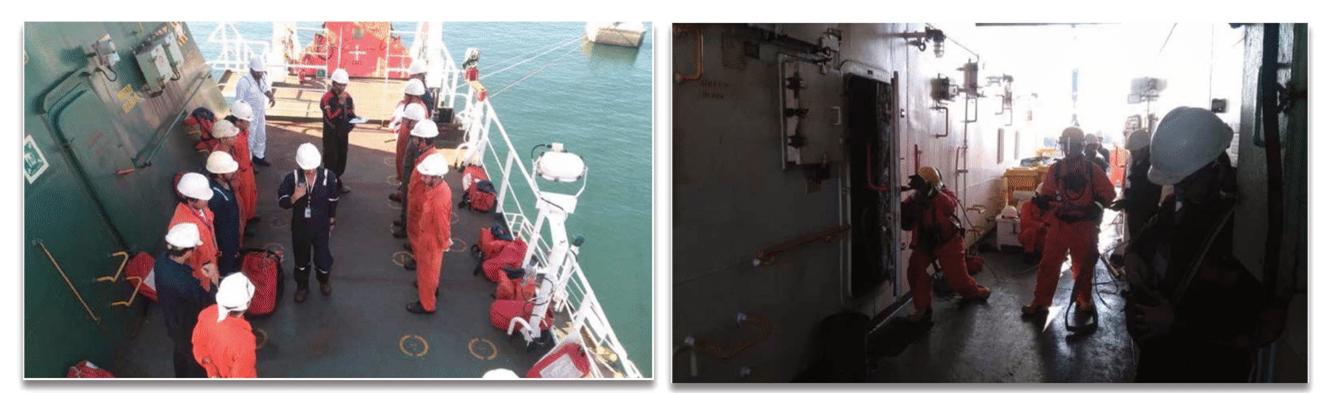
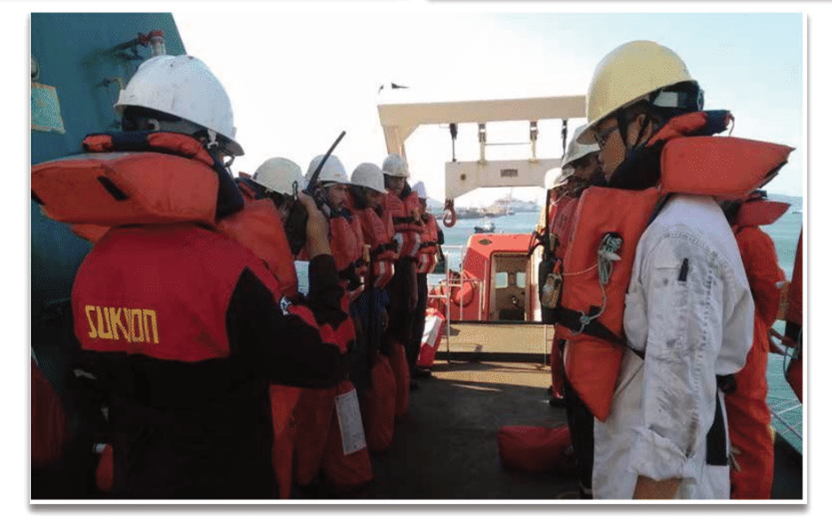
Our crew members receive training in using emergency breathing devices, such as the Emergency Escape Breathing Device (EEBD) and the Self-Contained Breathing Apparatus (SCBA), to protect against inadequate oxygen, dust, gases, and vapors on ships including fire drills which are held onboard vessels twice a month.
The Company also has a Drug and Alcohol Abuse Policy. It is based on the recommendations contained in OCIMF’s “Guidelines for the Control of Drugs and Alcohol On board Ship”. They are detailed in the safety management system available on all vessels and displayed for all crew members.
Ensuring that each crew member gets enough rest is a necessity. To avoid fatigue and stress related accidents on board, minimum rest periods have been recommended by STCW 95 convention and ILO Convention 180. Both these conventions have undergone considerable amendments. As a result, the requirements have become more stringent. STCW 2010 Manila amendments are effective from January 2012 whereas ILO 2006, which is known as MLC (Maritime Labor Convention) 2006, was ratified in August 2012 and became effective in August 2013. Both Thailand and Singapore, the flag states of the vessels in our fleet, have ratified the Maritime Labour Convention. All the Company’s vessels are fully compliant with the MLC requirements.
The Company’s medical fitness requirements are higher than the standards set by International Labour Organization (ILO) and other regulatory bodies. As a result, the Company finds very few cases of fitness or sickness related problems amongst its seafarers.
Employee Well-Being and Care
The Company recognizes that the well-being of its employees, both onboard vessels and at onshore offices, is fundamental to operational excellence, safety, and long-term sustainability. We are committed to providing a safe, supportive, and caring working environment that promotes physical health, mental well-being, and work–life balance, particularly during periods of heightened operational and global challenges.
Onboard Vessels: Seafarer Welfare and Care
The Company places the highest priority on the safety, health, and welfare of its seafarers, who operate in demanding environments and often spend extended periods away from their families. Comprehensive measures are in place to support their physical and mental well-being, including safe working conditions, appropriate rest hours, onboard amenities, access to medical care, and regular communication with shore management.
During the COVID-19 pandemic, the global maritime industry faced unprecedented challenges, particularly with respect to crew changes. International travel restrictions and port controls resulted in many seafarers being unable to disembark upon completion of their contracts, leading to extended periods at sea away from their families.
In response, the Company made every effort to ensure that its crew members were repatriated safely and responsibly. This included diverting vessels to alternative ports, including Thai and Indian ports, to facilitate crew changes for Thai and Indian seafarers, even where such diversions provided no financial or economic benefit to the Company. These actions reflected our commitment to seafarer welfare and our belief that the well-being of our people must take precedence over short-term commercial considerations.
In addition, strict health and safety protocols were implemented onboard all vessels to minimize infection risks. These measures included controlling and limiting onboard visitors at ports, health screening of essential visitors such as port officials and surveyors, mandatory use of personal protective equipment (PPE), and adherence to social distancing requirements while onboard. Enhanced hygiene practices and monitoring procedures were also maintained throughout the fleet.
Onshore Offices: Employee Health, Safety, and Well-Being
For onshore employees, the Company is committed to providing a safe, healthy, and supportive workplace that fosters employee engagement, comfort, and productivity. During the COVID-19 pandemic, work-from-home arrangements were introduced for office employees to minimize health risks while ensuring business continuity. The Company continues to closely monitor public-health developments, particularly in Thailand, to enable timely and appropriate responses.
Additional preventive measures implemented at onshore offices included social distancing protocols, temperature screening, mandatory mask requirements, and the increased use of virtual meetings to reduce physical contact. These measures were complemented by clear internal communications and guidance to support employees during periods of uncertainty.
Beyond health protection, the Company promotes employee well-being through thoughtfully designed workplace facilities that support rest, recovery, and work–life balance. Dedicated employee well-being spaces provide a comfortable environment for relaxation during the workday, helping employees recharge and return to work refreshed. In addition, a dedicated breastfeeding room has been established to support nursing mothers, offering a private, safe, and comfortable space that respects employees’ family responsibilities and promotes an inclusive workplace culture.
Plan Areas
| Plan Area |
|---|
| Fair employee compensation |
| Employee training and development |
| Promoting employee relations and participation |
| Occupational health and safety in workplace |
Employees — Workforce
Workforce Data
| Metric | Current Year | Previous Year | Two Years Ago |
|---|---|---|---|
| Total number of employees (Persons) | 140 | 132 | 138 |
| Number of male employees (Persons) | 59 | 58 | 64 |
| Number of female employees (Persons) | 81 | 74 | 74 |
| Total employment of disabled persons (people) | |||
| Total disabled employees (people) | |||
| Total male disabled employees (people) | |||
| Total female disabled employees (people) | |||
| Total disabled workers who are non-employee (people) | |||
| Contributions to the fund for promoting and improving the quality of life for disabled persons | |||
| Total number of male employees in operational level (Persons) | 12 | 13 | 18 |
| Total number of male employees in management level (Persons) | 39 | 37 | 37 |
| Total number of male employees in executive level (Persons) | 8 | 8 | 9 |
| Total number of female employees in operational level (Persons) | 61 | 64 | 58 |
| Total number of female employees in management level (Persons) | 16 | 6 | 12 |
| Total number of female employees in executive level (Persons) | 4 | 4 | 4 |
Employees — Remuneration & Provident Fund
Remuneration & Provident Fund
| Metric | Current Year | Previous Year | Two Years Ago |
|---|---|---|---|
| Total disabled employees (people) | 366,553,800.75 | 420,663,578.72 | 389,094,197.36 |
| Total male employee remuneration (Baht) | 267,091,907.5 | 310,510,070.23 | 290,680,865.85 |
| Total female employee remuneration (Baht) | 99,461,893.25 | 110,153,508.49 | 98,413,331.51 |
| Number of employees eligible to participate in PVD (persons) | 120 | 112 | 127 |
| Total number of employees joining employee provident fund (Persons) | 120 | 109 | 113 |
| Percentage of total number of employees joining employee provident fund to total number of employees (%) | 85.71 | 82.58 | 81.88 |
| Number of PVD members / Total eligible employees (%) | 100 | 97.32 | 88.98 |
| Total amount of provident fund contributed by the Company (Baht) | 6,250,694 | 5,967,362 | 5,735,013 |
| Total amount of provident fund contributed by employee (baht) | 9,573,198 | 9,252,817 | 8,836,694 |
Employees — Training & Development
Training Data
| Metric | Current Year | Previous Year | Two Years Ago |
|---|---|---|---|
| Average employee training hours (Hours / Person / Year) | 44.84 | 41.84 | 38.7 |
| Employee development and training expenses (baht) | 3,914,778.8 | 2,246,430.52 | 2,260,054.75 |
Employees — Occupational Health & Safety
Occupational Health & Safety Data
| Metric | Current Year | Previous Year | Two Years Ago |
|---|---|---|---|
| Total number of lost time injury incidents by employees (Cases) | 3 | 2 | 0 |
Employees — Labour Relations
Labour Relations Data
| Metric | Current Year | Previous Year | Two Years Ago |
|---|---|---|---|
| Total voluntary resignations (Persons) | 5 | 6 | 2 |
| Male employees who voluntary resigned (Persons) | 0 | 4 | 2 |
| Female employees who voluntary resigned (Persons) | 5 | 2 | 0 |
| Percentage of employee turnover leaving the Company voluntarily (%) | 3.57 | 4.55 | 1.45 |
| Evaluation result of employee engagement | 1 | 1 | 1 |
Employees — Employee Representation
Employees Are Represented Collectively
Yes
Forms of Representation
| Form |
|---|
| Welfare committee |
Employees — Targets
Has Set Employee Targets
Yes
Targets
| Indicator | Target Areas | Target Year | Target Year — Description |
|---|---|---|---|
| Employee satisfaction | 2985 · Description: Promoting employee relations and participation | 2,026 | Achieving employee
satisfaction rates of at
least 80% |
| Lost Time Injury frequency rate | 2988 · Description: Safety and occupational health at work | 2,026 | LTIFR rate: A maximum of two incidents per million working hours |
| Attendance rate for cybersecurity awareness training sessions | 2984 · Description: Employee training and development | 2,026 | Maintain a 95% attendance rate for cybersecurity awareness training sessions. |
| Employee fatalities LTIFR rate: | 2988 · Description: Safety and occupational health at work · 2990 · Other name: Lost Time Injury Frequency Rate (LTIFR) rate: A maximum of two incidents per million working hours. · Description: Others | 2,026 | Zero employee fatalities due to work-related injury.
LTIFR rate: A maximum of two incidents per million working hours. |
Employees — Performance & Outcomes
Has Performance Results
Yes
Performance Description
The Company recognizes that employees are one more key success factor for the Companys operations. The Company has committed to being a fair and caring employer, offering its staff equitable opportunities to develop and grow. The Company has a policy to provide equal opportunities in employment, job security, and career advancement, as well as adhering to other good principles related to employees and employment. The Company supports good relationships between all employees, including the management. The Company also gives importance to anti-discrimination throughout its operations and promotes diversity in its workforce at both the management and staff levels. The Company ensures its employee management complies with national labor laws and related regulations. In addition, the Company ensures that the process of employee termination is fair and is proceeded in accordance with the Companys working regulations and the relevant laws.
Empowering Women at Sea
In 2025, the Company continued its groundbreaking initiative of providing scholarships to female cadets, building on the significant milestone achieved in 2023 when the program was introduced for the first time in our history. This initiative reflects the Company’s unwavering commitment to promoting gender equality in the maritime industry and fostering an inclusive work environment. The Company’s scholarship program not only breaks gender barriers but also enables female cadets to undertake sea time on board Precious Shipping vessels as part of their graduation requirements. This progressive approach signifies the Company’s commitment to providing equal opportunities for both men and women in traditionally male-dominated maritime professions.
This year, we proudly witnessed a historic milestone: one of our former female cadets has now become the Company’s first female junior officer. Her achievement reflects the clear career pathway that Precious Shipping provides for women and demonstrates that capability, not gender, defines potential in our fleet. At the same time, our current female cadets continue to work tirelessly at sea, consistently proving that they can perform every duty expected of their male counterparts. They represent the future of women in maritime—determined, resilient, and ready to grow into our next generation of officers.
Precious Shipping has established comprehensive policies and guidelines to address safety concerns and prevent sexual harassment both at its shore office and onboard the Company’s vessels. The Company recognizes the importance of fostering a safe and respectful working environment for all employees, irrespective of gender. To ensure the effective implementation of these policies, the Company conducts training sessions for shore-based employees and seafarers at all levels, reinforcing a culture of vigilance, mutual respect, and zero tolerance for harassment. Our commitment is not only to protect our people but to empower them, ensuring every seafarer feels safe, valued, and confident in reporting concerns without fear.
The Company’s commitment remains closely aligned with the UN Sustainable Development Goals especially Goal 5 (gender equality) and Goal 8 (decent work and economic growth). In 2025, we strengthened our focus on creating real, measurable progress for women in maritime careers. Gender equality is not merely a principle we endorse, it is a transformation we actively drive. By supporting female cadets, enabling career progression, maintaining strong safety and anti-harassment frameworks, and encouraging women to pursue seafaring roles, Precious Shipping is helping shape a more inclusive maritime sector. Each barrier broken, each career advanced, and each safe workplace protected brings us closer to an industry where women can thrive equally, confidently, and proudly.
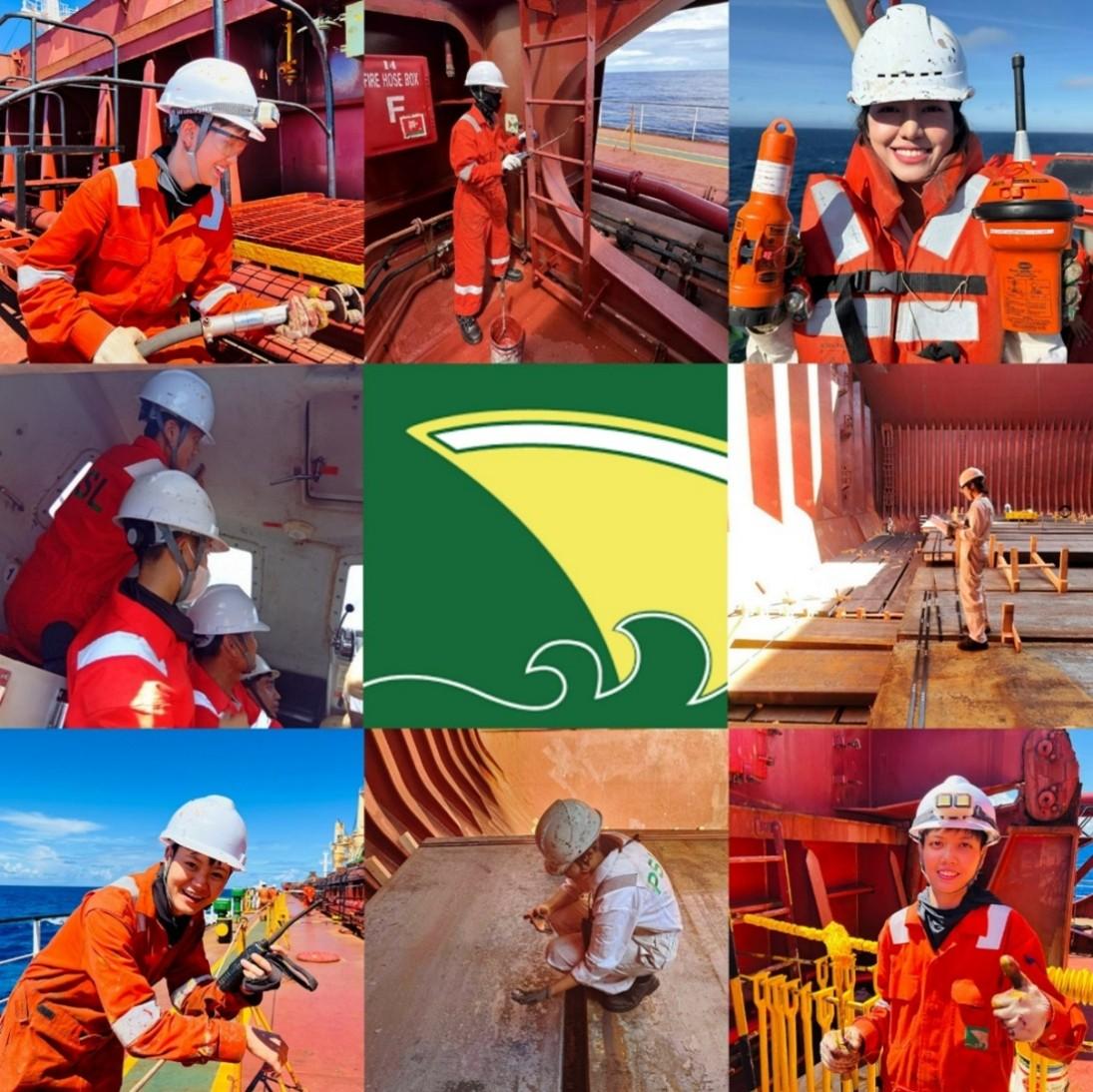
In 2025, online employee satisfaction surveys were conducted for onshore personnel as well as crew members onboard vessels. The employee satisfaction survey results have been presented in the below table:
Description | Percentage of employee satisfaction rate | ||||||
Onshore staff members | Floating staff members | Target | |||||
2023 | 2024 | 2025 | 2023 | 2024 | 2025 | 2026 | |
Percentage of employee engagement | 91% | 93% | 95% | 84% | 88% | 95% | 80% |
Employee satisfaction rate results: | |||||||
Are you satisfied working for the Company? | 88% | 88% | 83% | 89% | 93% | 92% | 80% |
Employees agreed to recommend the Company as a good place to work. | 78% | 79% | 78% | 98% | 91% | 95% | 80% |
I feel like I am a part of the Company. | 86% | 89% | 82% | 79% | 81% | 89% | 80% |
To improve the employee satisfaction survey, the Company has promptly responded to feedback collected through the surveys, addressing concerns and implementing necessary improvements as a testament to its dedication to employee well-being.
In line with its commitment to maintain high ethical standards and good corporate governance practices, the Company has in place a group-wide whistle-blowing policy and encourages all employees to report any possible improprieties on a confidential basis without fear of recrimination. The employees are free to express their opinions and concerns and provide feedback via email or mail. In 2025, there were zero cases of discrimination and zero human rights violations.
Training and Development
In 2025, the Company conducted training and development programs for office staff, totaling 7 courses and 3,556 manhours. Additionally, the Company conducted training and development programs for seafarers, totaling 20 courses and 44,196 training hours.
Occupational Health & Safety Performance Disclosure
The Company monitors workplace safety performance using the Lost Time Injury Frequency Rate (LTIFR), calculated as the number of lost time injuries per 1,000,000 working hours.
Targets:
LTIFR rate: A maximum of two incidents per million working hours.
Zero employee fatalities due to work-related injury.
Performance indicators:
Safety, occupational health, and environment at work | Unit | 31-Dec-24 | 31-Dec-25 |
Total number of hours worked by all employees (on board and ashore) | Hours | 4,628,000 | 4,668,300 |
Total number of lost-time injury accidents by all employees (office-based) | Case | 0 | 0 |
Total number of lost-time injury accidents by all employees (onboard vessels) | Case | 2 | 3 |
Loss time injury frequency rate (LTIFR) – Office-based employees | Times/Million working hours | 0 | 0 |
Loss time injury frequency rate (LTIFR) – Crew onboard vessels | Times/Million working hours | 0.43 | 0.64 |
The number of employee fatalities resulting from work-related injuries | Person | 0 | 0 |
Percentage of employees’ fatalities resulting from work-related injuries | % | 0% | 0% |
Performance remained generally stable compared to 2024, with no work-related fatalities recorded across all operations. The LTIFR for crew members reflects the operational exposure inherent in maritime activities, while the office-based workforce maintained a zero lost-time injury record. The Company continues to strengthen its safety management systems, onboard training programs, hazard identification processes, and near-miss reporting to reduce incident rates.
Piracy: The Company’s ships are exposed to the threat of piracy when sailing through high-risk areas, and the officers/crew sailing onboard are under tremendous pressure when sailing through such areas where armed pirates are known to attack. This is especially true of the Indian ocean/ Arabian sea area, extending from the mouth of the Persian Gulf in the north to Madagascar in the south. The Company takes this threat very seriously and ensures all ships are routed outside these areas and closer to the Indian coast. Where this is not possible for any reason, the Company engages security guards to sail with the vessel for the passage through these high-risk areas. In any case, all ships transiting through the high-risk areas are ‘hardened’, amongst other things, by rigging barbed razor wire around the ship thereby making it harder for the pirates to climb onboard the Company’s ships. The Company is committed to doing everything possible to ensure safety of the ship and officers/crew.
Automated Mutual Assistance Vessel Rescue System (AMVER): Sponsored by the United States Coast Guard (USCG), AMVER is a unique, computer-based, and voluntary global ship reporting system used worldwide by search and rescue authorities to arrange for assistance to persons in distress at sea. The Company continues to be involved in the AMVER program and its good performance is recognized by the USCG in the form of AMVER awards given to the Company every year through their representative at the United States Embassy in Bangkok. A quote from the USCG citation letter would perhaps reflect what this award is all about: “you can take pride in the voluntary commitment of your officers and crew to the safety of life at sea”.
Teamwork: Unlike several ship owning Company’s, which outsource the technical management of its ships, the Company’s ship-management company, viz. Great Circle Shipping Agency Limited (GCSHIP) is a wholly-owned subsidiary of the Company. The staff of the ship-management company work as one team under the same roof. Regular weekly meetings are also conducted between the ship management and commercial teams to sort out all operational issues and discuss the status of future plans. Good co-ordination is achieved in all areas of ship operation by this arrangement. Besides ISM code certification, GCSHIP is also certified for Quality Management System “ISO 9001: 2015” and has obtained certification for their Environment Management System “ISO 14001:2015”.
Fire Drill and Evacuation Training
At PSL, we believe that the foundation of any successful business lies in the health and safety of its people. On September 26, 2024, we conducted our Annual Fire Drill and Evacuation Training, underscoring our deep commitment to the well-being of our employees. This essential event is more than just a regulatory requirement; it is a proactive step towards fostering a safe work environment where everyone can thrive. Through realistic simulations of emergency scenarios, employees were given the opportunity to familiarize themselves with critical safety procedures and evacuation protocols. This experience ensures that every individual knows how to act swiftly and safely in the event of an emergency, reinforcing our priority of safeguarding the lives of those who are integral to our company’s success.
Last year, we conducted Basic Firefighting Training to promote safer workplaces, this initiative was born out of the recognition that equipping our workforce with essential knowledge about fire behavior and propagation is crucial to fostering a secure working environment. The comprehensive training program provided participants with hands-on experience in using various fire extinguishing methods, instilling the confidence and skills needed to respond effectively to fire-related incidents.
The benefits of this training extend far beyond the immediate context of emergency preparedness. By providing employees with hands-on experience in managing high-pressure situations, we enhance their ability to remain calm and composed during real-life emergencies. It also promotes a sense of unity, as employees learn to work together, communicate effectively, and rely on each other’s strengths to ensure the collective safety of the team. This training is part of our larger commitment to creating a culture of safety at PSL, where employees are not only equipped with the knowledge and skills to protect themselves but are also assured that their well-being is a core value of the company. Our approach fosters a supportive work environment, making PSL a place where employees can confidently focus on their work, knowing that their safety is in good hands.
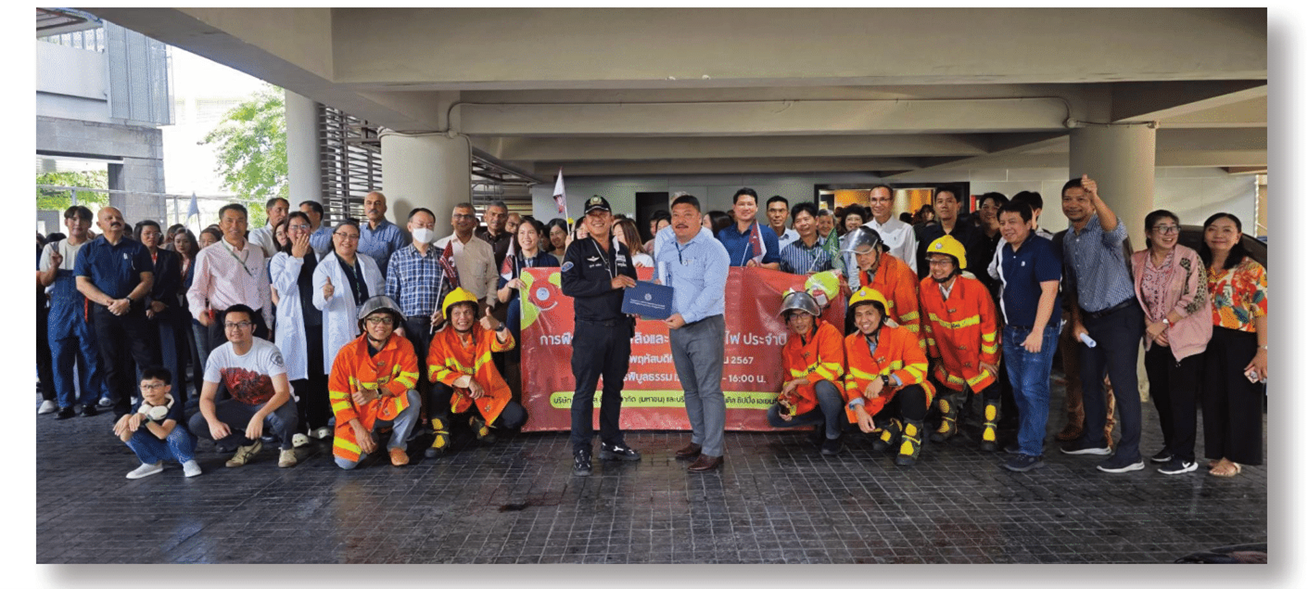
This initiative also aligns with our commitment to the SDG 3: Good Health and Well-Being. By prioritizing safety and emergency preparedness, we contribute to the physical and mental well-being of our employees, ensuring that they work in a secure and supportive environment. Our fire drill and evacuation training are a testament to how PSL goes beyond conventional safety measures, investing in the holistic well-being of our team. This commitment not only supports our people but also strengthens the long-term sustainability of the company by fostering a healthy, engaged workforce. As a forward-thinking company, we understand that employee safety is not just about risk management—it’s about creating a foundation for growth and success. Through these efforts, we are setting a positive example for how companies can prioritize both human capital and business excellence in tandem.
Customers — Plan & Guidelines
Has a Customer Management Plan
Yes
Plan Description
Customer Relationship Management
The Company recognizes that its success depends on adding value to customers by transporting goods cost-efficiently and reliably. As maritime shipping is a 24/7 business, it is imperative that company employees, both ashore and onshore, respond to customer needs promptly and substantively. The Company strives to offer solutions to the Customer’s issues, even if its vessels are not involved, as long as they are within the bounds of the agreed contract. The Company is happy to report that its service is well appreciated, and many first-class charterers prefer to do business with the Company over others in the market.
Customer Privacy
For customer privacy, the Company insists on protecting customers’ confidential information from loss, theft, misuse, unauthorized disclosure, modification, and unauthorized destruction. The Company handles complaints through phone lines, emails, and letters to and from customers. The Company always prioritizes the principles of transparency and responsibility in providing services to its customers to meet the commitment to provide the best service, provide a rapid response to various requests and complaints as part of a service commitment and maintain the confidentiality of its customers. During the reporting period, there have been no complaints whatsoever regarding the mentioned issues and no financial penalties or other sanctions associated with the violation of the confidentiality of customers’ data.
Plan Areas
| Plan Area |
|---|
| Development of customer satisfaction and customer relationship |
| Protection of customer personal information |
Customers — Satisfaction Results
Customer Satisfaction Results
| Metric | Current Year | Previous Year | Two Years Ago |
|---|---|---|---|
| Evaluation results of customer satisfaction | 1 | 1 | 1 |
Customers — Targets
Has Set Customer Targets
Yes
Targets
| Indicator | Target Areas | Target Year | Target Year — Description |
|---|---|---|---|
| Customer satisfaction rates | 3009 · Description: Development of customer satisfaction and customer relationship | 2,026 | Achieve at least 50% very satisfied
customer satisfaction rates for the following performances of
1. the master and ship
staff and
2. the performance
of PSL's operations team |
| Data Privacy and Customer Confidentiality | 3010 · Description: Consumer data privacy and protection | 2,026 | Zero regulatory fines, penalties, or sanctions arising from non-compliance with applicable data protection laws and regulations |
Customers — Performance & Outcomes
Has Performance Results
Yes
Performance Description
The Company recognizes and promptly engages with customer feedback, demonstrating the value placed on their opinions. We collected feedback from various sources, including emails, customer surveys, social media, and other channels, and thoroughly analyzed this input to identify trends and gain insights into the strengths and areas for enhancement within the business.
In 2025, no customer complaint was received. Customer feedback is continuously monitored to evaluate the effectiveness of the implemented changes. By engaging in iterative feedback cycles, we ensure responsiveness and enhance our ability to adapt to evolving customer needs.
Community & Social — Plan & Guidelines
Has a Community & Social Plan
Yes
Plan Description
Social and Community Development
The Company recognizes that a strong community and society are critical pillars for its long-term success. Committed to meaningful social responsibility, the Company actively engages in diverse community initiatives throughout the year, going beyond legal requirements to create tangible, positive impact. By integrating social accountability into its core operations, the Company ensures that its business contributes to the well-being and development of the communities it touches. The establishment and expansion of the Company’s CSR Fund provides a formal, sustainable framework to strengthen and scale these initiatives—enabling innovative, high-impact programs that respond to evolving societal needs and reflect the Company’s vision of responsible, inclusive growth.
CSR Philosophy and Commitment
The Company is committed to conducting its business in accordance with the principles of Good Corporate Governance, operating ethically, and striving to contribute positively to society and the environment. The Company recognises its unique role, with its vessels flying the Royal Thai flag and operating globally, and therefore acts as a representative of Thailand to the international community. The Company takes this responsibility seriously and integrates social responsibility into its business practices.
Corporate Social Responsibility (CSR) is one of the Company’s key priorities and is embedded in its Mission Statement and Core Values. Through its CSR initiatives, the Company aims to create sustainable value for communities, employees, and other stakeholders while supporting long-term social and environmental well-being.
CSR Policy and Reserve Allocation
The Company allocates 0.50% of net profit for each year to its CSR reserve, subject to a minimum of Baht 1.75 million and a maximum of Baht 25 million per year. The utilisation of the CSR reserve is determined by senior management and/or the Board of Directors, as appropriate, and is reviewed periodically or at least once a year by the Board of Directors.
For the year 2025, the Company reserved Baht 2.14 million as CSR reserve. As of 31 December 2025, the balance of the CSR reserve amounted to Baht 55.37 million
2025 Summary Corporate Social Responsibility (CSR) Program
CSR Activities | Amount (Million Baht) |
Scholarship to students of MMTC and Kasetsart University | 1.03 |
Donation to Mechai Pattana School | 1.00 |
Donation to organisations associated with marine mammals (e.g. ORCA, CETACEA, etc.) | 0.17 |
Maritime Anti-Corruption Network – Membership | 0.32 |
Scholarship programs for the children of community members | 0.59 |
The Hom Pha Hai Nong Project by MMTC, supporting community infrastructure in schools located in remote rural areas | 0.31 |
Donation to Navjyoti India Foundation | 0.37 |
Donation to hospitals in Hat Yai and Songkhla for flood disaster relief | 0.80 |
Supporting CSR projects (e.g., blood donation activities, staff training, etc.) | 0.25 |
Total CSR expenditure for the year 2025 | 4.84 |
Plan Areas
| Plan Area |
|---|
| Employment and professional skill development |
| Education |
| Sports and recreation |
| Occupational health, safety, health, and quality of life |
| Disadvantaged and vulnerable groups |
Community & Social — Targets
Has Set Community & Social Targets
No
Community & Social — Performance & Outcomes
Has Performance Results
Yes
Performance Description
Scholarship Program for Students in the Maritime Industry (Thailand)
Strategy: Scholarship Support for Maritime Education in Thailand
The Company is committed to supporting the education of merchant marine students to foster job opportunities and long-term career advancement within the maritime sector. This commitment responds to the growing demand for qualified and competent seafarers in the global shipping industry and supports the safe, efficient, and reliable facilitation of international trade.
Beyond preserving and promoting maritime culture, heritage, and tradition, the Company actively contributes to the development of both local and national economies by strengthening the supply of skilled maritime professionals to the shipping industry and related services. This strategic investment enhances economic resilience while reinforcing the safety, efficiency, and sustainability of maritime transportation. Through the development of well-trained and educated seafarers, the Company supports responsible ship operations and the safety and security of global maritime trade routes.
The Company maintains a long-standing and proactive partnership with the Merchant Marine Training Center (MMTC), Thailand. Since 1998, the Company has recognized outstanding graduates through the awarding of Gold Medals and has consistently supported MMTC by donating textbooks and educational materials, thereby enhancing learning resources for aspiring maritime professionals.
To further strengthen access to maritime education, the Company established a dedicated scholarship program for students enrolled at MMTC and Kasetsart University. Over the years, the program has provided sustained financial assistance to deserving students to help mitigate financial barriers and promote academic excellence. From 2010 to 2025, the Company allocated a cumulative scholarship contribution of Baht 23.09 million, reflecting its long-term commitment to human capital development in Thailand’s maritime industry. Through these initiatives, the Company continues to invest in the next generation of maritime professionals, supporting workforce readiness, inclusive access to education, and the long-term sustainability of the shipping sector.
Performance results:
The Company actively recruits MMTC cadets, supporting the development of qualified Thai maritime officers and workforce sustainability. In 2025, 17 scholarships totaling Baht 1.03 million were awarded. Cumulatively, 233 MMTC students have been supported, with approximately 79% transitioning into employment with the Company. The program strengthens the maritime talent pipeline while maintaining open access to the wider shipping industry.
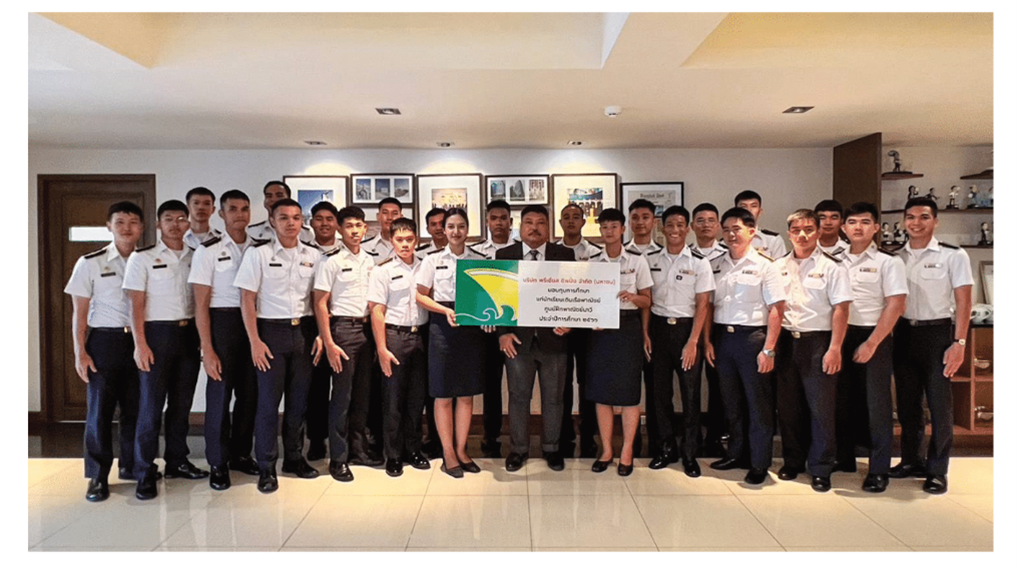
Building Futures: A Journey of Commitment Through the Hom Bah Hai Nong Project
Every corner of a school, from the library to the playground, holds the promise of brighter futures for children. For over 17 years, PSL has proudly supported the “Hom Bah Hai Nong” project, an inspiring initiative by the cadets of the Merchant Marine Training Centre (MMTC). This long-standing partnership exemplifies PSL’s unwavering commitment to community upliftment, education, and sustainable development, making a tangible difference in the lives of children across Thailand.
The Hom Bah Hai Nong project brings together the determination of MMTC cadets and the support of PSL to uplift underprivileged schools and create environments where children can learn, explore, and thrive. Over the years, this partnership has strengthened educational spaces across Thailand—enhancing learning environments, improving student well-being, and expanding opportunities for growth. Each year, PSL continues to support initiatives that revitalize school infrastructure, enrich student experiences, and promote safe, inclusive, and inspiring spaces for future generations.
A key emphasis this year 2025 is on long-term sustainability and consistent follow-up. PSL actively encourages cadets not only to complete new projects but also to return to schools from previous years to assess progress, understand ongoing challenges, and ensure that past initiatives continue to deliver lasting value. This approach reinforces that Hom Bah Hai Nong is not a one-off initiative; it is a long-term commitment to nurturing communities, strengthening resilience, and ensuring that each improvement remains meaningful and sustainable well into the future. Through this continued engagement, cadets gain a deeper sense of responsibility and learn to view community service as an ongoing journey rather than a single moment of support. The impact extends far beyond the school grounds. Improved facilities create shared spaces for surrounding communities, fostering stronger connections, safer environments, and better quality of life. The project also nurtures essential values in Merchant Marine cadets leadership, compassion, teamwork, and social responsibility which align closely with PSL’s corporate ethos and vision for supporting future maritime professionals who understand the importance of giving back.
The photograph below captures the heartwarming collaboration between MMTC cadets and local communities, showcasing the power of collective action to create meaningful change.
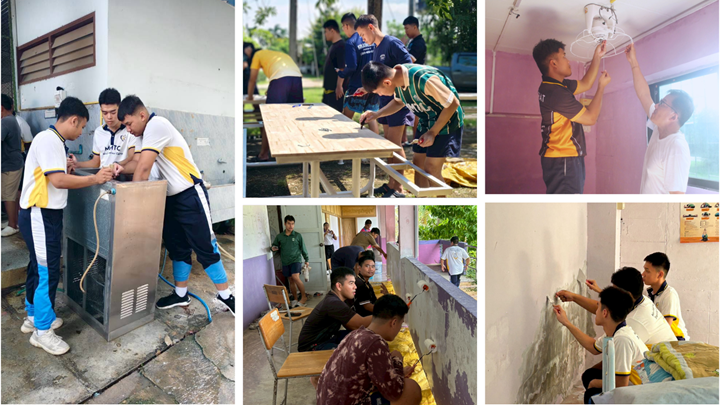
Aligned with Sustainable Development Goals (SDGs), particularly Goal 4 (Quality Education) and Goal 11 (Sustainable Cities and Communities), the Hom Bah Hai Nong project underscores PSL’s commitment to creating a lasting impact. Beyond the numbers and facilities, this initiative is a testament to PSL’s dedication to nurturing young minds and empowering communities. Each project is a brick in the foundation of a brighter future—a future built on shared values, collaboration, and the belief that every child deserves the chance to succeed.
Leading the Charge for Cleaner Waterways and Sustainable Solutions
At Precious Shipping Public Company Limited, our commitment to environmental sustainability is driven by the recognition that the health of the oceans we navigate starts with cleaner waterways upstream. As a leader in the maritime industry, PSL understands the profound impact of urban pollution on the broader marine ecosystem. With this in mind, we have taken proactive steps to address pollution at its source, focusing on Bangkok’s urban canals that feed into the Chao Phraya River. By introducing Thailand’s first high-density polyethylene (HDPE) canal-cleaning boat named Phitak Tara, we are tackling waste before it reaches the river, contributing to the preservation of the ecosystems we depend on.
Bangkok’s canals have long been vital to the city’s transportation system and cultural heritage. However, these waterways now face significant pollution, with debris and waste flowing into the Chao Phraya River, affecting the local environment. PSL’s solution—a small, maneuverable HDPE boat—is designed to intercept waste in the narrow, winding canals that larger vessels cannot reach. This boat is lightweight, durable, and efficient, making it perfectly suited to clean the city’s waterways, where pollution begins and ultimately impacts the broader ecosystem.
Our innovative canal-cleaning project goes beyond waste management—it’s about building a sustainable future. The use of HDPE material in the construction of these boats not only ensures they are durable and efficient but also supports a circular economy by being recyclable and eco-friendly. PSL’s investment in these custom-designed vessels reflects our deep commitment to environmental responsibility and sustainable practices. By addressing pollution at its roots, we are reducing the amount of waste that enters the Chao Phraya River, ultimately promoting cleaner waterways and improving the ecological health of Bangkok.
For the full video about the project, please visit: https://youtu.be/hc4JLpxkO04?si=eRxZN8rZz-6vh--5
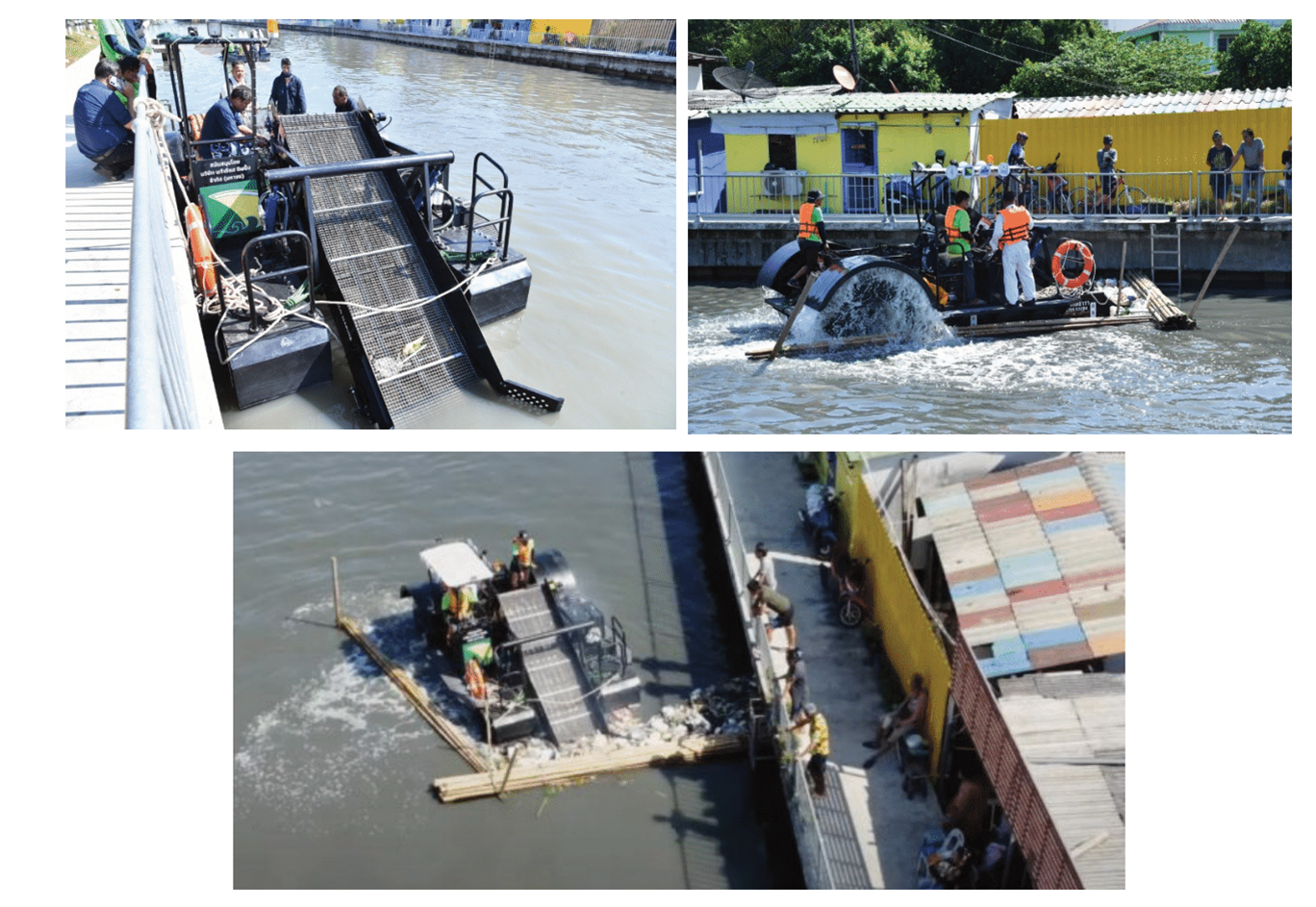
Photos: the “Phitak Tara” canal-cleaning boat, proudly backed by Precious Shipping Public Company Limited (PSL).
This project aligns with the SDGs, particularly SDG 14: Life Below Water. By focusing on pollution prevention and the preservation of aquatic ecosystems, PSL is making a lasting, positive impact on both the local community and the global environment. Through strategic partnerships and innovation, PSL is demonstrating how businesses can play a significant role in driving urban environmental initiatives. Our canal-cleaning project serves as a model for how companies can contribute to a cleaner, safer, and more sustainable future for all.
Advancing Maritime Safety: A Commitment to Community Well-Being
Laem Chabang Port, one of Thailand’s busiest maritime gateways, became the stage for a significant advancement in marine emergency preparedness when the Queen Savang Vadhana Memorial Hospital and the National Maritime Interests Protection Center carried out the intensive Practice Sea Patient Transport 2025 exercise. PSL was invited as a key partner to support this critical initiative, reflecting the trust placed in our expertise and long-standing commitment to maritime safety. The Company not only provided funding support but also nominated PSL crew members who actively participated in the hands-on emergency training.
The 2025 exercise is set to elevate Thailand’s emergency response capabilities at sea. Conducted aboard a vessel anchoring at Laem Chabang Port, the simulation will recreate a high-pressure medical evacuation scenario, complete with onboard patient rescue, at-sea stabilization, and rapid transfer to shore-based medical teams. Designed to enhance precision, speed, and inter-agency coordination, the training will bring together port authorities, maritime responders, medical teams, and vessel crew members in a unified effort to improve readiness for real-life emergencies.
PSL’s involvement went far beyond sponsorship; it represents our ongoing dedication to strengthening safety standards across the maritime community. By enabling our seafarers to participate in this rigorous and realistic exercise, we equip them with critical first-response skills while contributing to the broader safety ecosystem surrounding Laem Chabang Port. This engagement helps reinforce a culture of vigilance, preparedness, and responsibility—values essential to safeguarding lives at sea.
The photographs below showcase teamwork and hands-on emergency training during the Practice Sea Patient Transport 2025 exercise at Laem Chabang Port.
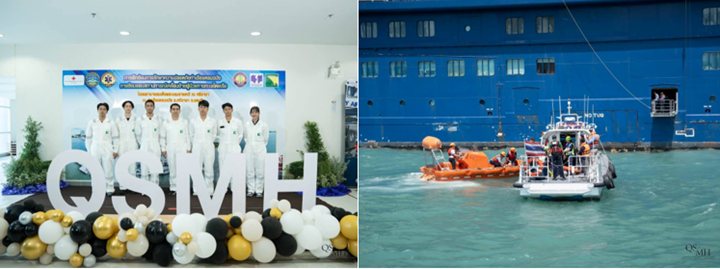
This initiative directly aligns with Sustainable Development Goal 3, which focuses on health, safety, and well-being. By supporting this vital training program, PSL advances its mission to protect maritime workers, empower emergency responders, and enhance the long-term resilience of the local community. Our continued commitment reflects the Company’s belief that strong safety foundations are essential to the sustainable future of the maritime industry—benefiting present and future generations alike.
Donation to Mechai Pattana School
In line with our unwavering belief in the transformative power of education, Precious Shipping Public Company Limited proudly extends its support to Mechai Pattana School for the fourth consecutive year. This year, we once again contributed 1 million THB and actively engaged with students to support both infrastructure and personal growth, ensuring a safe, inspiring, and thriving learning environment.
Mechai Pattana School has fully recovered from previous flood impacts, providing students with spaces that foster creativity, learning, and confidence. In 2025, our Head of Fleet personally visited the school to extend PSL’s support, interact with students, and witness firsthand the positive outcomes of our ongoing initiatives. During the visit, career guidance sessions introduced students to opportunities in the maritime industry, inspiring them to envision future pathways while creating an engaging, warm, and motivating atmosphere.
At PSL, we recognize that education goes beyond classrooms. Quality facilities and programs cultivate essential life skills, leadership, teamwork, and resilience. By enhancing sports and learning infrastructure, we help students develop confidence and perseverance, equipping them to face future challenges with strength and determination.
This enduring partnership reflects the power of collective action and long-term commitment. Our support helps create inclusive, safe, and stimulating educational environments, empowering students to thrive academically, socially, and emotionally. Through continued engagement, we ensure that every initiative delivers lasting value, reinforcing PSL’s dedication to sustainable impact and community development.
The photograph below shows Mechai Pattana School students along with Captain Pattana Sriroon, Head of our Fleet Personnel Department.
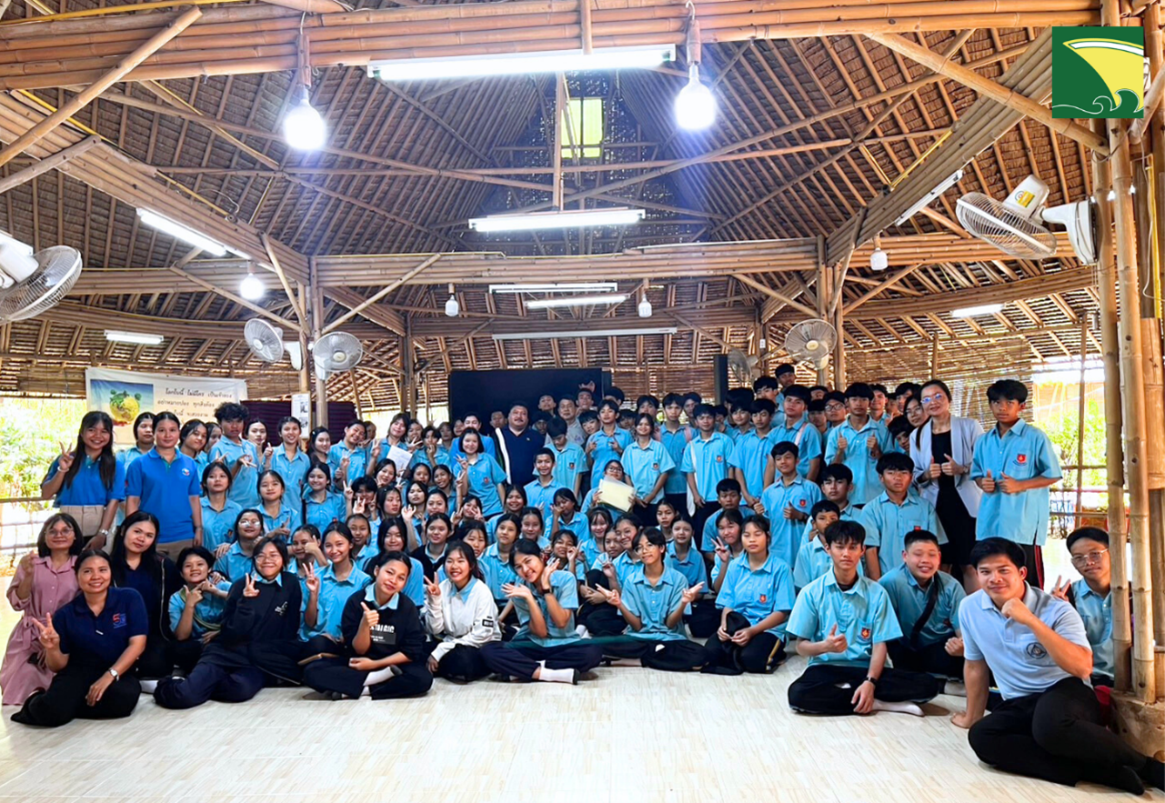
Aligned with Sustainable Development Goals (SDGs), particularly Goal 4 (Quality Education) and Goal 11 (Sustainable Cities and Communities), this initiative demonstrates how strategic corporate support can nurture the next generation of leaders and changemakers. Together with Mechai Pattana School, PSL is not just enhancing infrastructure, we are investing in potential, inspiring growth, and building a legacy of opportunity and hope for years to come.The photograph below shows Mechai Pattana School students along with Captain Pattana Sriroon, Head of our Fleet Personnel Department.
Feeding Futures, Filling Hearts
This year, the Company organised a lunch and donation initiative to support more than 1,000 underprivileged children at Wat Sakaeo Orphanage in Ang Thong Province on 28 August 2025. The orphanage, which shelters over 1,100 children many of whom are abandoned or living without family continues to face significant shortages of food, clothing, and daily necessities. With limited resources and rising costs, the temple carries a heavy responsibility in caring for these children. The Company recognised the urgent need and stepped forward to help lighten this burden.
At a time when many children’s centres across the country are struggling, this initiative reflected our commitment to stand together as one team with a shared purpose: to inspire hope, nurture wellbeing, and bring joy to the lives of children who need it most. Our employees helped serve warm meals, provided essential supplies, and spent meaningful time engaging with the children. Every moment mattered because small gestures, given with sincerity, can create a big and lasting impact. Through collective generosity, we helped transform an ordinary day into one filled with connection, dignity, and real smiles.
By supporting Wat Sakaeo Orphanage, the Company reaffirmed its belief that investing in children is investing in the nation’s future. We strive to uplift vulnerable communities, strengthen social wellbeing, and ensure that every child regardless of circumstance has the opportunity to grow, dream, and thrive. Through compassion, unity, and responsible action, we aim to be a force for good that contributes to a stronger and more caring society.
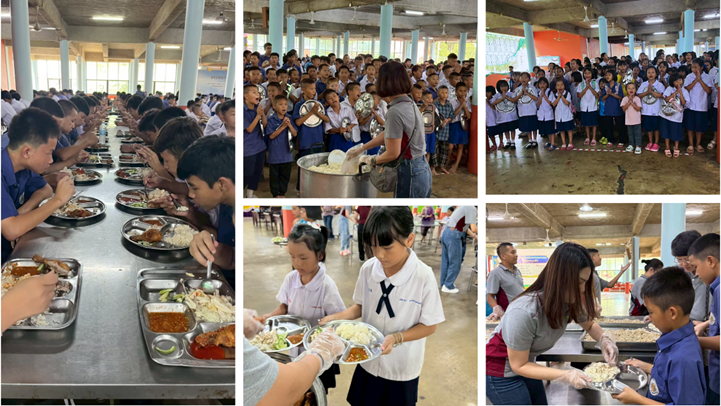
This initiative directly supports SDG 2: Zero Hunger, by improving access to nutritious food for vulnerable children; SDG 3: Good Health and Well-Being, through actions that enhance wellbeing and emotional support.
Strengthening Communities Through Shared Resilience
In a year marked by severe natural disasters across Thailand, the Company reaffirmed its commitment to protecting the well-being of both its people and the communities that sustain the nation. With employees and seafarers originating from provinces across the country, our responsibility extends beyond the workplace into families, hometowns, and society at large. As wildfires affected the northern region and catastrophic flooding struck the south, the Company responded promptly—providing essential equipment to frontline responders, as well as financial assistance and critical relief supplies to families impacted by these emergencies—helping communities stabilise and recover during times of acute hardship.
Following the severe flooding in Hat Yai and surrounding areas in Southern Thailand in 2025, the Company further strengthened its support through a donation of 0.80 million baht to Hat Yai Hospital and the Songklanagarind Hospital Foundation. This contribution supported emergency medical services, patient care, and recovery efforts during a period of intense strain on public healthcare systems. By partnering with key medical institutions at the centre of the affected communities, the Company helped ensure continuity of essential healthcare services when they were most urgently needed.
Our community initiatives advance several global objectives, notably SDG 3: Good Health and Well-Being, by safeguarding health and safety during emergencies; SDG 11: Sustainable Cities and Communities, by enhancing disaster preparedness and resilience; and SDG 17: Partnerships for the Goals, through active collaboration with local authorities, hospitals, and emergency response organisations to deliver impactful, coordinated support.
Empowering Lives: Blood Donation Camp
For many years, the Company has maintained a close partnership with the Thai Red Cross, supporting the national blood supply through regular blood donation initiatives. This long-standing commitment reflects the Company’s belief that access to safe and sufficient blood is fundamental to effective healthcare—playing a critical role in emergency response, life-saving surgeries, and ongoing medical treatment across the country.
In 2025, the Company continued this mission by organising two blood donation camps in June and November, mobilising employees and community members to participate in a shared act of social responsibility. These efforts resulted in the collection of 45,000 cc of blood, directly supporting hospitals and patients in need and reinforcing the importance of consistent, voluntary blood donation to sustaining public health.
Beyond measurable outcomes, the blood donation programme demonstrates the Company’s values in action. By encouraging long-term employee engagement and creating accessible opportunities to give back, the Company fosters a culture of compassion and collective responsibility, strengthening community wellbeing and delivering meaningful, lasting impact beyond the workplace.
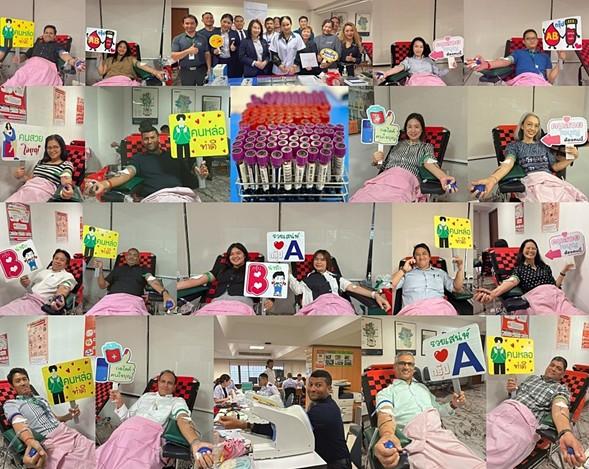
The Annual PSL Maritime Day Run
Good health is essential for individuals working on ships because it directly impacts their safety and overall effectiveness in performing their duties. While working on board a ship, seafarers face challenging and physically demanding tasks, often in remote or hazardous environments. Maintaining good health ensures they have the stamina, alertness, and resilience to handle the demands of the job, reduce the risk of accidents, and respond effectively to emergencies. Additionally, a healthy crew is vital for the successful operation of the ship, as illnesses can lead to manpower shortages and resulting disruptions in critical tasks, potentially compromising the safety and efficiency of maritime operations.
Running or brisk walking is well-known to be a beneficial exercise. Besides the physical health benefits, this activity helps to lift one’s mood and spirits due to the release of endorphins. It relieves stress and helps manage negative feelings like anger and depression. The act of committing to the completion of a stretch of running induces motivation, discipline, and feelings of personal achievement. It is also believed to increase energy and creativity as a natural outcome of the peace, sound sleep, and healthy diet induced by this exercise. For many years, PSL has embraced the opportunity to organize ‘The Annual PSL Maritime Day Run’ at the beautiful Lumphini Park in the heart of Bangkok’s central business district. This event is extremely popular and attracts lots of participants from within the organization in addition to students from the Merchant Marine Training Center. Besides raising awareness about the shipping industry, PSL uses this opportunity to highlight health-related issues and promote fitness. We resumed this cherished tradition on 6 February 2026. The Company is committed to making the Maritime Day Run an annual celebration once again, fostering community spirit and promoting wellness.
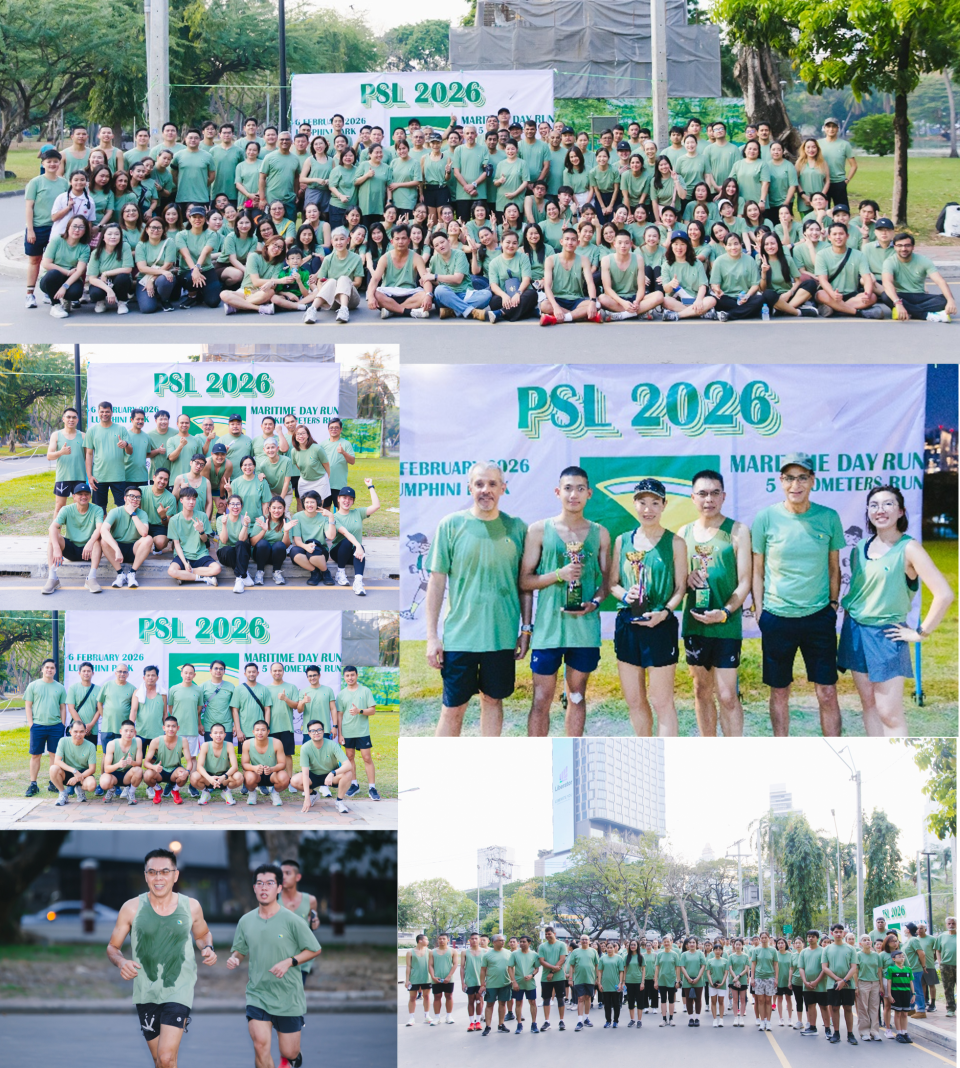
Law Violation Incidents
Law Violation Incidents
| Metric | Current Year | Previous Year | Two Years Ago |
|---|---|---|---|
| The total number of cases or incidents of significant violations of laws or regulations regarding social and human rights (Cases) | 0 | 0 | 0 |
| The total number of cases or incidents that cause significant labor disputes (Cases) | 0 | 0 | 0 |
| The total number of cases or complaints related to consumer rights violations (Cases) | 0 | 0 | 0 |
| The total number of cases or complaints related to partner rights violations (Cases) | 0 | 0 | 0 |
| The total number of cases or incidents that cause disputes with the community/society (Cases) | 0 | 0 | 0 |
| The total number of cases or incidents related to cyber security or customer data breaches (Cases) | 0 | 0 | 0 |
| The total number of cases or incidents related to safety and occupational health at work (Cases) | 0 | 0 | 0 |