

Risk Management · 2025
In this section2 topics
Risk Management Policy & Plan
Policy & Plan Description
The Company recognises the importance of risk assessment as a systematic process for identifying and evaluating events or conditions that may affect the achievement of its objectives. The Company’s risk management policy, guided by its vision and values, covers material risks that may impact its business operations and performance. The company manages both internal and external risk through a structured risk management framework aligned with the principles of the Committee of Sponsoring Organizations of the Treadway Commission – Enterprise Risk Management (2017 Framework) and the International Organization for Standardization’s ISO 31000 Risk Management standard, under the oversight of the Board of Directors, with support from the Sustainability and Risk Management Committee and senior management.
This framework is supported by the Company’s internal control system and is designed to integrate risk considerations into strategy setting and operational decision-making, operate within defined risk appetite and tolerance levels, and provide reasonable assurance over strategic, operational, reporting, and compliance objectives. The framework also facilitates consistent risk monitoring, periodic assessment, and continuous improvement of risk management practices across the organization.
Risk Governance Structure
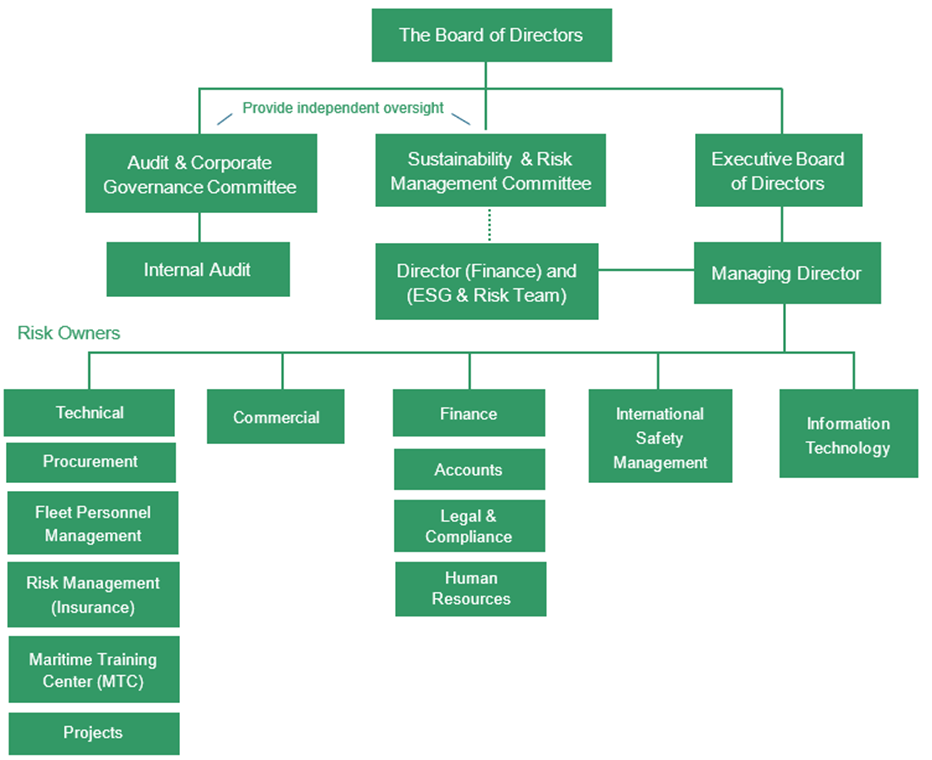
The Board of Directors has ultimate oversight of the Company’s enterprise risk management framework. The Sustainability and Risk Management Committee provides focused oversight of material business and sustainability-related risks, while the Audit and Corporate Governance Committee oversee the effectiveness of internal controls and independent assurance. The Managing Director is accountable for embedding risk management into strategic planning and day-to-day operations. The Finance Director acts as the executive sponsor of enterprise risk management, coordinating risk assessment, monitoring, and reporting across the organization. Designated risk coordinators support the maintenance of the risk register and periodic risk reporting. Business units, as risk owners, are responsible for identifying, assessing, and managing risks within their respective areas of accountability. The internal audit function provides independent assurance on the adequacy and effectiveness of the organization’s risk management and internal control systems. The results of risk assessments for various activities are reported periodically to the Executive Board of Directors, the Sustainability and Risk Management Committee, and the Board of Directors for their consideration. Accordingly, the Company’s risk governance structure is aligned with the Three Lines of Defense model: operational management functions serve as the first line; the ESG & Risk function, together with the Sustainability and Risk Management Committee, provides oversight and framework stewardship as the second line; and the Internal Audit function, reporting to the Audit and Corporate Governance Committee, serves as the third line by providing independent assurance.
Risk Management Process
Risk Identification: The Company identifies events, trends, or conditions that may affect the achievement of objectives. Risks are documented with their causes, potential impacts, and affected areas through data reviews and incident analysis.
Risk Analysis: The Company analyses each identified risk by assessing its inherent likelihood and impact, followed by an evaluation of existing controls to determine the residual risk. This process highlights any gaps requiring further mitigation and is supported by a five-risk matrix, which provides a structured, consistent basis for assessing the severity of each risk.
Risk Evaluation: Following the analysis, each risk is evaluated against the Company’s defined risk appetite and tolerance to determine whether the residual risk level is acceptable. Risks are classified and prioritised into four categories based on their position in the risk matrix:
Low Risk: Risks with minimal likelihood and/or impact that can be managed through routine procedures
Medium Risk: Risks requiring active management and regular monitoring
High Risk: Significant risks requiring senior management attention, dedicated mitigation strategies, and frequent review
Extreme Risk: Critical risks that exceed risk appetite thresholds and require immediate executive and Board attention, comprehensive action plans, and continuous monitoring
Risk Treatment: The company determines its risk response strategy based on the nature of the risk: avoidance, mitigation through controls, transfer via third parties, or acceptance within established appetite. To ensure successful execution, distinct action plans are established with designated owners, strict timelines, and allocated resources. Monitoring and Review: Risks, controls, and action plans are continuously monitored through key risk areas and indicators, management reviews, and periodic assessments. Emerging risks and changes in the operating environment are incorporated to keep the risk profile current.
Communication and Reporting: Risk information is communicated to relevant stakeholders through regular reporting to management, the Sustainability and Risk Management Committee, and the Board of Directors.
Currently, the Company has identified the various risk factors into 5 categories as follows:
Market Risks
Strategic Risks
Operational Risks
Financial Risks
Technology and Cyber Risks
Risks to the Company's Business Operations
Risk Register
| Risk Name | Risk Characteristics | Consequences | Management Measures | Related Risk Factors |
|---|---|---|---|---|
| Vessel oversupply risk | This risk arises from the potential oversupply of dry-bulk tonnage in the global market, which may create a structural imbalance between vessel supply and cargo demand. Such conditions, compounded by intense competition among shipowners and operators, exert sustained pressure on freight rates and vessel utilization. Key drivers include the continued delivery of newbuild vessels and cyclical downturns in the shipping market, both of which may weaken charter rates and dilute earnings capacity across the sector. | Heightened supply-side competition may materially and adversely affect the Company’s financial performance and operating stability. Persistent oversupply can depress freight rates and reduce the Company’s ability to secure charter contracts on favorable commercial terms, thereby constraining revenue generation and profitability. Furthermore, increased volatility in charter hire rates may result in significant fluctuations in earnings, particularly during market downturns. Such volatility also reduces the reliability of financial forecasting and budgeting, and may impair management’s ability to plan capital allocation, liquidity management, and fleet deployment effectively, leading to elevated business and financial uncertainty. | To manage the risk arising from increased supply-side competition, the Company employs a data-driven and forward-looking approach. We maintain continuous market surveillance that tracks global newbuilding deliveries by vessel size, age profile, and technical specification. This granular intelligence enables us to anticipate the scale and timing of incoming fleet capacity, allowing management to proactively adjust commercial and operational strategies. The Company also ensures that all new additions to the fleet are built with the latest fuel-efficient and eco-design technologies. These vessels not only support our environmental stewardship commitments but also provide a distinct competitive edge in oversupplied markets. Their lower operating costs, reduced emissions profile, and stronger compliance posture make them the preferred choice for charterers, supporting higher utilization and premium earnings even when market conditions soften. Furthermore, the Company deliberately strengthens long-term partnerships with high-quality charterers by consistently delivering reliability, operational excellence, and transparent communication. This disciplined focus on being a trusted, high-service provider secures preferential status and stable employment for our core fleet, ensuring resilience and commercial support despite heightened market competition. | 728 · Description: Volatility in the industry in which the company operates · Info category: STRATEGIC_RISK · 1725 · Description: Income volatility · Info category: FINANCIAL_RISK · 1714 · Description: Competition risk · Info category: STRATEGIC_RISK · 1715 · Description: Economic risk · Info category: STRATEGIC_RISK |
| Global Economic Slowdown Risk | The risk of an economic slowdown is an external factor of concern for the Company, given its direct influence on global seaborne trade volumes, commodity flows, and freight market dynamics. In the dry bulk sector, market conditions have grown more complex as geopolitical pressures, shifting trade policies, and diplomatic realignments reshape commodity flows, creating unpredictable demand patterns. Tariff regimes and retaliatory trade measures threaten to disrupt established trade lanes and suppress global economic momentum, elevating the risk of prolonged weakness in dry bulk demand. | As global seaborne trade volumes contract, the fundamental balance of supply and demand tilts against us. Vessel utilization falls, triggering a direct and often severe reduction in freight rates, especially for our fleet exposed to the volatile spot market. This is exacerbated by a looming fleet oversupply, where weakened demand meets the steady delivery of new vessels from the industry orderbook. The resulting tonnage surplus intensifies competition for cargoes, compressing rates further and leading to extended idle periods where vessels wait longer for employment or must reposition at uneconomical rates. Simultaneously, geopolitical tensions and trade restrictions can disrupt established routes, forcing vessels onto longer, less efficient, and less profitable alternative pathways. | The Company manages the risk of an economic slowdown through disciplined market monitoring, prudent financial management, and operational efficiency. Management continuously reviews global economic indicators, commodity demand patterns, fleet supply developments, and geopolitical trends to detect early signs of weakening trade conditions. These insights inform scenario analyses and support timely strategic adjustments. To reduce exposure to freight-rate volatility, the Company employs a balanced chartering approach that blends spot and medium-term contracts while diversifying customer mix, trade routes, and cargo segments. This supports revenue stability and reduces dependence on any single market. Additionally, the Company focuses on cost control and flexible fleet deployment and maintenance programs are optimized to preserve competitiveness in low-rate environments. | 728 · Description: Volatility in the industry in which the company operates · Info category: STRATEGIC_RISK · 730 · Description: Government policy · Info category: STRATEGIC_RISK · 731 · Description: Policies or international agreements related to business operations · Info category: STRATEGIC_RISK · 1725 · Description: Income volatility · Info category: FINANCIAL_RISK · 1715 · Description: Economic risk · Info category: STRATEGIC_RISK |
| Transition risk | Transition risk arises from the progressive tightening of global environmental regulations, specifically the International Maritime Organization (IMO) 2030 carbon intensity targets and 2050 net-zero ambitions, alongside the development of global fuel standards. This risk is driven by regulatory changes, shifting charterer preferences toward eco-efficient vessels with lower emission profiles, uncertainties regarding future alternative fuel pathways (such as methanol, ammonia, or biofuels), and the operational complexity and costs associated with retrofitting the existing fleet. | Failure to adapt to evolving standards can lead to weaker RightShip Greenhouse Gas (GHG) ratings, potentially resulting in exclusion from major vetting regimes or forcing the Company to accept Time Charter Equivalent (TCE) rate discounts. Regulatory shifts threaten to shorten the economic life of non-compliant vessels and depress their resale value. Furthermore, poor environmental performance could impair access to sustainability-linked financing, necessitating borrowing at less competitive rates. Financial risk also exists in retrofit technology costs and operational complexities exceeding capital budgets. | To mitigate decarbonization risk, the Company integrates climate considerations into its core capital and fleet strategy. Strategically, this involves balancing newbuildings, second-hand acquisitions, and scrapping. Mitigation measures include installing energy-saving devices, such as high-performance hull coatings, engine power limitation (EPL), waste heat recovery systems, and propeller upgrades targeted Handysize and Supramax/Ultramax vessels. Operational measures include fleet-wide weather routing and eco-speed optimization. Through these integrated strategic, technical, and operational actions, the Company aims to enhance fleet efficiency, ensure regulatory compliance, and maintain its competitive position in a rapidly evolving market. | 756 · Description: Change in laws and regulations · Info category: COMPLIANCE_RISK · 758 · Description: Violations of laws and regulations · Info category: COMPLIANCE_RISK · 731 · Description: Policies or international agreements related to business operations · Info category: STRATEGIC_RISK · 732 · Description: Changes in technologies · Info category: STRATEGIC_RISK · 1717 · Description: ESG risk · Info category: STRATEGIC_RISK |
| The risk from an ageing fleet | Ageing vessels heighten exposure to mechanical failures, maritime accidents, environmental incidents (e.g., oil spills), and elevated liability/repair costs. The Company also depends critically on timely fleet renewal, where delays due to shipyard constraints, long newbuilding lead times, capital needs, financing access, and secondhand market conditions undermine operational efficiency and competitive positioning in a modern-tonnage market. Exacerbating factors include dry-bulk sector volatility, fluctuating asset values, tightening environmental/ technical standards, and uncertainties in future vessel technologies/fuel types. Sub-optimal renewal risks a less charterer-attractive fleet that is costlier to operate and more vulnerable to regulatory/ market shifts. | Failure to manage fleet ageing and renewal exposes the Company to higher operational downtime from off-hire periods and repairs, eroding revenue and profitability. Charterers may shun older vessels, reducing utilization rates and market share amid preferences for efficient, compliant tonnage. Financially, this triggers a cycle of higher maintenance expenditures, diminished asset values, and constrained cash flow. These pressures can, in turn, necessitate asset write downs or dilutive financing. | The Company regularly assesses its fleet age profile, technical condition, and market requirements to identify risks to operational efficiency and competitiveness. Fleet renewal and divestment are managed through a structured program supported by newbuilding orders and selective second-hand acquisitions. In 2025, the Company strategically acquired a mix of 5- to 9-year-old vessels alongside newbuildings. Given the capital-intensive nature of vessel investments, fleet renewal planning is closely integrated into the Company’s financial management processes. Capital expenditure requirements are assessed as part of medium- and long-term financial planning, supported by cash-flow projections and scenario analysis. The Company maintains ongoing relationships with financial institutions and other funding partners to secure appropriate financing structures and preserve balance sheet flexibility, allowing it to respond to market opportunities and shipyard availability in a timely manner. Furthermore, operational risks are mitigated through preventive and condition-based maintenance, regular inspections, and performance monitoring to reduce technical failures, downtime, and cost overruns. These measures help mitigate fleet ageing risks, enhance operational resilience, and support sustainable long-term value creation. | 732 · Description: Changes in technologies · Info category: STRATEGIC_RISK · 746 · Description: Delays in the development of future projects · Info category: OPERATIONAL_RISK · 749 · Description: Safety, occupational health, and working environment · Info category: OPERATIONAL_RISK · 751 · Description: Impact on the environment · Info category: OPERATIONAL_RISK · 1717 · Description: ESG risk · Info category: STRATEGIC_RISK |
| Newbuilding Risk | Newbuilding risk arise from the possibility that vessels under construction may be delivered later than contractually scheduled due to shipyard capacity constraints, long construction lead times, supply-chain disruptions, labor shortages, steel-price volatility, or evolving regulatory and technical requirements or that the vessel(s) delivered are not it for purpose due to a design flaw. As timely fleet renewal is essential to maintaining operational efficiency and complying with tightening environmental standards, delays or flaws in newbuildings can disrupt PSL’s strategic plan, prolong reliance on older vessels, and reduce the Company’s ability to introduce more fuel-efficient tonnage into the market as intended. | Delivery delays may result in lost revenue opportunities, particularly during strong freight markets, while increasing exposure to operational inefficiencies associated with older vessels that remain in service longer than planned. Financial consequences can include higher maintenance costs, increased off-hire, and potential budgetary pressure arising from design changes or compliance upgrades required during construction. Such challenges may also disrupt long-term fleet-deployment strategies, ultimately affecting competitiveness and market positioning. | The Company mitigates newbuilding delivery risk by contracting with reputable shipyards, incorporating clear construction milestones and liquidated-damages provisions in newbuilding contracts, and deploying supervision teams to oversee progress and ensure adherence to specifications. PSL also maintains flexibility in its fleet-renewal strategy by complementing newbuildings with selective second-hand acquisitions, thereby reducing dependency on shipyards. | 732 · Description: Changes in technologies · Info category: STRATEGIC_RISK · 745 · Description: Loss or damage from non-compliance of partners or counterparties · Info category: OPERATIONAL_RISK · 746 · Description: Delays in the development of future projects · Info category: OPERATIONAL_RISK · 1717 · Description: ESG risk · Info category: STRATEGIC_RISK |
| Human Capital Risk | Persistent shortages of qualified personnel, both at sea and ashore, can lead to crewing instability, scheduling complications, and increased pressure on existing staff, ultimately heightening the risk of operational incidents and compliance gaps. | Such workforce strain may also contribute to higher vessel off hire exposure, delays in maintenance and drydocking programs, and reduced ability to maintain rigorous ISM, Maritime Labour Convention (MLC), and ESG compliance. PSL acknowledges that shortages of skilled employees can lead to increased recruitment and training costs, elevated turnover related expenses, and reduced operational efficiency. In addition, a weakening succession pipeline or insufficient leadership development efforts may further erode knowledge, reduce decision making quality, and impact optimization of fleet performance, issues directly highlighted in PSL’s ERM assessments as drivers of human capital risk. | The Company adopts a structured and proactive approach to human capital risk management by regularly assessing workforce capacity, critical skill requirements, succession planning coverage, and employee engagement levels across both seagoing and shore-based functions. Strategic manpower planning is integrated into business and fleet development plans to ensure adequate availability of qualified personnel in line with operational growth, fleet renewal, and regulatory complexity. The Company continues to strengthen its talent attraction and retention efforts through the maintenance of competitive remuneration and benefits frameworks, together with clear and transparent career progression pathways. To support long-term capability development, PSL invests in structured professional development programs encompassing technical training, leadership development, and regulatory competency enhancement. In parallel, the Company collaborates with maritime academies, universities, and recognized training institutions to cultivate a sustainable pipeline of qualified seafarers and shore-based professionals, ensuring the availability of skilled personnel essential for ongoing operational excellence. Operational and safety risks arising from fatigue and well-being are mitigated through compliance with international rest-hour regulations, crew rotation planning, workload management, and the provision of welfare support programs for both seafarers and office staff. Regular employee engagement surveys and performance reviews are conducted to identify early warning signals of burnout, dissatisfaction, or capability gaps. In addition, the Company promotes a safety-oriented and performance-driven organizational culture supported by clear codes of conduct, internal communication channels, and management oversight. Human capital metrics, including turnover rates, vacancy duration, training coverage, and incident trends, are periodically monitored and reported to senior management and relevant Board committees to ensure timely corrective actions. | 738 · Description: Reliance on employees in key positions · Info category: OPERATIONAL_RISK · 739 · Description: Shortage or reliance on skilled workers · Info category: OPERATIONAL_RISK · 742 · Description: Human error in business operations · Info category: OPERATIONAL_RISK · 749 · Description: Safety, occupational health, and working environment · Info category: OPERATIONAL_RISK · 1717 · Description: ESG risk · Info category: STRATEGIC_RISK |
| Geopolitical risk | Geopolitical risk pervades global shipping operations, remaining beyond any single organization's control and affecting the entire maritime industry. While global in scope, it intensifies in critical chokepoints such as narrow straits, conflict-adjacent zones, and sanctioned territories, creating layered exposure. Its interconnected nature amplifies the impact of events like blockades, sanctions, or acts of aggression. These events can cascade across operations, evolving from route disruptions and port delays into financial crises, contractual breaches, security incidents, and reputational damage. The effects range from immediate vessel diversions and cargo seizures to prolonged, structural shifts in trade routes, energy flows, and market dynamics | Geopolitical instability can materially disrupt the Company’s shipping operations and financial performance by constraining access to key maritime routes, ports, and markets. Escalating conflicts, trade restrictions, or sanctions may force vessels to divert from optimal routes, increasing voyage distances, fuel consumption, insurance premiums, and operating costs, while also reducing schedule reliability and fleet utilization. | The Company mitigates geopolitical risk through continuous monitoring of international developments, supported by intelligence from industry bodies, maritime security advisors, insurers, and regulators. Risk assessments inform voyage planning, chartering decisions, and fleet deployment to avoid or minimize exposure to high-risk areas where commercially and operationally viable. Furthermore, the Company diversifies trading routes, cargo types, and customer bases to limit reliance on any single region, while securing appropriate insurance for war risks, cargo, and liabilities. Crisis-management protocols and crew-safety procedures undergo regular reviews to ensure readiness for escalations. These measures collectively safeguard operations, personnel, assets, and financial resilience amid volatile geopolitical conditions. | 728 · Description: Volatility in the industry in which the company operates · Info category: STRATEGIC_RISK · 730 · Description: Government policy · Info category: STRATEGIC_RISK · 731 · Description: Policies or international agreements related to business operations · Info category: STRATEGIC_RISK · 745 · Description: Loss or damage from non-compliance of partners or counterparties · Info category: OPERATIONAL_RISK · 746 · Description: Delays in the development of future projects · Info category: OPERATIONAL_RISK · 1715 · Description: Economic risk · Info category: STRATEGIC_RISK |
| Safety related risk | The risk of accidents can arise due to the safety rules not being followed properly. Routine activities such as cargo handling, maintenance, mooring, and engine-room work expose crew members to physical and operational dangers, often under challenging weather and sea conditions. Human factors, including fatigue, procedural non-compliance, and improper use of personal protective equipment, together with equipment malfunctions and unsafe work practices, can lead to incidents. As the Company’s vessels operate globally on a tramp-shipping basis without fixed routes, varying environmental and navigational conditions also contribute to the overall risk profile. | Onboard accidents can have wide-ranging consequences for the Company’s personnel, operations, regulatory standing, and financial performance. Such incidents may result in crew injuries or fatalities, including fractures, crush injuries, burns, slips, trips, and equipment-related accidents, adversely affecting workforce morale and well-being. Operationally, accidents can disrupt cargo handling, delay voyages, and necessitate unplanned repairs, thereby undermining service reliability and fleet utilization. From a financial perspective, the Company may incur medical expenses, compensation claims, higher insurance premiums, and potential legal liabilities. In addition, failures to comply with applicable international safety and environmental standards, including frameworks and requirements issued by the International Maritime Organization (IMO), the International Safety Management (ISM) Code, the International Convention for the Prevention of Pollution from Ships (MARPOL), and policies aligned with the International Organization for Standardization (ISO), may lead to regulatory scrutiny and reputational damage. | The Company operates a Safety Management System compliant with the ISM Code and ISO 9001, including a zero-fatality tolerance objective. Safety risk ownership is clearly structured across technical, ISM, fleet personnel, and training functions to ensure coordinated oversight. Operationally, the Company conducts regular emergency drills and safety training, supported by systematic inspections and preventive maintenance of critical equipment such as cranes, lifeboats, firefighting systems, and deck surfaces. A formal hazard identification and near-miss reporting process promotes continuous improvement, while strict cargo-handling and lifting protocols reduce operational exposure. Human-factor risks are addressed through targeted safety training, behavioral supervision, fatigue-management practices, and onboard well-being initiatives aimed at reducing stress and unsafe conduct. In parallel, the Company maintains structured emergency response procedures aligned with international maritime standards and works closely with regulators and classification societies to ensure regulatory compliance and ongoing enhancement of vessel safety performance. | 758 · Description: Violations of laws and regulations · Info category: COMPLIANCE_RISK · 741 · Description: Systems or internal control system · Info category: OPERATIONAL_RISK · 742 · Description: Human error in business operations · Info category: OPERATIONAL_RISK · 749 · Description: Safety, occupational health, and working environment · Info category: OPERATIONAL_RISK |
| Climate Risk | Climate Risks refer to the tangible, site-specific impacts of a changing climate on the Company’s maritime assets and operations. These are categorized into Acute Risks, such as the increasing frequency and severity of extreme weather events (e.g., "bomb cyclones," typhoons, and hurricanes), and Chronic Risks, including gradual sea-level rise, shifting ocean currents, and rising sea surface temperatures. These hazards can lead to perilous navigational conditions, structural stress on vessels, and the disruption of critical port infrastructure and global maritime chokepoints. | Extreme weather directly threatens crew safety and increases the risk of cargo damage and hull integrity failures. Operational disruptions, such as port closures or mandatory route deviations to avoid storms, result in increased bunker consumption, higher insurance premiums, and potential contractual penalties for delivery delays. In the long term, chronic sea-level rise may impair the operational capacity of key terminals, necessitating significant capital expenditure for coastal adaptation or causing a permanent shift in trade routes, which could impact the Company’s asset utilization and revenue stability. | To enhance physical resilience, the Company employs the following mitigation strategy:
| 728 · Description: Volatility in the industry in which the company operates · Info category: STRATEGIC_RISK · 1725 · Description: Income volatility · Info category: FINANCIAL_RISK · 746 · Description: Delays in the development of future projects · Info category: OPERATIONAL_RISK · 736 · Description: Damage to company image and reputation · Info category: STRATEGIC_RISK · 749 · Description: Safety, occupational health, and working environment · Info category: OPERATIONAL_RISK · 1717 · Description: ESG risk · Info category: STRATEGIC_RISK · 751 · Description: Impact on the environment · Info category: OPERATIONAL_RISK |
| Interest Rate Risk in Debt Facilities | The Group is exposed to interest rate risk primarily through its cash balances, intercompany loans, other financial assets, long-term borrowings, debentures, and lease liabilities. A significant portion of its long-term loan facilities bears floating interest rates, generally referenced to the Secured Overnight Financing Rate (SOFR) plus an applicable margin. Although many financial instruments are short-term in nature, those with variable interest rates remain sensitive to changes in market rates, which may affect financing costs and the fair value of related financial instruments | Fluctuations in market interest rates may affect the Group’s financial performance and financial position. Increases in rates raise interest expenses on floating-rate long-term borrowings, which can elevate total finance costs and reduce net profit. Changes in interest rates also influence the fair value of cash flow hedging instruments, such as interest rate swaps, and may therefore result in volatility in shareholders’ equity. In addition, a prolonged high-interest-rate environment may increase the cost of future financing and the burden of servicing existing debt, potentially constraining cash flows and financial flexibility. | The Group manages interest rate risk through a combination of financial hedging, prudent liquidity management, and ongoing monitoring. Interest rate swaps are employed to hedge floating-rate borrowings by effectively converting variable interest obligations into fixed-rate payments. These swaps are designated as cash flow hedges, structured to align their notional amounts, maturity, and payment schedules with the corresponding underlying loans. In addition, the Group mitigates refinancing and repricing risk by diversifying debt maturity profiles and maintaining sufficient cash reserves to cushion potential increases in financing costs. The Group’s remaining financial instruments are either short-term in nature or carry interest rates that are closely aligned with prevailing market levels, thereby minimizing sensitivity to interest rate fluctuations and reducing fair value volatility. | 761 · Description: Insufficient sources of funding · Info category: FINANCIAL_RISK · 764 · Description: Fluctuation in exchange rates, interest rates, or the inflation rate · Info category: FINANCIAL_RISK · 1724 · Description: Liquidity risk · Info category: FINANCIAL_RISK · 1715 · Description: Economic risk · Info category: STRATEGIC_RISK |
| Exchange Rate Risk | While the Company’s revenues and operating costs are predominantly in United States Dollars (USD), a small proportion of its liabilities are denominated in Thai Baht. Quarterly fluctuations in the exchange rate between the Thai Baht and the US dollar impact the quarterly profit or loss reported on the financial statements, even if such losses or profits are notional in nature. | Accounting impact: Exchange rate movements directly affect the Company’s “bottom line” when financial results are translated into Thai Baht. In the absence of clear disclosure, shareholders may be alarmed by a sharp decline in reported net profit arising solely from Thai Baht appreciation, even though the Company’s underlying operating performance in USD remains sound. Regulatory and compliance impact: In accordance with the requirements of the Stock Exchange of Thailand and applicable financial reporting standards (International Financial Reporting Standards: IFRS/ Thai Financial Reporting Standards: TFRS), the Company is required to disclose material risks that may affect its financial position and operating results. Failure to adequately identify and communicate significant foreign exchange translation risk may result in regulatory non-compliance and weakened transparency to investors. Impact on dividend policy: For a company listed in Thailand, dividends must be declared based on net profit reported in the separate financial statements denominated in Thai Baht. Accordingly, accounting volatility arising from currency translation may adversely affect the Company’s dividend-paying capacity in certain periods, despite stable or improving operating performance in USD. | The Company applies a natural hedging strategy by structuring the majority of its revenues and operating expenses to be denominated in the same currency (USD), thereby reducing exposure to cash flow volatility arising from exchange rate movements. In addition, the Company has designated the United States dollar as its functional currency to reflect the underlying economic environment of its operations more faithfully. The Company also closely monitors foreign exchange developments on an ongoing basis to assess their potential impact on financial reporting and to ensure timely and appropriate disclosure | 758 · Description: Violations of laws and regulations · Info category: COMPLIANCE_RISK · 764 · Description: Fluctuation in exchange rates, interest rates, or the inflation rate · Info category: FINANCIAL_RISK · 759 · Description: Corporate Governance · Info category: COMPLIANCE_RISK · 1724 · Description: Liquidity risk · Info category: FINANCIAL_RISK · 1725 · Description: Income volatility · Info category: FINANCIAL_RISK |
| FUNDING, LIQUIDITY AND LEVERAGE RISK | The Group operates in a capital-intensive industry that requires continuous access to funding for fleet acquisition, renewal, and refinancing of existing obligations. Funding and liquidity risk arises from the possibility that the Group may be unable to obtain sufficient financing on acceptable terms due to adverse market conditions, tightening credit markets, rising interest rates, or reduced lender and investor risk appetite. In addition, the use of debt to finance vessel investments exposes the Group to leverage risk, increasing sensitivity to earnings volatility, refinancing cycles, and asset value fluctuations. | If funding, liquidity, or leverage risk materializes, the Group may face constraints in executing its fleet strategy, refinancing maturing debt, or maintaining adequate liquidity buffers. Elevated leverage may amplify the impact of market downturns, increase debt servicing pressure, and reduce financial flexibility. In stressed market conditions, these factors could adversely affect cash flows, profitability, and access to capital, and may also impact the Group’s ability to pursue growth opportunities or maintain dividend capacity. | The Group manages funding, liquidity, and leverage risk through conservative financial policies, diversified funding sources, and disciplined capital allocation. Liquidity is monitored through regular cash-flow forecasting and stress testing under various market scenarios. The Group seeks to align debt maturities with asset life cycles and maintains ongoing relationships with a broad range of financial institutions and capital market participants. Leverage levels are closely monitored against internal benchmarks and covenant thresholds to ensure balance-sheet resilience throughout market cycles. | 761 · Description: Insufficient sources of funding · Info category: FINANCIAL_RISK · 765 · Description: Fluctuation in return on assets or investment · Info category: FINANCIAL_RISK · 1724 · Description: Liquidity risk · Info category: FINANCIAL_RISK |
| ASSET VALUE AND DEBT COVENANT RISK | The Group’s financial position is sensitive to fluctuations in the market value of its vessels, which are influenced by freight market conditions, supply-demand dynamics, regulatory developments, and investor sentiment toward the shipping sector. Declines in vessel values may affect the collateral value supporting secured debt facilities. In addition, the Group’s financing arrangements include financial covenants and other contractual restrictions linked to asset values, leverage ratios, and financial performance | A significant decline in vessel values or deterioration in earnings may lead to increased pressure on loan-to-value or other financial covenant ratios. Non-compliance with debt covenants could result in restrictions on dividend payments, requirements to provide additional security, mandatory prepayments, or, in severe cases, acceleration of repayment obligations. Such outcomes could adversely affect liquidity, financial flexibility, and the Group’s ability to pursue strategic initiatives. | The Group mitigates asset value and debt covenant risk through prudent fleet management, diversification across vessel types and age profiles, and ongoing monitoring of market valuations. Covenant compliance is closely tracked through regular financial reporting, forecasting, and stress testing. Management maintains proactive and transparent communication with lenders and seeks amendments or waivers where appropriate. Capital expenditure and financing decisions are evaluated with a focus on maintaining sufficient buffers against asset value volatility and covenant thresholds | 763 · Description: Default on payment or exchange of goods · Info category: FINANCIAL_RISK · 765 · Description: Fluctuation in return on assets or investment · Info category: FINANCIAL_RISK · 1724 · Description: Liquidity risk · Info category: FINANCIAL_RISK |
| Investment Risk to Securities Holders | The Company operates within a dynamic and interconnected global financial landscape, where its share price and overall investor returns can be influenced by a broad spectrum of external factors that are beyond its direct management or control. This encompasses the risk of significant and sometimes sudden fluctuations in our stock price, driven not only by our operational performance but also by volatile market sentiment, macroeconomic shifts, and geopolitical events. Furthermore, we are subject to the evolving legal and regulatory environments both in Thailand and internationally. Unanticipated changes in laws, including those related to taxation, exchange controls, or the introduction of new compliance frameworks, could materially alter the investment landscape and affect the value or accessibility of returns for our shareholders. | If these risks materialize, they could result in several adverse outcomes for the Company and its shareholders. Pronounced share price volatility may erode shareholder value, weaken investor confidence, and elevate the cost of capital, potentially complicating or diluting future equity fundraising. Unanticipated regulatory changes, including those relating to taxation or sustainability reporting, could introduce additional compliance costs and administrative burdens. In extreme situations, restricted market liquidity or capital controls could impede investors’ ability to realize the value of their holdings, damaging the Company’s reputation as a stable and accessible investment. | While external market or regulatory developments cannot be controlled, the Company adopts a proactive approach to mitigate their potential impact and maintain investor confidence through the following measures:
Promoting investor understanding of the Company’s value drivers, risk profile, and strategic direction, thereby encouraging a stable and informed shareholder base and reducing short-term reactive trading | 759 · Description: Corporate Governance · Info category: COMPLIANCE_RISK · 736 · Description: Damage to company image and reputation · Info category: STRATEGIC_RISK · 1715 · Description: Economic risk · Info category: STRATEGIC_RISK · 1741 · Description: Corporate ownership structure risk · Info category: STRATEGIC_RISK |
| Counterparty Risk | Counterparty Risk arises from the possibility that a charterer, supplier, trading counterparty, or other contractual partner may fail to meet its financial or performance obligations. In the dry bulk sector, where freight markets are cyclical and counterparties often operate with tight working capital positions, defaults can occur due to insolvency, liquidity stress, commodity price shocks, sanctions exposure, or broader macroeconomic downturns. For PSL, the risk is amplified by operating a tramp shipping model, where varying cargo segments and counterparties expose the Company to different credit profiles, documentation standards, and jurisdictional risks. Long standing commercial relationships reduce but do not eliminate exposure, especially during periods of freight rate volatility or sector wide distress. | A counterparty default can directly affect cash flows through unpaid freight, demurrage, hire, or claim settlements. In severe cases, charterers may delay payments for extended periods, seek renegotiations of charter terms, or become insolvent, resulting in write offs. Operationally, defaults may lead to unplanned vessel redelivery, idle time exposure, and repositioning costs if PSL must seek new employment at lower spot market rates. In addition, disputes or prolonged receivable recovery processes may create legal costs, tie up working capital, and reduce the Company’s financial flexibility. Counterparty failure may also trigger reputational risk if associated with sanctions breaches, fraudulent activities, or ESG related non compliance, potentially affecting relationships with banks, insurers, and high quality charterers | The Company mitigates counterparty and charterer credit risk through a structured due diligence framework that assesses the financial strength, payment history, trade patterns, sanction exposure, and ESG compliance of each counterparty. PSL prioritizes employment with reputable charterers and established commodity houses with strong balance sheets and long term operational track records. | 763 · Description: Default on payment or exchange of goods · Info category: FINANCIAL_RISK · 1724 · Description: Liquidity risk · Info category: FINANCIAL_RISK · 745 · Description: Loss or damage from non-compliance of partners or counterparties · Info category: OPERATIONAL_RISK · 1725 · Description: Income volatility · Info category: FINANCIAL_RISK |
| Personal Data Protection and Privacy Risk | As the maritime industry undergoes digital transformation, the Company recognizes data privacy and cybersecurity as critical to operational excellence, legal compliance, and stakeholder trust. In line with Thailand’s Personal Data Protection Act B.E. 2562 (PDPA), the Company acts as a data controller and processor of personal data relating to crew, employees, and business partners, and is required to implement appropriate technical and organizational measures, maintain accurate processing records, and respect data subject rights. Our vessels operate as integrated technology platforms, collecting and processing operational, crew, and business data to enhance efficiency and safety, and are subject to IMO cyber risk management expectations under MSC.428(98) and the MSC FAL.1/Circ.3 Guidelines on Maritime Cyber Risk Management, which require cyber risks to be addressed within the Company’s safety management system. This digital evolution, while creating significant competitive advantages, increases our exposure to personal data and cyber threats and therefore requires robust data governance frameworks to protect personal information, comply with applicable laws and guidelines, and maintain the trust of our employees, customers, and business partners. | A failure in personal data protection or non compliance with the Thailand PDPA could have significant and multifaceted consequences for the Company, including regulatory investigations, administrative fines, mandatory notifications to regulators and affected data subjects, and potential civil claims from individuals whose rights have been infringed. In addition, a material cyber incident affecting shipboard or shore based systems that support our fleet operations, contrary to IMO cyber risk management expectations, could disrupt vessel operations, compromise safety critical systems, and result in loss of commercially sensitive or personal data. Such events could damage customer and employee trust, adversely affect our reputation and competitive position, and have negative impacts on our financial performance and market standing that may persist for years beyond the incident itself. | The Company has implemented the following measures to strengthen data privacy and cyber risk management across its operations, taking into account Thailand PDPA requirements and IMO maritime cyber risk guidelines:
| 758 · Description: Violations of laws and regulations · Info category: COMPLIANCE_RISK · 741 · Description: Systems or internal control system · Info category: OPERATIONAL_RISK · 1723 · Description: Legal risk · Info category: COMPLIANCE_RISK · 744 · Description: Information security and cyber-attack · Info category: OPERATIONAL_RISK · 736 · Description: Damage to company image and reputation · Info category: STRATEGIC_RISK · 1717 · Description: ESG risk · Info category: STRATEGIC_RISK · 1720 · Description: System disruption risk · Info category: OPERATIONAL_RISK |
| Cyber Risk | Cybersecurity risk arises from the increasing frequency and sophistication of phishing, spear-phishing, and business email compromise (BEC) attacks targeting corporate users, financial workflows, and operational systems. These threats exploit human behavior, email systems, and interconnected IT environments to gain unauthorized access, steal credentials, manipulate payment instructions, or disrupt business operations. The risk is amplified by uneven levels of employee cybersecurity awareness, particularly in relation to identifying fraudulent emails and reporting suspicious activity in a timely manner. In addition, the Company’s reliance on third-party service providers, cloud platforms, and external networks introduces indirect exposure, as vulnerabilities or breaches in counterparties’ systems may propagate into the Company’s environment. Given the Company’s increasing digitalization of operations, treasury processes, and information flows, cybersecurity risk remains a dynamic and evolving threat that requires continuous monitoring, control enhancement, and behavioral discipline across the organization. | If cybersecurity risk materializes, the Company may suffer significant financial losses arising from fraudulent payments, misappropriation of funds, ransomware demands, or costs associated with system recovery and forensic investigations. Operational disruptions may occur due to locked or compromised user accounts, temporary shutdown of IT systems, or the need to isolate infected networks to prevent further propagation of malicious activity. Data breaches involving customers, employees, or commercial information could expose the Company to regulatory sanctions, legal liabilities, contractual disputes, and heightened scrutiny from regulators and counterparties. Such incidents may also weaken the Company’s negotiating position with banks, insurers, and business partners. Beyond direct financial and operational impacts, cybersecurity incidents may materially damage the Company’s reputation and stakeholder confidence, particularly among financial institutions, charterers, and strategic partners who increasingly expect robust information-security governance as a prerequisite for long-term cooperation. | The Company maintains a comprehensive cybersecurity framework emphasizing prevention, detection, and response. Preventive measures include mandatory cybersecurity and phishing-awareness training, supported by regular simulations and targeted coaching for higher-risk users. Access security is reinforced through multi-factor authentication (MFA) implemented across email systems, Virtual Private Network (VPN) access, and key financial platforms. Detective controls are strengthened through centralized logging and activity monitoring, with automated alerts for abnormal login patterns and indicators of potential account compromise, enabling early detection and escalation to the Information Technology team. Responsive measures aim to minimize incident impact through defined incident-response procedures, rapid account isolation, domain blocking, and containment within one hour of detection. The Company also periodically reviews its cyber-insurance coverage to mitigate residual financial exposure from fraud, data breaches, and incident-response costs. To further enhance information security governance, the Company obtained ISO/IEC 27001:2022 certification for its Information Security Management System (ISMS), demonstrating its commitment to meeting international standards in safeguarding data and managing cybersecurity risks. These measures collectively help reduce the likelihood and impact of cyber threats, supporting operational resilience and stakeholder confidence. | 758 · Description: Violations of laws and regulations · Info category: COMPLIANCE_RISK · 741 · Description: Systems or internal control system · Info category: OPERATIONAL_RISK · 744 · Description: Information security and cyber-attack · Info category: OPERATIONAL_RISK · 1720 · Description: System disruption risk · Info category: OPERATIONAL_RISK |